Anchuthengu Fort: An East India Company Stronghold on the Malabar Coast
Site at a Glance
- Rating
- 4.1
- Popularity
- Medium
- Country
- India
- Primary era
- Early Modern
- Eras represented
- Early Modern
- Civilizations
- English
- Site type
- Military
- Remains
- Fort
On this page8 sections
History
Foundation and early conflicts
Anchuthengu Fort, formerly known as Anjengo, is an English East India Company fort in India, at Anchuthengu in Kerala. Built between 1696 and 1699, it became the Company’s first permanent post on the Malabar Coast and a fortified commercial base for its expanding trade.
In November 1693, the Company sent John Brabourne to Attingal. There, Rani Ashure, the female ruler associated with Attingal, granted him land on a sandy spit for a fort and gave the Company a monopoly over Attingal’s pepper trade. Construction began in January 1696 and was completed in 1699.
The fort immediately faced opposition from the Dutch, whose position in Malabar Coast trade was threatened by the new settlement. Rani Ashure ordered Brabourne to stop construction, attempted to interrupt supplies, and later sent an armed force against him. The sea allowed the fort to continue receiving provisions, Brabourne defeated the force, and the conflict ended in a peace settlement.
Anjengo also experienced attacks at sea during its construction. In June 1696, British pirates aboard the ketch Josiah, a small two-masted sailing vessel commanded by Robert Culliford, destroyed the Bengal Pilot Service sloop Gingali at Anjengo. Another attack was recorded in 1697.
Trade and changing relations
After the fort was completed, it supported a rapidly expanding trade in pepper and cotton cloth. It also served as the first signaling station for ships arriving from Britain. Anjengo became the second most important of the East India Company’s establishments after Bombay Castle.
Brabourne remained in charge until 1704. After his wife’s death, she was buried at the fort, and Simon Cowse succeeded him. Cowse was later replaced by John Kyffin, who stayed at Anjengo as a free trader. Kyffin used his position for personal enrichment and became involved in local politics.
Rani Ashure died around 1700, and her successor lacked her authority. Relations between the British and local people deteriorated further as the ruling power weakened and Kyffin and his successor pursued self-serving and divisive policies. By 1717, Kyffin had retired and William Gyfford had replaced him. Gyfford was regarded as even more self-serving, and the relationship with the local population continued to decline.
The Attingal attack and siege of 1721
In early 1721, Gyfford tried to improve relations with the Rani by restoring annual gifts that had stopped seven years earlier. On 11 April, he travelled four miles upriver to Attingal with at least 240 people, including Simon Cowse. A large crowd initially greeted the party, but it was later confined in a small enclosure after Gyfford ignored warnings. The group had entrusted its ammunition to porters. After the men fired their weapons as a gesture of goodwill, they discovered that their reloads had been taken. The party was attacked and overcome. A few men escaped, while Cowse was killed as he fled.
After the attack, Gyfford’s widow Catherine, Cowse’s widow, another woman, and six children fled to Madras in a small local vessel that had delivered cowries from the Maldives. They carried the fort’s records with them. Local forces then besieged Anjengo.
The remaining garrison numbered 35, mostly pensioners and boys, and only 20 of them could use firearms. Around 150 local residents whose houses had been burned by the besiegers also took refuge inside. Samuel Ince, the gunnery officer, organized the defense. On 25 April, two East India Company ships arrived from Cochin with supplies and seven reinforcements. The Rajah of Quilon, a regional ruler, offered sanctuary to displaced residents, and 150 women and children were sent into his care. On 1 May, 52 more reinforcements arrived from Tellicherry and Calicut.
On 24 June, the besiegers attacked from three sides. The garrison repelled the assault with artillery and grenades, without fatalities among its own members. Further supplies and reinforcements came from Calicut, the Rani, and her supporters. On 17 October, 300 men from Carwar and Surat arrived and relieved the fort.
Later military and commercial roles
The fort played an important part during the Anglo-Mysore Wars, a series of eighteenth-century conflicts between the East India Company and the state of Mysore in southern India. Its role in these wars included storing ammunition.
In 1792, the Company reduced Anjengo’s formal status to a Residency, an East India Company political or diplomatic establishment. In 1810, it abolished the Commercial Residency, which had focused on trade, and transferred responsibility for the fort to the Political Agent at Travancore. The factory, meaning the Company’s commercial trading station, closed in 1813.
Anjengo also retained a connection with shipbuilding and maritime service. The Bombay Dockyard built the snow Luconia, a two-masted sailing vessel, for the Anjengo Pilot Service in 1748. In 1802, the 260-ton vessel Anjengo was built at the settlement, the first vessel of that size constructed there. Its owner, John Tady Dyne, was among the last East India Company residents at Anjengo.
Remains
Fort plan and artillery
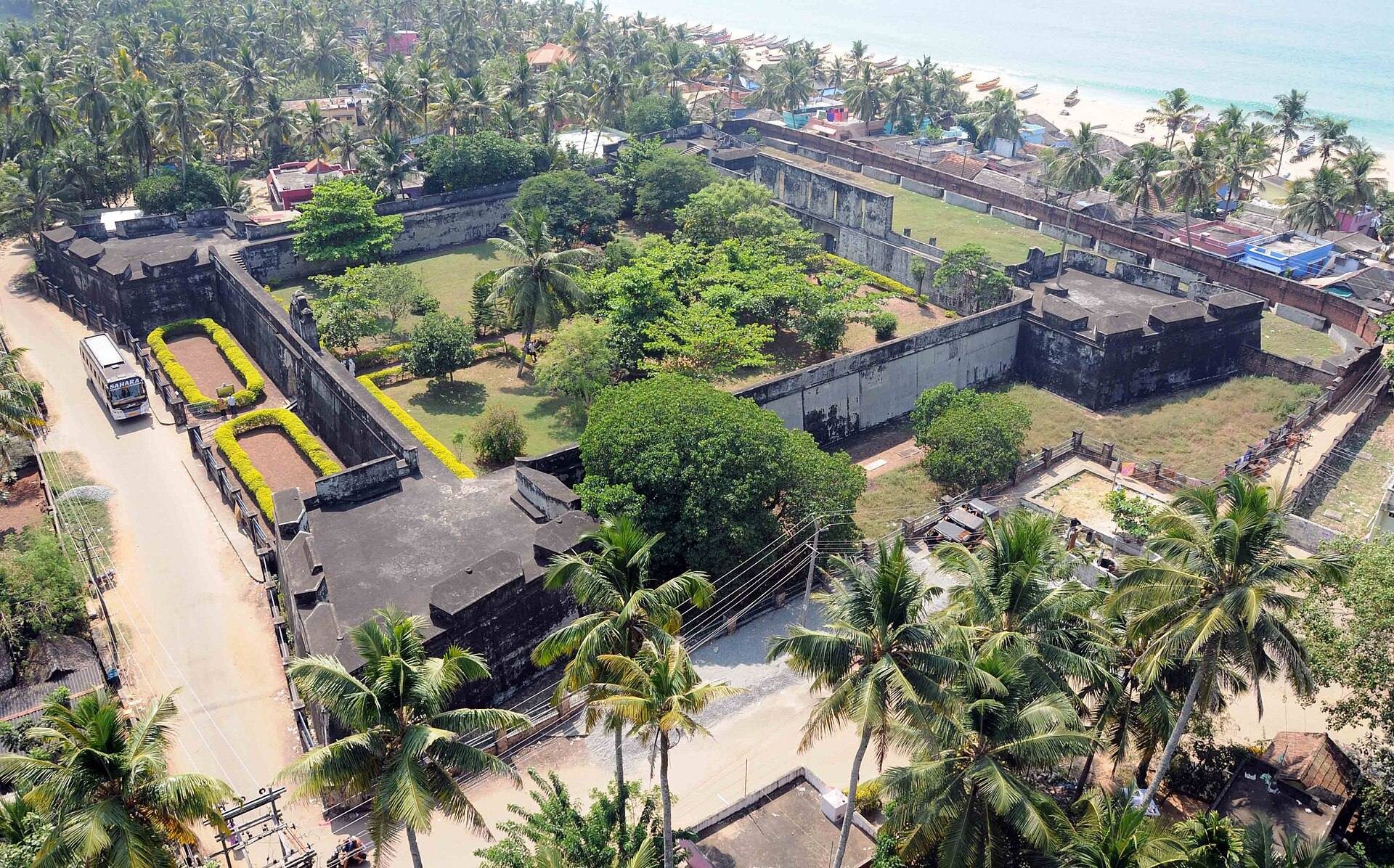
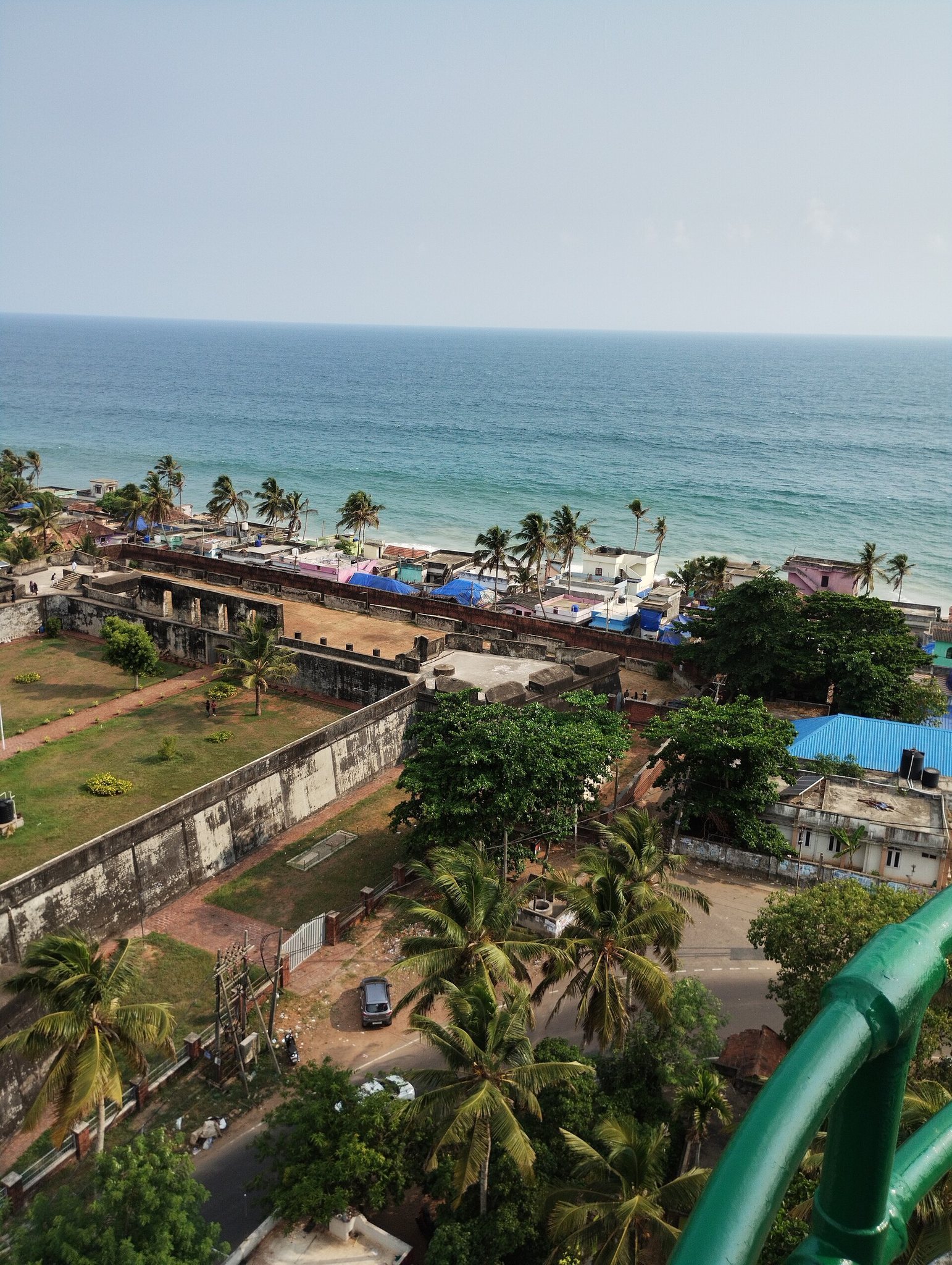
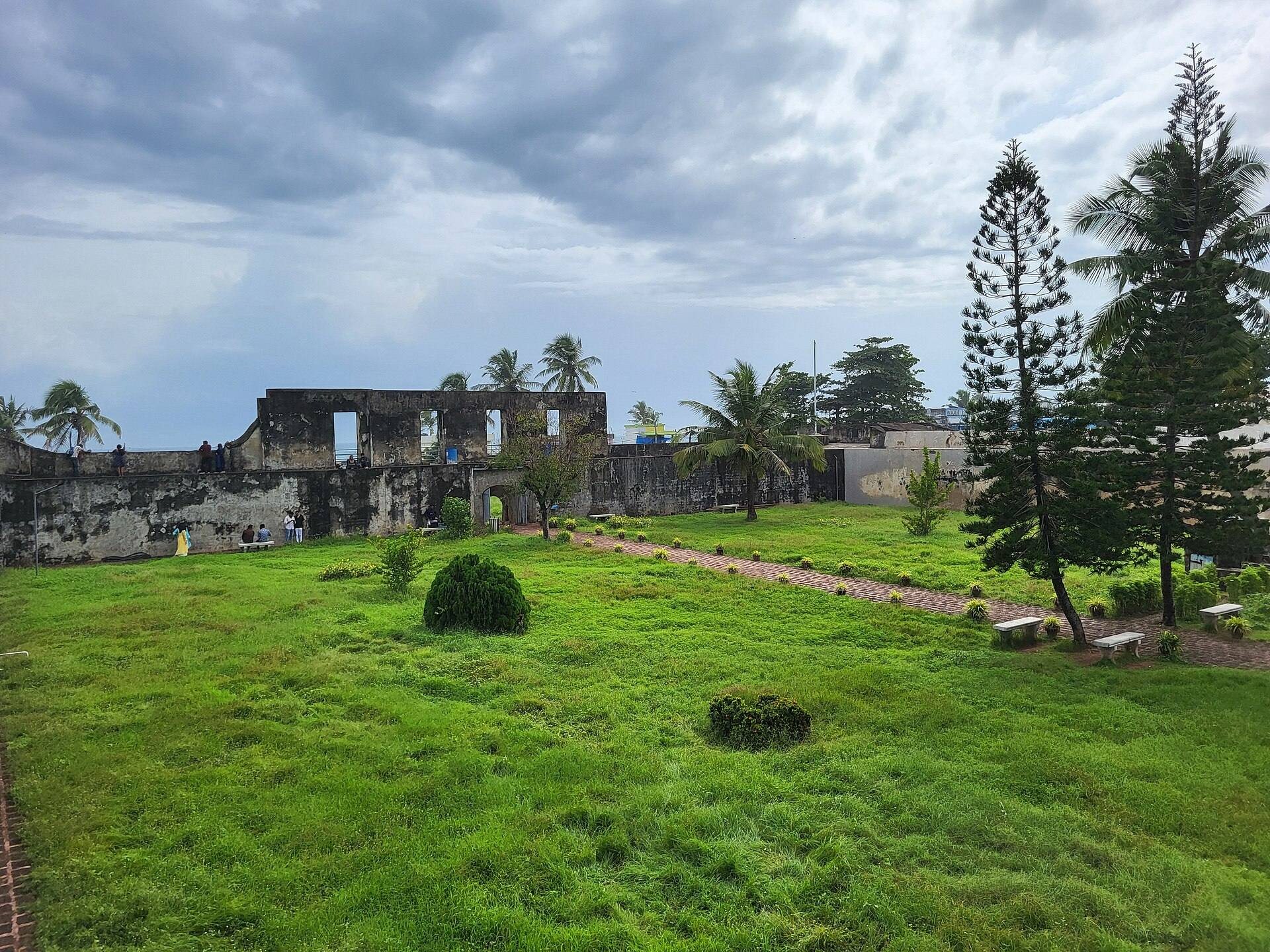
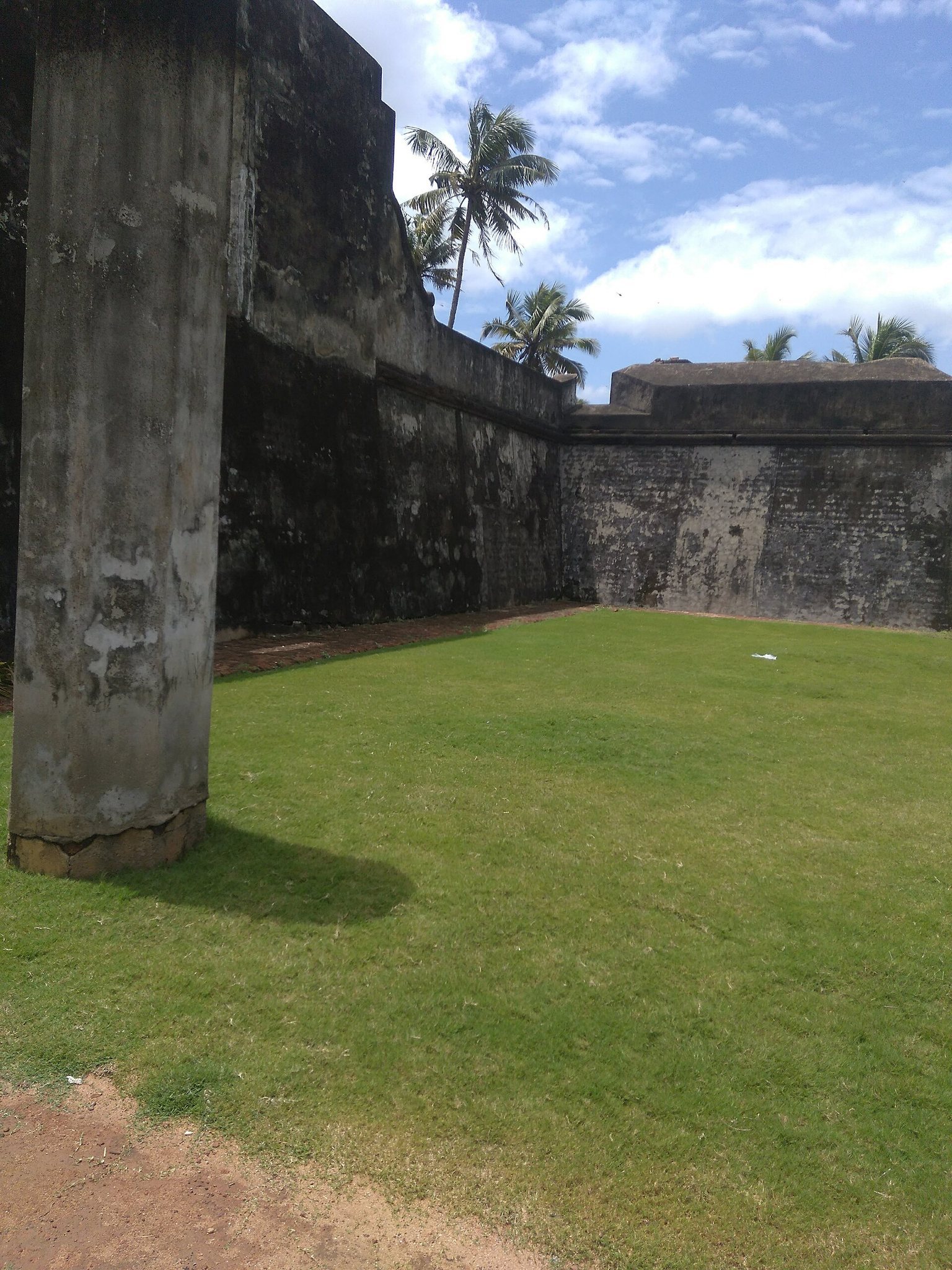
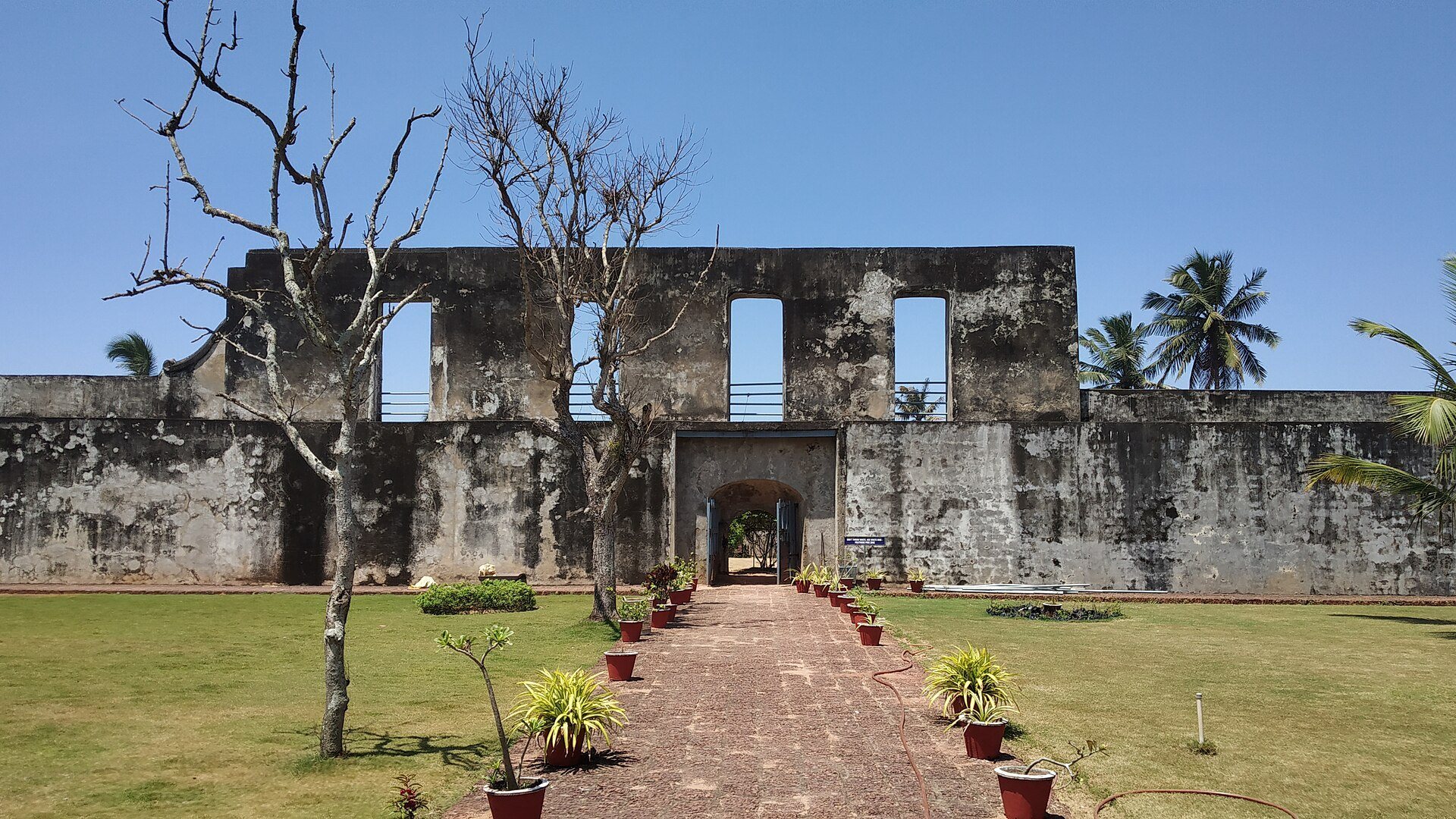
Anchuthengu Fort occupies a sandy spit and has a square plan measuring 256 feet, approximately 78 metres, on each side. Four bastions formed its corners. These projecting fortifications were designed to provide flanking fire along the adjoining walls, and each carried eight 18-pounder guns, cannon that fired shot weighing about 18 pounds.
The walls between the bastions carried seven or eight guns. A separate battery on the seaward side mounted approximately twenty 18- and 24-pounder guns. This arrangement gave the fort artillery along its walls as well as a concentrated position facing the sea.
Evidence of the 1721 siege
During the 1721 siege, the fort enclosed both the surviving garrison and approximately 150 local refugees whose houses outside the fort had been burned. Its artillery and grenades were used to repel the attack from three sides on 24 June. The fort’s records were carried to Madras during the siege, while Brabourne’s wife remained commemorated through her burial at the fort after her death in the early eighteenth century.