Altuna Runestone: An 11th-Century Viking Age Memorial in Sweden
Site at a Glance
- Popularity
- High
- Country
- Sweden
- Primary era
- Medieval
- Eras represented
- Medieval
- Civilizations
- Norse
- Site type
- Civic
- Remains
- Monument
On this page8 sections
History
Viking Age Memorial
The Altuna Runestone is an 11th-century memorial in Uppland, Sweden, carved in Viking Age Scandinavia. Its ornament follows the Urnes style, a Scandinavian tradition of slender, intertwined animal forms. The stone is unusual among surviving runestones for its exclusively pagan imagery. Many 11th-century stones were raised after Sweden became Christian, and at least half carry Christian-related inscriptions.
The inscription says Vifastr, Folkaðr, and possibly a third person raised the stone in memory of Holmfastr and Arnfastr, a father and son. The third name may be Guðvarr, though it could be a carving error for Gunnar. Both men died in an indoor fire. The wording does not settle whether the fire was accidental or a deliberate killing, perhaps an arson attack connected with a feud. The memorial is unique among runic inscriptions for commemorating people who burned to death indoors.
Balle and Frösten are identified as carvers, and Livsten may also be named, although his role is uncertain. Balle worked in southwestern Uppland and northern Södermanland in the second half of the 11th century. Balle and Livsten are associated with numerous other inscriptions in Uppland.
Rediscovery and Relocation
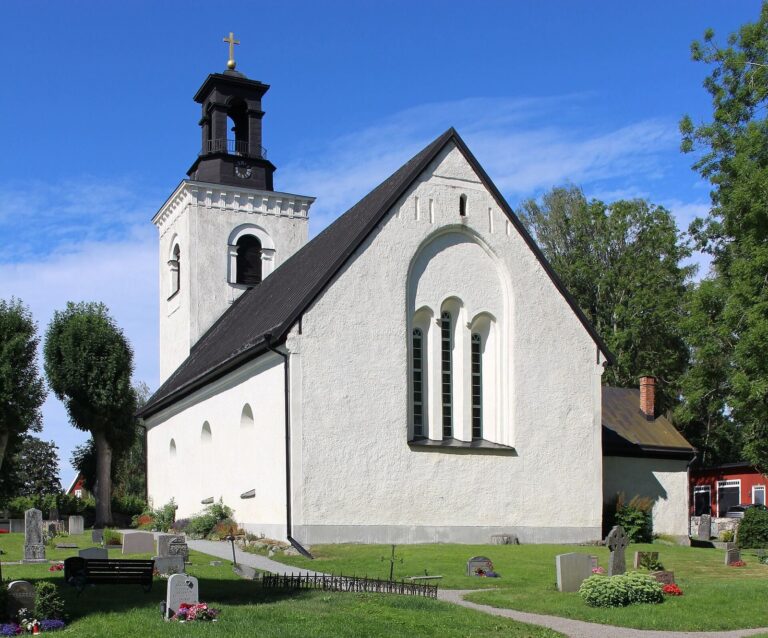
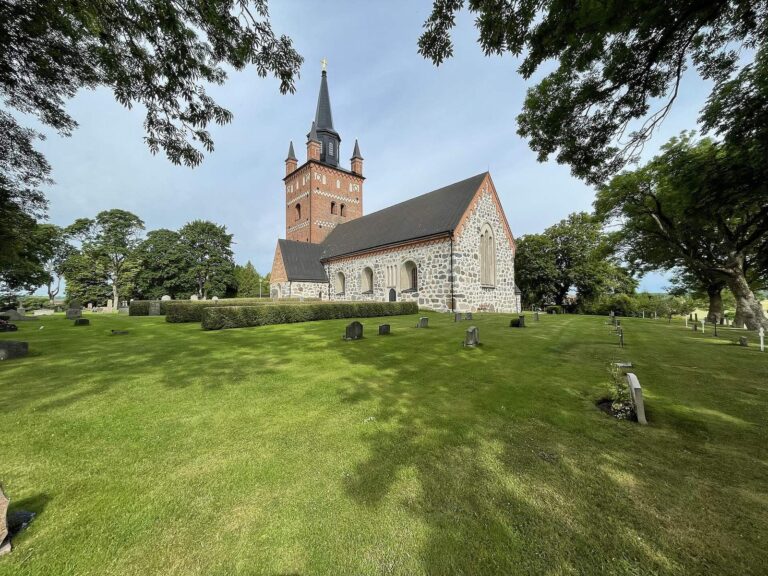
In 1918, local historian Karl Alexis Karlinder found the stone whitewashed and built into the stone base of a burial chapel at Altuna Church. He arranged for it to be uncovered and moved to its present position outside the church.
Remains
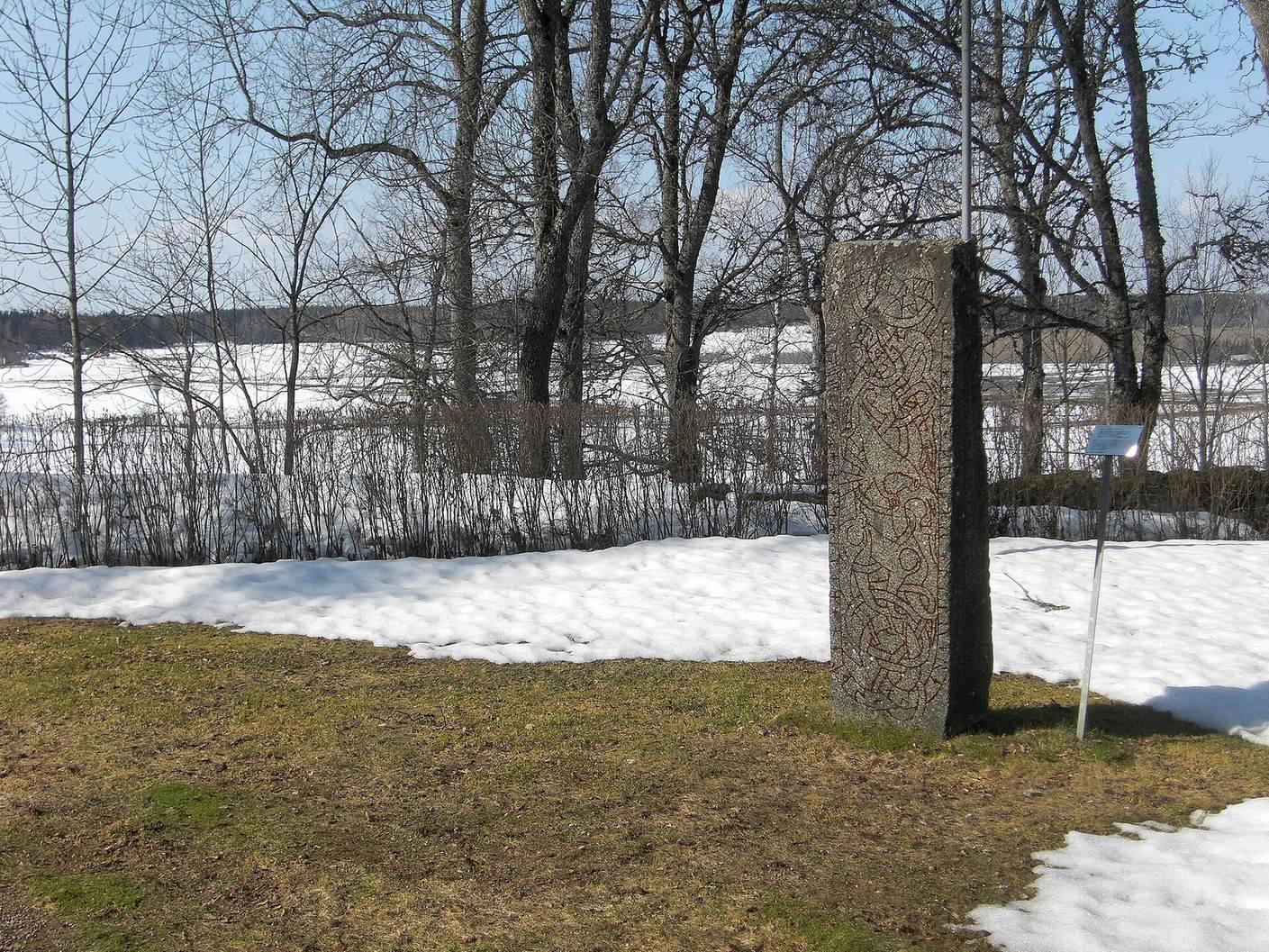
The granite runestone stands outside Altuna Church in Altuna parish, now within Enköping Municipality. Its broad front and two narrow sides are carved. The stone is 2.42 metres high; the front measures 0.60 metres across, while each narrow side is 0.31 metres wide at the base.
Inscription and Ornament
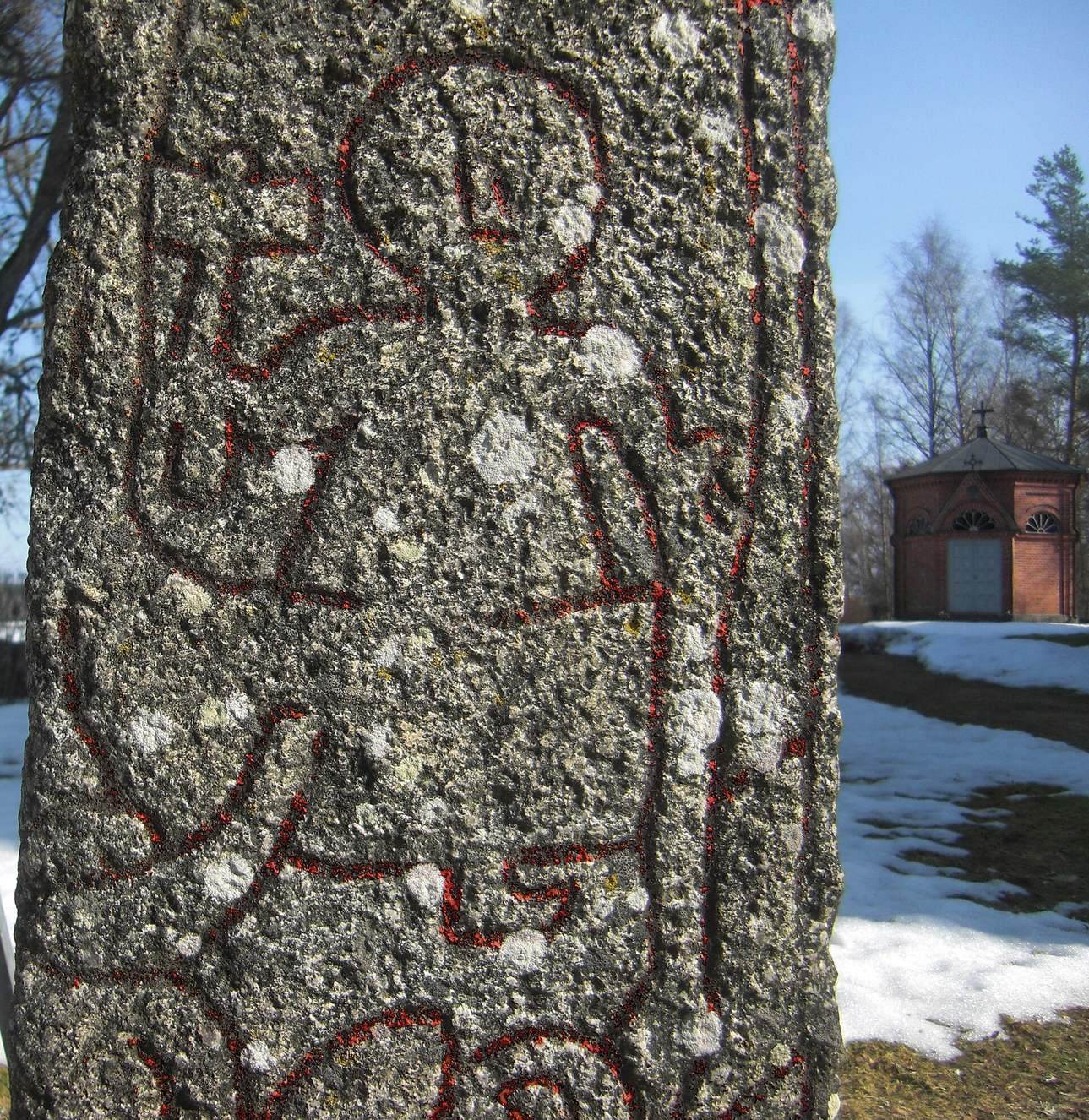
The top has broken away, damaging carvings on all three faces. Carving high on the right narrow side has flaked off with some runes and ornament. The front and left side are worn, and a notable image on the left is very shallow. The inscription uses the Younger Futhark, the runic alphabet used in Viking Age Scandinavia, and the stone is classified as Pr3, or Urnes style. Its stylized animals have side-facing heads, narrow almond-shaped eyes, and upward-curving details at the nose and neck. Several words use the rune þ unexpectedly, while the h in one name and the g in a word for “father and son” are difficult to explain.
Figural Carvings
Thor’s Fishing Scene
One narrow side shows Thor, the Norse god of thunder, fishing for Jörmungandr, the world serpent. The carving includes Thor, his fishing line and tackle, and the serpent. One of Thor’s legs passes through the boat’s hull, while the literary account describes both feet passing through it. Related depictions of the myth appear on the Ardre VIII image stone, the Hørdum stone, and the Gosforth Cross. A slab that may have belonged to a second Gosforth Cross also shows the fishing episode, with an ox head as bait.
Other Images
Other carvings include a separate rider and a bird of prey, perhaps an eagle or falcon, attacking a horse-like animal. Further images survive, but the stories or events they once represented are no longer understood.