Alba Docilia: A Roman Settlement and Villa Complex in Albisola Superiore
Site at a Glance
- Popularity
- Low
- Country
- Italy
- Primary era
- Classical
- Eras represented
- Classical
- Civilizations
- Roman
- Site type
- Domestic
- Remains
- Villa
On this page7 sections
History
Roman settlement and villa
Alba Docilia is a Roman settlement site in Albisola Superiore, Italy, whose surviving complex is generally interpreted as a rural villa, a residence associated with farming or production. The complex flourished most between the first and third centuries AD. Its scale and extensive domestic and productive areas have also prompted the possibility that it served as a mansio, a stopping station on a Roman route, near the Via Julia Augusta, a Roman road.
Ancient itineraries give the settlement’s name as Alba Docilia or Decelia, and it appears on the fourth-century Tabula Peutingeriana, a map of the Roman Empire’s roads. Nineteenth-century excavations helped identify the remains with this ancient place-name. The first element, Alba, usually referred to a settlement, though it may originally have meant a hill or height. Docilia was an adjective linked to the Liguri Docilii, an ancient people spread across the area between Albisola and Sassello.
Church and excavations
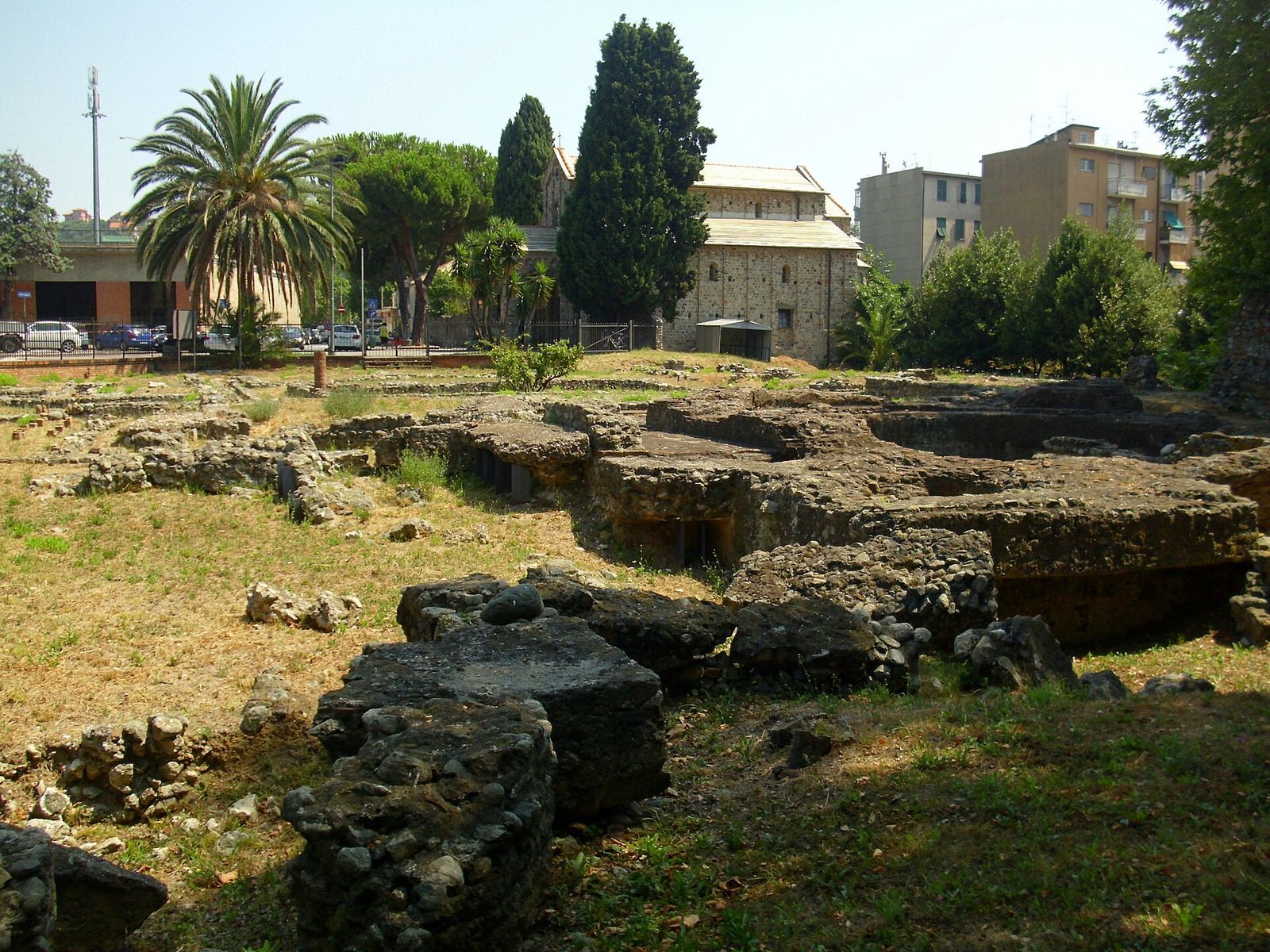
The old church of San Pietro was built over the villa. In the nineteenth century, the cleric G. B. Schiappapietra excavated much of the site in gardens and orchards around the church. Work during construction of the railway station in the 1950s, followed by further excavation in the 1970s, revealed the perimeter of the complex. Three Iron Age tombs were found nearby in 2008.
Remains
Layout and location
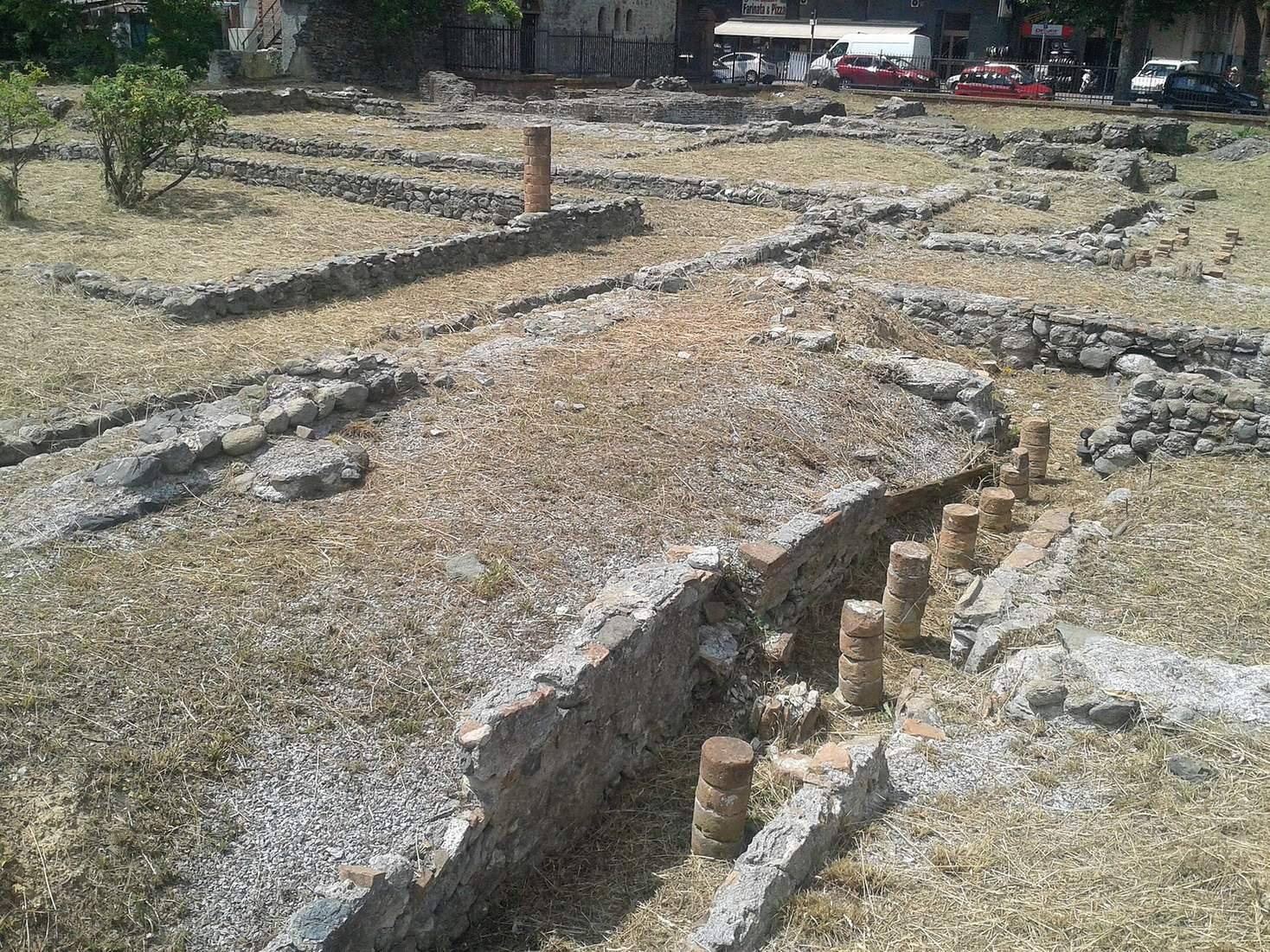
The visible remains lie in Piazza Giulio II, opposite the exit from Albisola Superiore railway station. The complex has residential and productive areas, and some rooms are concealed beneath the station.
Residential quarter
The residential area includes several rooms and an extensive bath complex arranged around two peristyles, open courtyards surrounded by columns.
Productive sector
The productive area is organized around a large central courtyard. Some rooms now hidden beneath the station were probably used for wine production.