Aile Castle: A Neo-Gothic Residence in Vevey


Site at a Glance
- Rating
- 4.4
- Popularity
- Very Low
- Country
- Switzerland
- Primary era
- Modern
- External website
- Open
- Eras represented
- Modern
- Civilizations
- Swiss
- Site type
- Domestic
- Remains
- Castle
On this page7 sections
History
Aile Castle is a Neo-Gothic castle in Vevey, Switzerland, built between 1840 and 1846 as a nineteenth-century replacement for an earlier pleasure residence. Also known as Couvreu Castle, after the local political family that owned it, the building occupies a site connected with Vevey’s market and waterfront history.
Market halls and the first castle
The site held the city’s former market halls and an adjoining inn from 1545. The castle’s name is linked to the inn’s sign, which showed a torn-off wing. The Latin word ala, meaning “wing,” was also associated with the term used for market halls. Around 1680, Vincent Hertner demolished the earlier buildings and replaced them with a pleasure castle fitted with turrets at its corners.
The Couvreu rebuilding
Jacques-Edouard Couvreu, a nineteenth-century banker, inherited the older Aile property from his grandfather in 1814. During a journey to England in 1827, he encountered English Gothic and Neo-Gothic architecture, a nineteenth-century revival that reinterpreted forms associated with medieval Gothic buildings. From 1828 he planned a renovation, but the work could not begin until the death of an elderly aunt who lived in the castle in 1839.
The present building was erected from 1840 to 1846. Couvreu developed it as a Neo-Gothic monument partly inspired by English architecture, working with the Vevey architect Philippe Franel, the Lausanne architect Henri Perregaux, and the Geneva architect Jacques-Louis Brocher.
Twentieth-century residence and later restoration
From 1948 to 1976, Aile Castle was the residence of the French diplomat and writer Paul Morand and his wife, Hélène Chrisoveloni. Vevey purchased the property in 1988 intending to turn it into a hotel complex, but the plan failed because investment was not secured. The building subsequently became a squat.
Following a popular vote in 2007, the castle was sold to the German businessman Bernd Grohe, who began extensive work to convert it into a luxury residence. Christophe Amsler directed the restoration from 2008 to 2014. Aile Castle is listed as a Swiss Cultural Property of National Significance, a national heritage designation for culturally significant sites and objects in Switzerland.
Remains
Setting and exterior
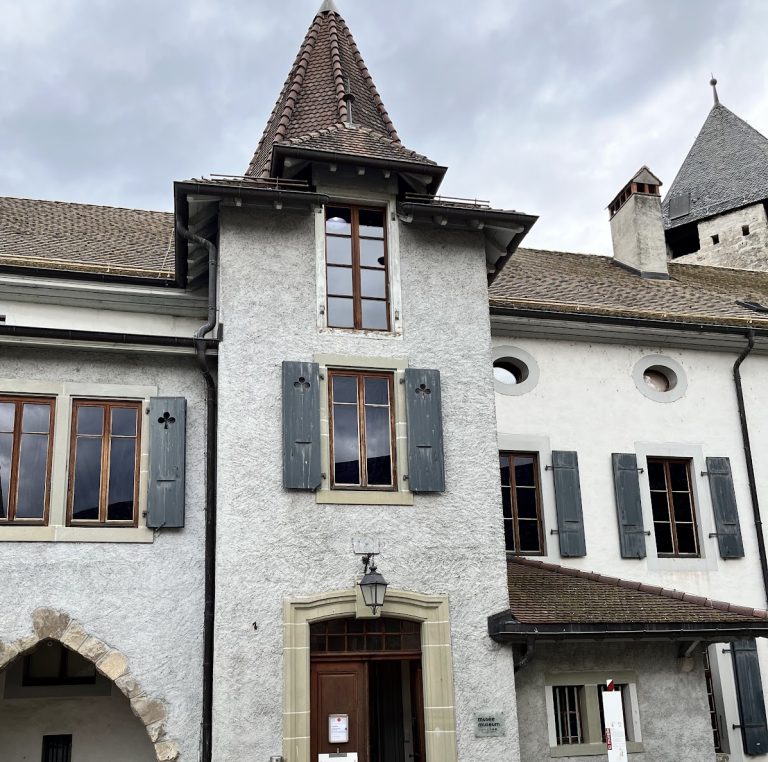
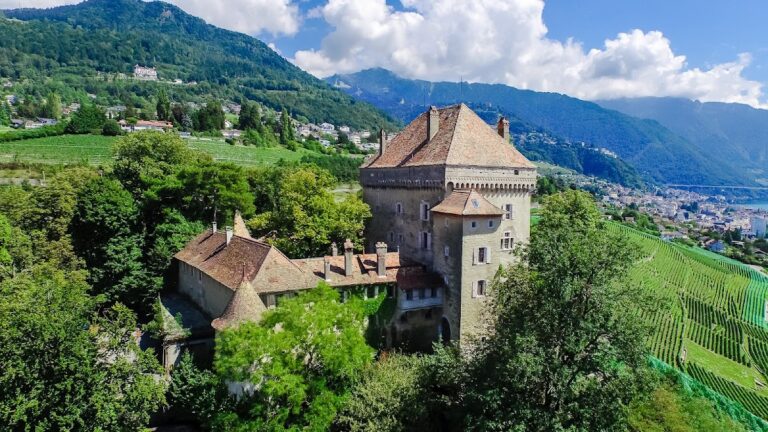
Aile Castle stands on the former market-hall and inn site between Lake Geneva’s shore and Vevey’s Market Square. The nineteenth-century building has richly ornamented facades with sculpted decoration in molasse, a relatively soft sandstone formed from sediments eroded from the Alps and widely used for carved architectural work in the Lake Geneva region. Its exterior replaced the corner-turreted pleasure castle built around 1680.
Interior and conversion
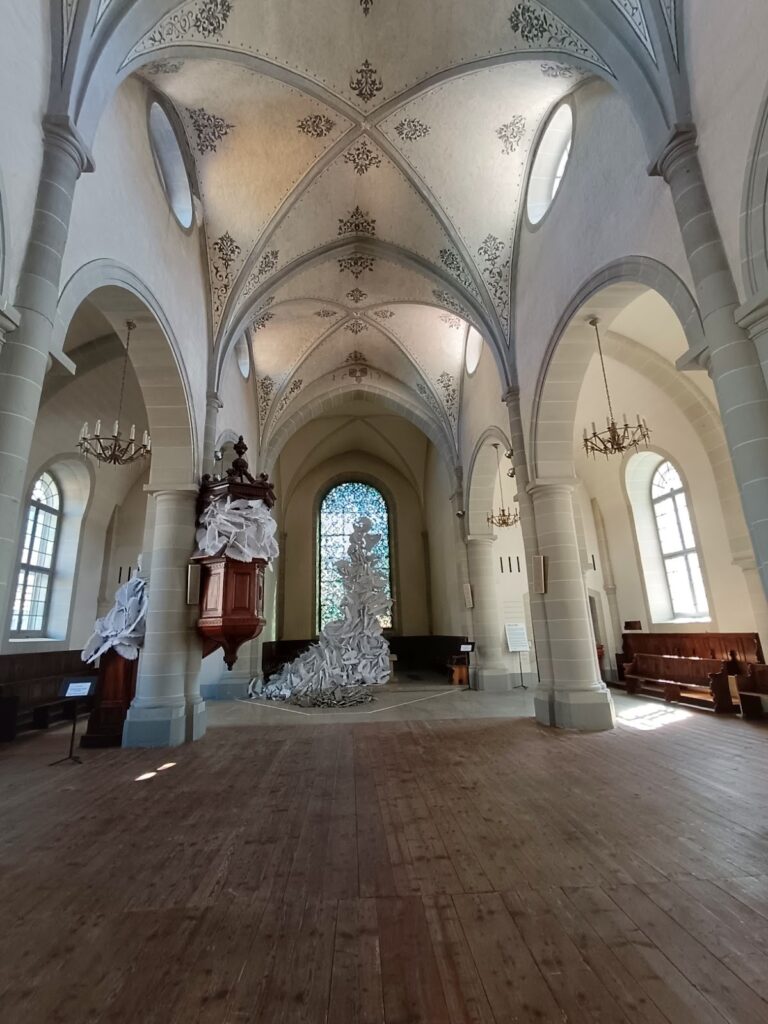
Inside, painted ceilings and marquetry floors form part of the surviving decorative scheme. The restoration and conversion carried out between 2008 and 2014 created a luxury residence divided into four apartments. One apartment measures more than 1,500 square metres.