Abbey of Saint-Arnoul: A Medieval Monastery in Metz
Site at a Glance
- Rating
- 4.6
- Popularity
- Low
- Country
- France
- Primary era
- Early Modern
- Eras represented
- Early Modern, Modern
- Civilizations
- French
- Site type
- Religious
- Remains
- Monastery
On this page13 sections
History
The Abbey of Saint-Arnoul was a Christian monastic house in Metz, France, established by the sixth century. A foundation tradition attributed an earlier basilica dedicated to Saint John the Evangelist to Bishop Patient of Metz in the second century, but the abbey’s known history begins in the sixth. It was called the Church of the Holy Apostles until 715. Relics of Arnulf of Metz were placed there in 641, and in 717 the abbey took his name.
Carolingian burial place and rebuilding
Charlemagne made the abbey a burial place for members of his family. Those buried there included his wife Hildegarde, his sisters and sons, Emperor Louis the Pious, and Bishop Drogo, a member of the Carolingian family. The abbey was later destroyed and rebuilt at its original location. The cause is uncertain: ninth-century Norman raids and later Hungarian attacks have both been proposed. It was rebuilt again in the tenth century, and a larger church was consecrated in 1049. That church suffered a fire in 1097.
Benedictine reform and medieval development
In 942, Bishop Adalberon I replaced the existing clergy with monks from Gorze under Abbot Heribert, establishing Benedictine monastic life governed by the Rule of Saint Benedict. Around 996–997, Bishop Adalberon II entrusted William of Volpiano with continuing the reform. Around 1000, William appointed Benoit, his former pupil at Saint-Bénigne in Dijon. Benoit became abbot after William’s death in 1015. Benoit’s successors were his prior Odo, a monastic officer subordinate to an abbot, and then Warin of Gorze. Relics of Gorgon, a fourth-century Roman martyr, were brought to the abbey in the eleventh century, during its medieval high point.
The abbey held lands and villages in the region around Metz. Arnoul gave it Vigy on 23 June 715, and Hildegarde gave Cheminot on 13 March 783. A charter of Charles II the Bald records the gift of Rémilly and its Chapel of Saint-Martin on 24 February 842; Charles II gave Jussy in 869. The abbey also held Sanry, Befey, then an annex of Saint-Hubert, and part of Chérisey, given by Cunégonde of Luxembourg in 1112. Ecclesiastically, the abbey belonged to the Diocese of Metz, within the province of Trier until 1780 and the province of Besançon from 1801. A priory at Lay-Saint-Christophe affiliated with the Congregation of Saint-Vanne, a Benedictine reform movement, in 1609; it was united with the Royal Missions Seminary of Nancy in 1746.
Relocation after 1552
During the 1552 siege of Metz by Holy Roman Emperor Charles V, the French demolished the abbey to strengthen the city’s defenses. The monks moved inside the walls to the Dominican Convent of the Preachers, taking the imperial tombs with them. French king Henry II commissioned a mausoleum for Louis the Pious in the new abbey church. It was intended to honor Carolingian imperial prestige, which the Valois dynasty claimed as part of its inheritance.
Revolution and military use
The Benedictines remained at the abbey until 1790. During the French Revolution, the property was confiscated, the monks were expelled, and the imperial tombs were destroyed. Vines were planted on part of the former abbey site afterward. In 1794, an artillery and engineering school moved into the convent buildings. The abbey church disappeared during the nineteenth century. Following German annexation in 1872, the French artillery school was replaced by a German military school.
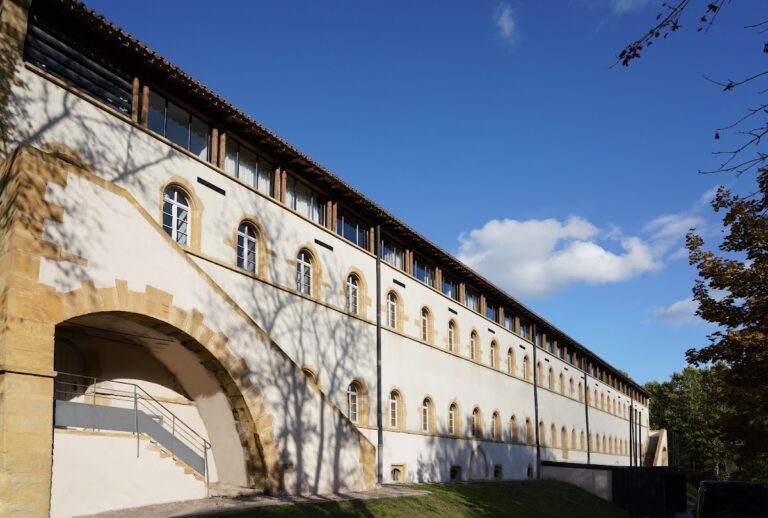
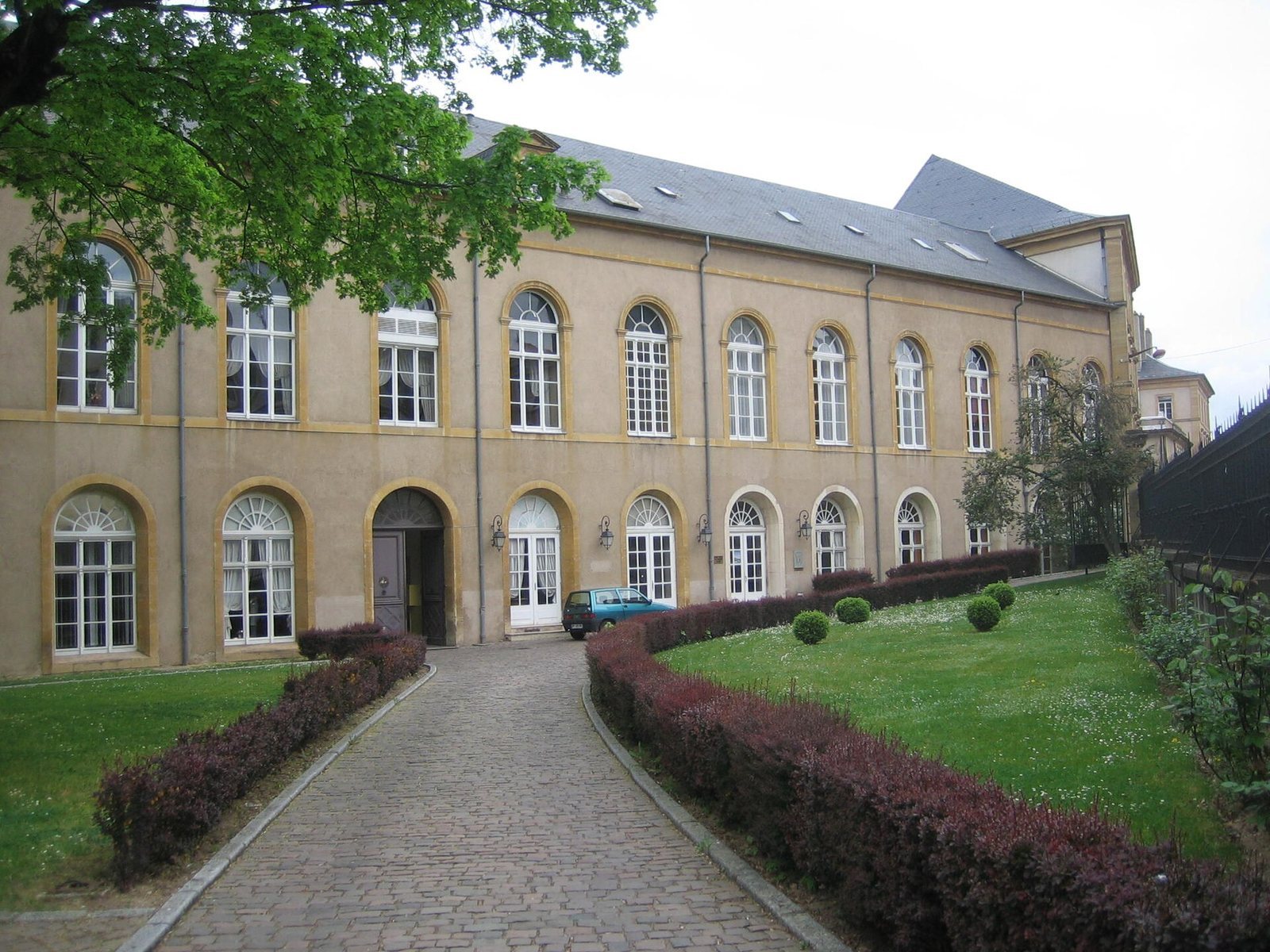
In April 1919, the former abbey became the headquarters of the Metz Officers’ Circle. It remains in French military use. Since 1999, it has served as a 34-room lodging facility for the Metz defense base’s mess, under the name Cercle mess Lasalle annexe Saint-Arnoul.
Remains
The remains relate to two locations: the original abbey outside Metz’s ramparts and the Dominican convent to which it moved in 1552. The original site’s precise position is disputed. The convent buildings, apart from the church, were rebuilt in the seventeenth century in a predominantly Classical style.
The original abbey site
Church and setting
The abbey stood outside Metz’s ramparts near the Roman road toward Toul and Lyon. Its site has been placed either at Bon-Secours Hospital or at the location of the present Church of Saint Theresa of the Child Jesus, opposite the hospital. The church consecrated in 1049 was described as more imposing than its predecessor, but it had disappeared by the nineteenth century.
Chapel and Pietà
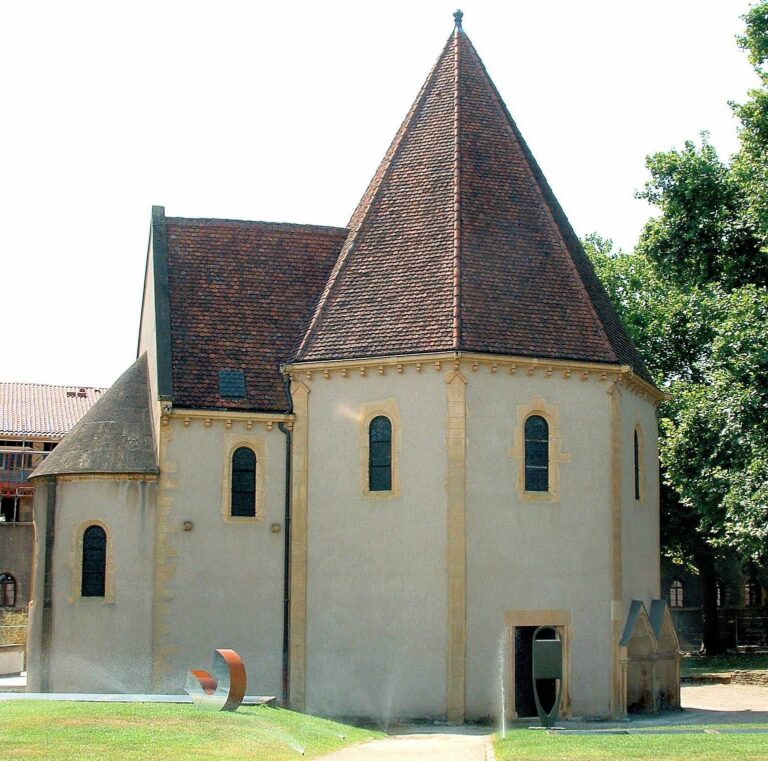
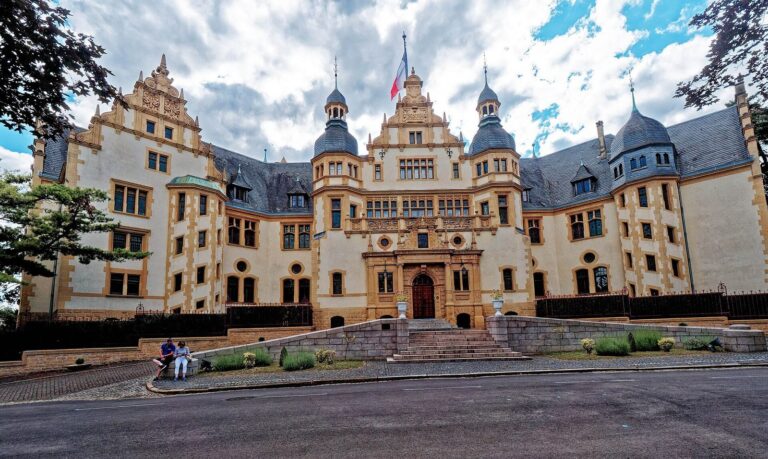
A chapel associated with the abbey stood on the site of the present tennis court behind the Governor’s Palace. A polychrome Pietà, a carving of Mary mourning Christ, was carved around 1520 and concealed above an entrance to the chapel during the French Revolution. It was rediscovered during building work in 1990. At a 2007 symposium, experts praised it as among the finest known polychrome Pietàs.
The relocated abbey
Dominican convent
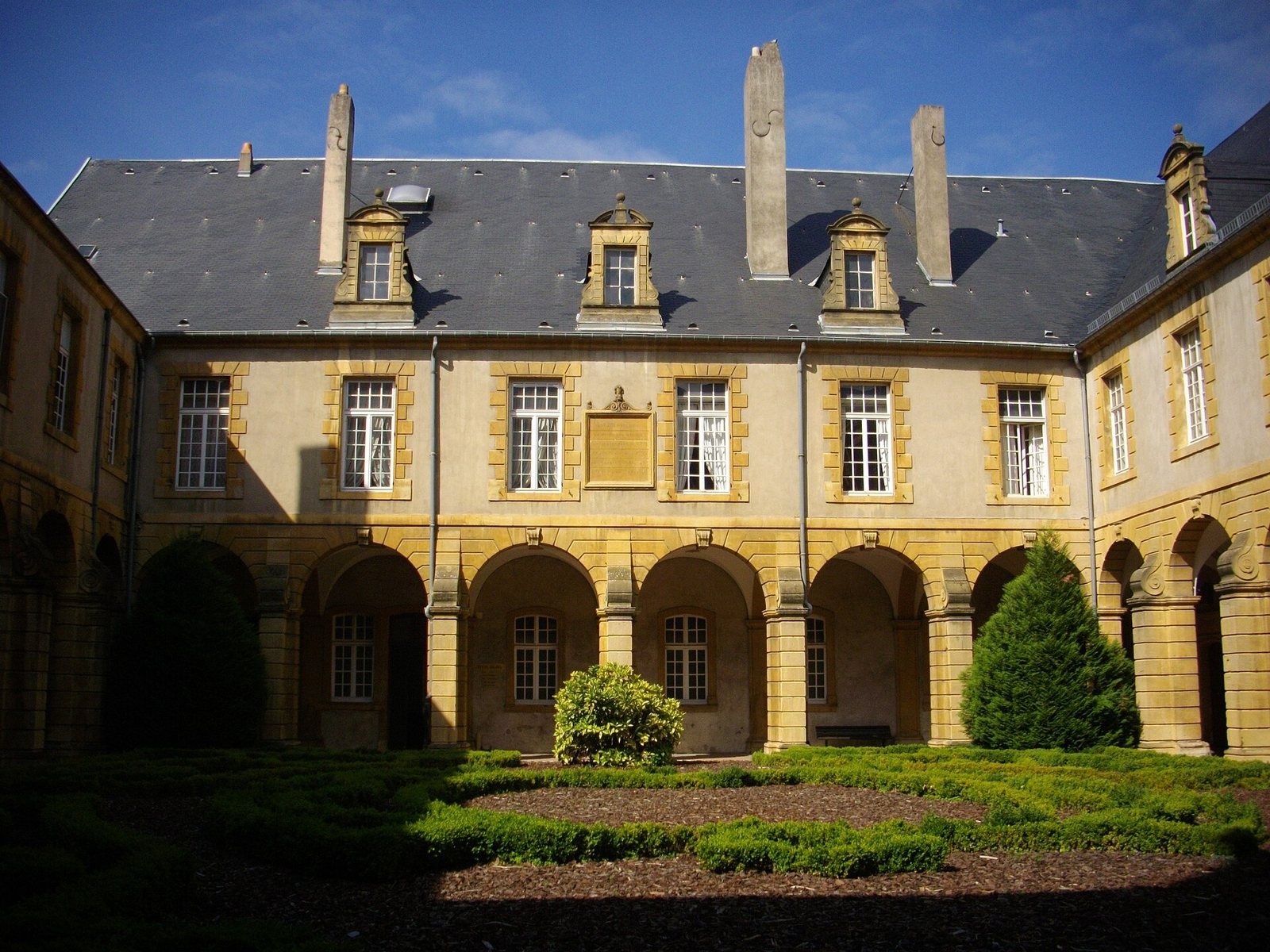
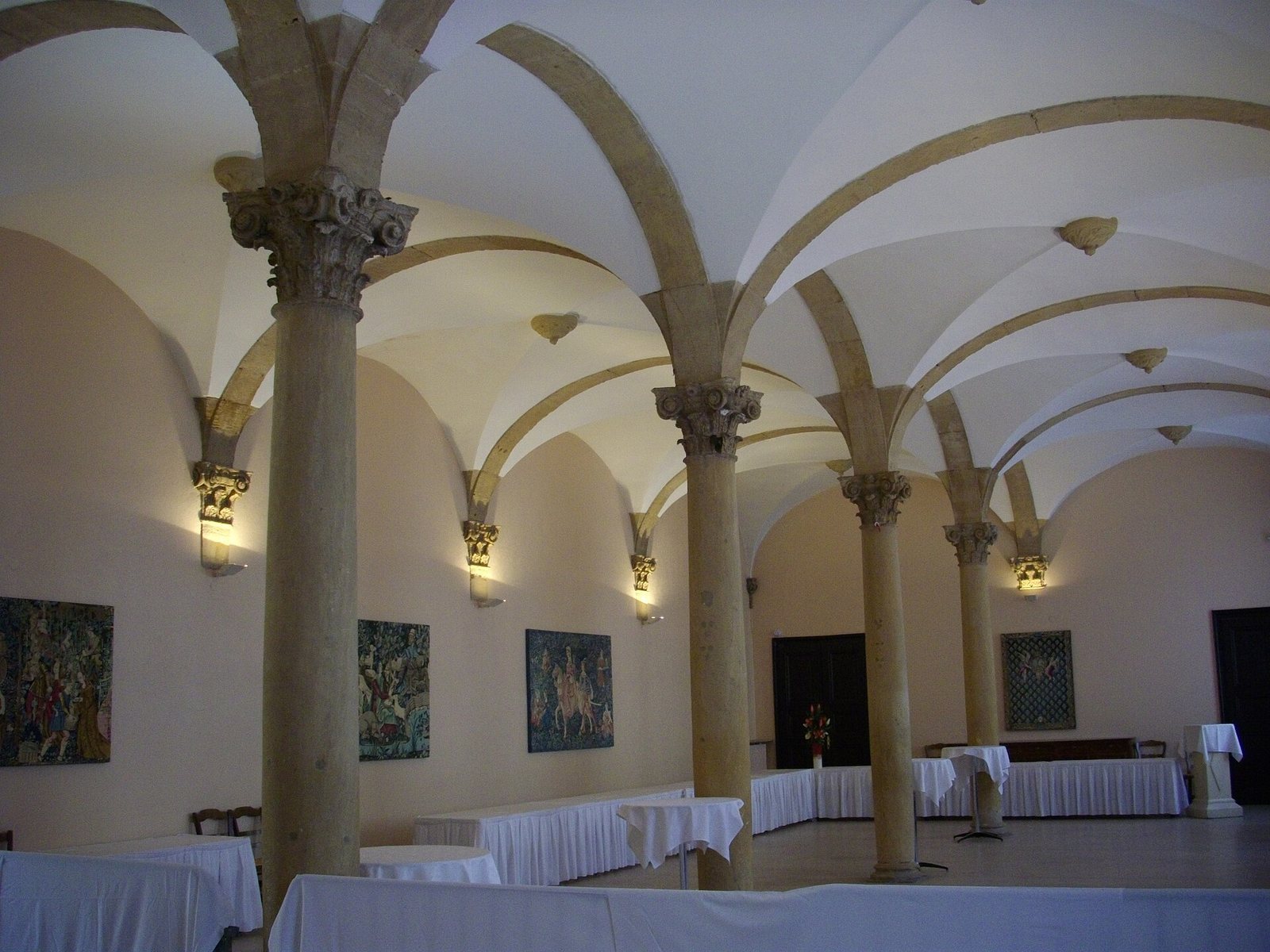
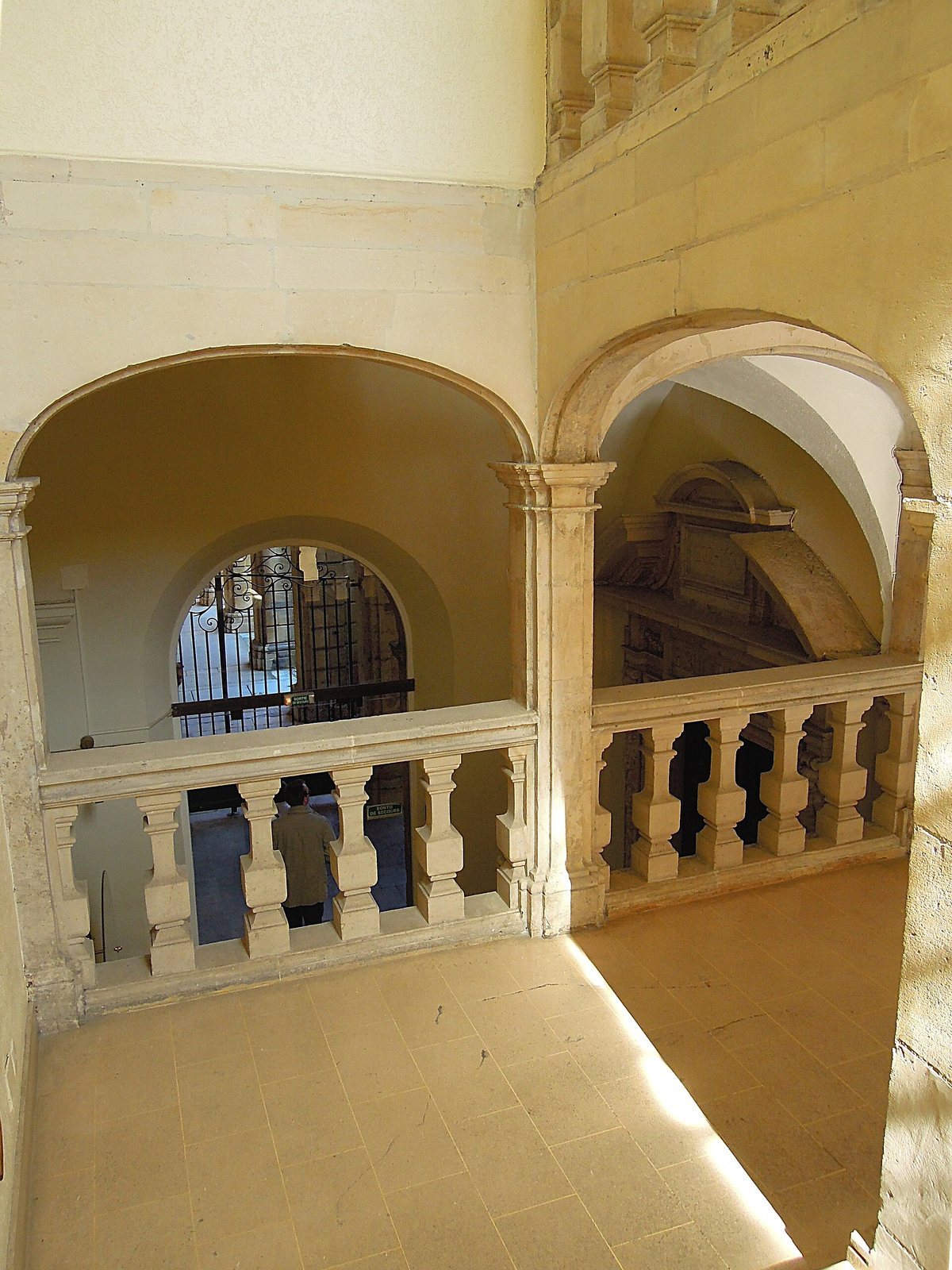
The abbey moved into the Dominican Convent of the Preachers, founded in 1221. The convent’s surviving buildings include its cloister, former refectory, and former sacristy. These belong to the rebuilt seventeenth-century complex, whose design is predominantly Classical.
Mausoleum of Louis the Pious
The mausoleum stood on the right-hand side of the altar when viewed from the nave. An eighteenth-century drawing preserves its appearance. Louis’s effigy rested directly on the lid of an antique sarcophagus and extended across almost its full length. He was shown crowned, holding a sceptre in his right hand, with his head on a cushion and his feet unsupported. Two columns rising from the lid supported the crowning element. Fluted supports, shells, and cartouches decorated the sarcophagus. Its chest rested on three sculpted lions with human faces, each holding a two-part shield bearing a royal lily and imperial eagle. Part of the tomb survives in the Metz museums.
Observation turret
A 42-metre turret was built during the Second Empire, Napoleon III’s regime from 1852 to 1870, to observe artillery maneuvers on Mont Saint-Quentin.