Abbey of Boulbonne: A Former Cistercian Monastery in France
Site at a Glance
- Rating
- 4.6
- Popularity
- Very Low
- Country
- France
- Primary era
- Early Modern
- External website
- Open
- Eras represented
- Early Modern
- Civilizations
- French
- Site type
- Religious
- Remains
- Monastery
On this page12 sections
History
The abbey of Boulbonne is a former Cistercian abbey in France, located at Cintegabelle, whose history began with a foundation near the Raunier in 1129. It became part of the Cistercian Order in 1150 and developed close ties with the Counts of Foix, who protected it and used it as a burial place.
Foundation and Cistercian development
The first monastery stood about 14 kilometres from the present site, in what is now Ariège. Its foundation is associated with Roger III, Count of Foix, and its initial community consisted of Benedictine monks from Saint-Michel-de-Cuxa, probably including monks connected with the earlier religious settlement at Tramesaygues. In 1150, Boulbonne entered the Cistercian Order, a reform movement that emphasized communal discipline, manual labor, and relatively austere monastic practice. It became affiliated with Bonnefont Abbey within the Cistercian network organized from Morimond.
The Counts of Foix continued to support Boulbonne. Roger IV of Foix was buried there, and the abbey received extensive forests from the counts in 1160 and the grange of Bonrepos in 1163. A grange was a monastic agricultural estate managed to support an abbey’s economy. Boulbonne also established the Cistercian monastery of Óvila in 1175, joined the Vajal priory near Saverdun in 1196, and participated in the foundation of the bastide of Mazères in 1253. In 1218, Saint-Michel-de-Cuxa transferred its Tramesaygues priory to Boulbonne, and the abbey later founded a college in Toulouse.
Political and religious connections
Boulbonne sometimes served as a setting for major political affairs. On 1 June 1272, Philip III of France and James I of Aragon met there with members of their families and retinues to discuss the terms of the capitulation of Roger-Bernard III, Count of Foix, who was under siege by Philip III. Simon IV de Montfort, the French nobleman and military commander who led the Albigensian Crusade in southern France, stayed at Boulbonne in 1213 before the Battle of Muret.
The monastery was also connected with important churchmen. Jacques Fournier entered Boulbonne as a monk and became Pope Benedict XII in 1334. The abbey’s religious and dynastic associations were further reflected in its role as the burial place of the Counts of Foix and Cardinal Curti, a professed monk of Boulbonne and one of its benefactors.
Destruction and rebuilding
In September 1567, during the French Wars of Religion, approximately 1,500 Huguenot troops under Captain Jean-Claude de Lévis d’Audon of the House of Léran burned, plundered, and destroyed the abbey. The monks withdrew to the Boulbonne college or house in Toulouse.
Reconstruction began in 1632 at the present site of Tramesaygues, at Cintegabelle. The location had previously contained a priory established around 972 by monks from Saint-Michel-de-Cuxa. Edmond Martène and Ursin Durand described the rebuilt abbey in 1717 as one of the most beautiful abbeys of the Cistercian Order. In 1707, its possessions included six principal granges at Tramesaygues, Le Baissac, Artenac, Ampouilhac, and two sites at Beaulias. The rebuilt church was consecrated in 1742 by Jean-Baptiste de Champflour, Bishop of Mirepoix.
Revolution and later preservation
At the French Revolution, the community comprised nine monks and four lay brothers. A lay brother, or convers, generally carried out practical and agricultural work rather than following the full clerical regimen of the choir monks. An inventory was made from 14 March to 15 May 1790 in preparation for selling the abbey’s property as national property. The auction took place on 12 June 1791 at the district office in Muret. The abbey was dissolved, the remaining community left, and much of its movable property was transferred to the parish church or disappeared.
The southeast corner of the former abbey was bought by Norbert Moulas from M. Azam in 1842, after which the surviving buildings remained in the Moulas family. Boulbonne has been protected as a French historic monument since 1981.
The funerary remains of the Counts of Foix were rediscovered accidentally among the ruins at Mazères at the beginning of 1753. Their ashes were transferred to Cintegabelle during a ceremony on 15 May 1753, preserving the abbey’s association with the Foix dynasty at its rebuilt site.
Remains
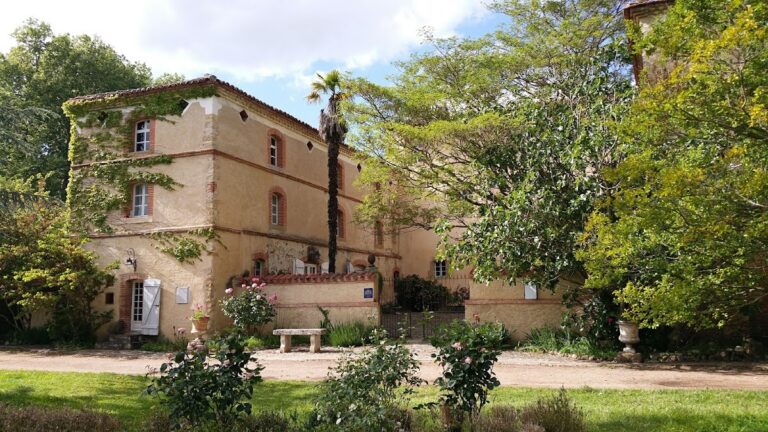
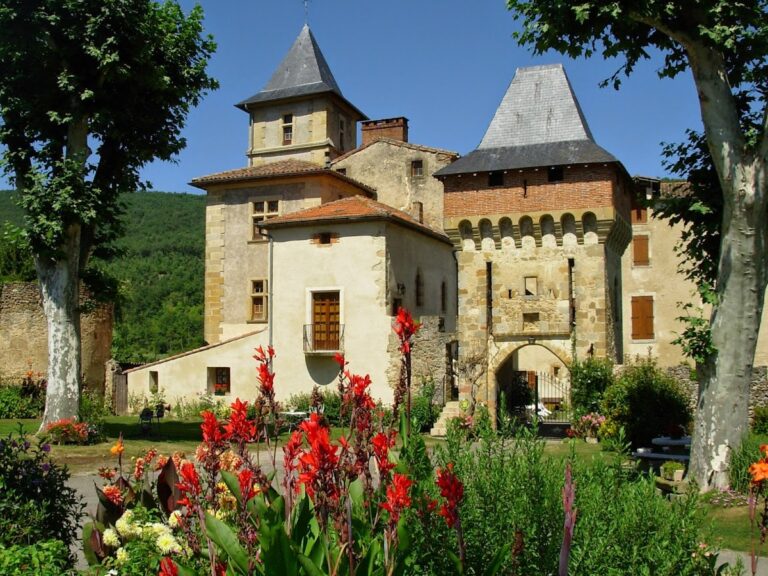
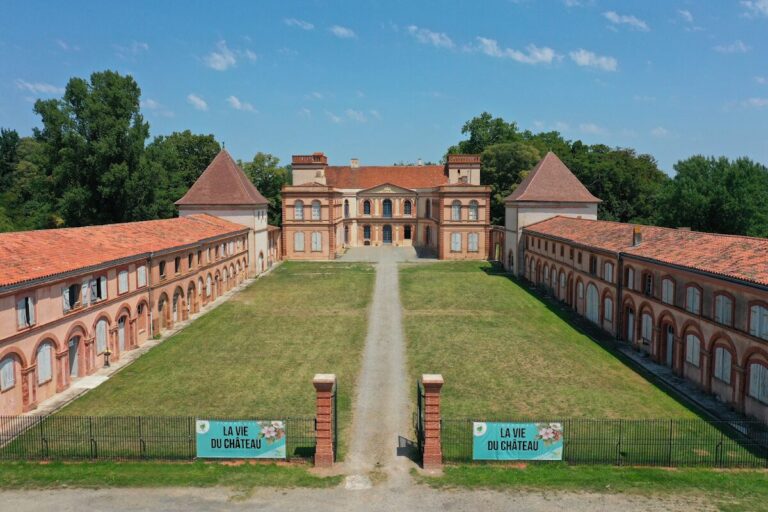
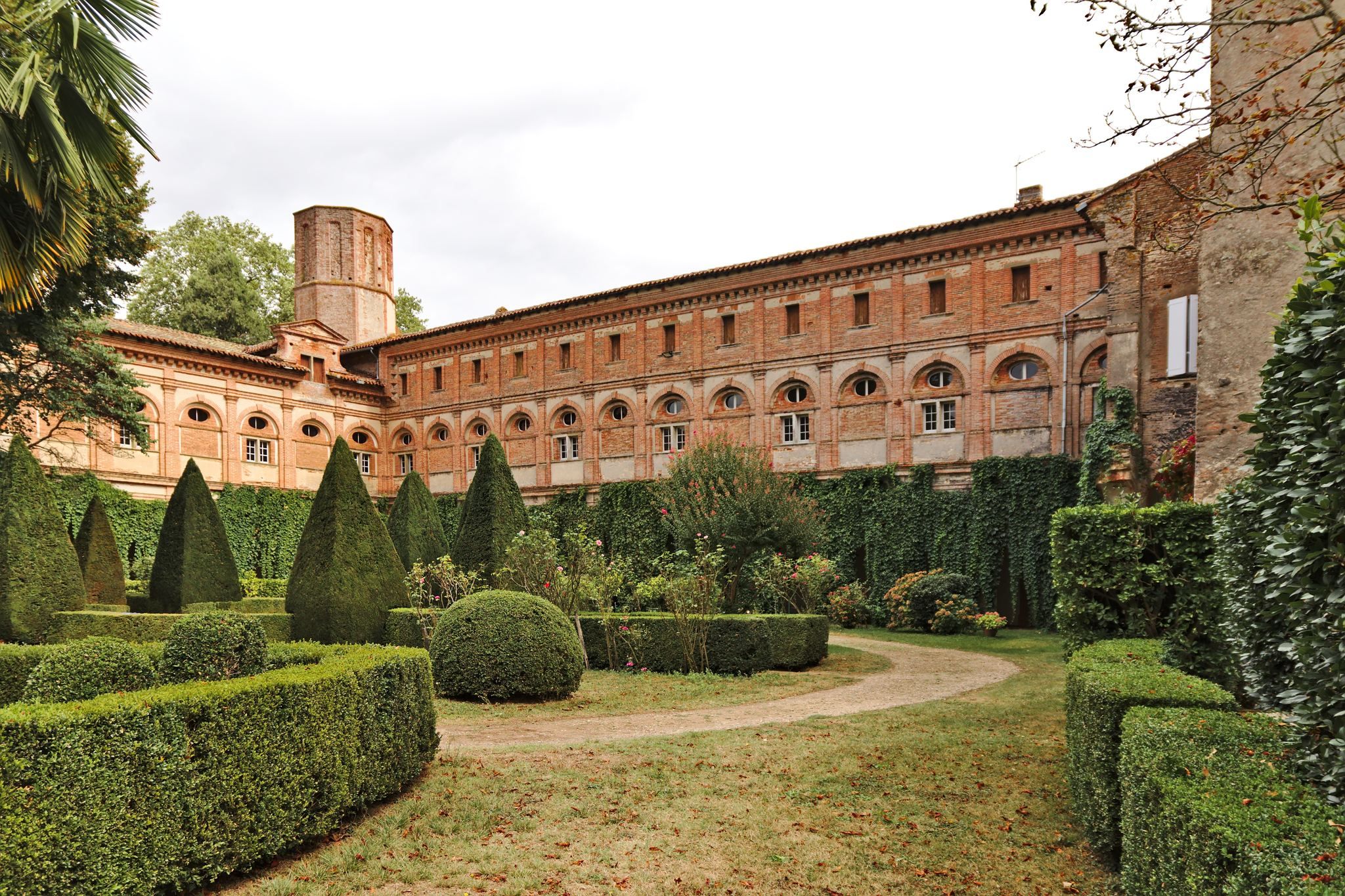
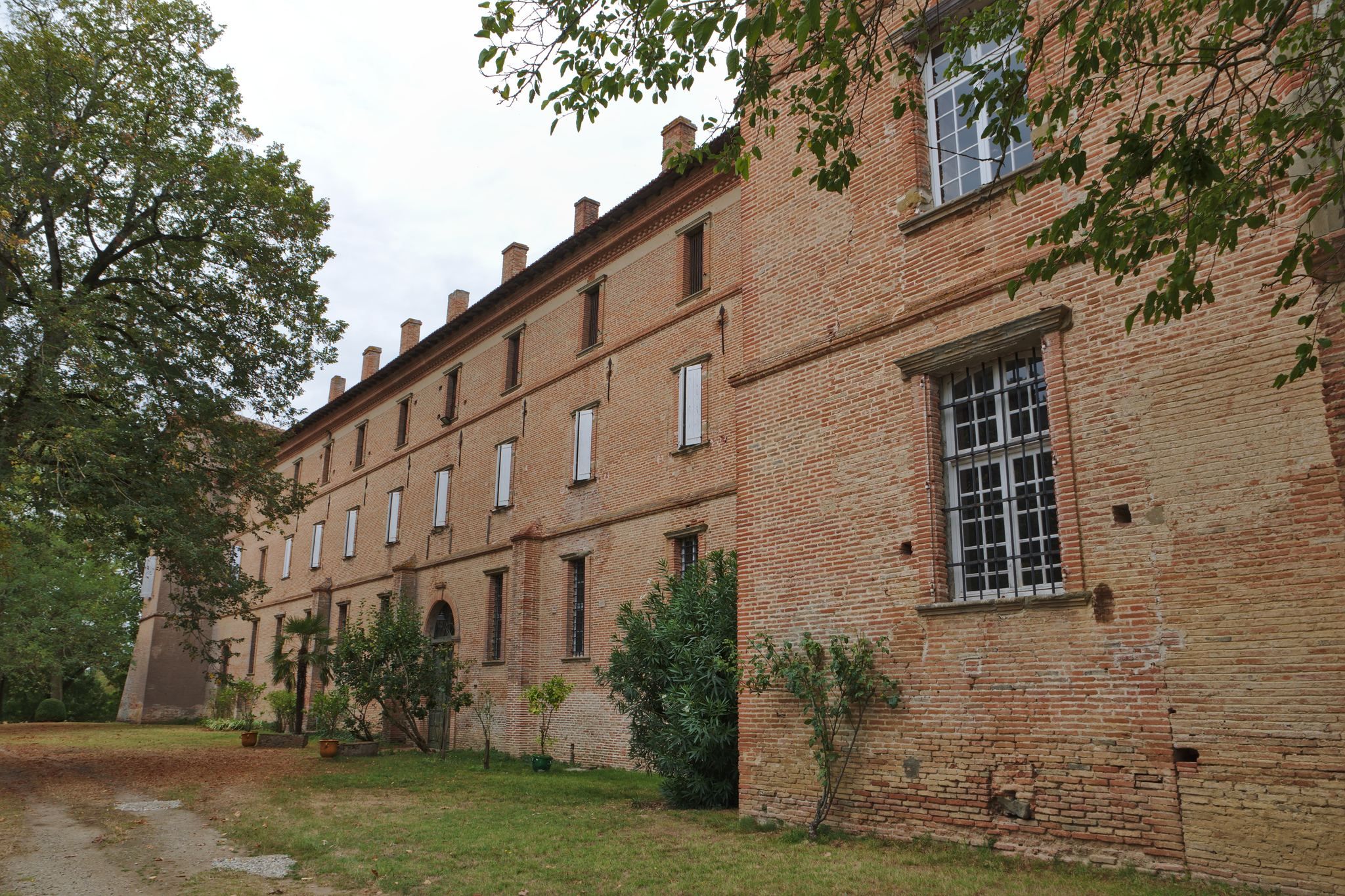
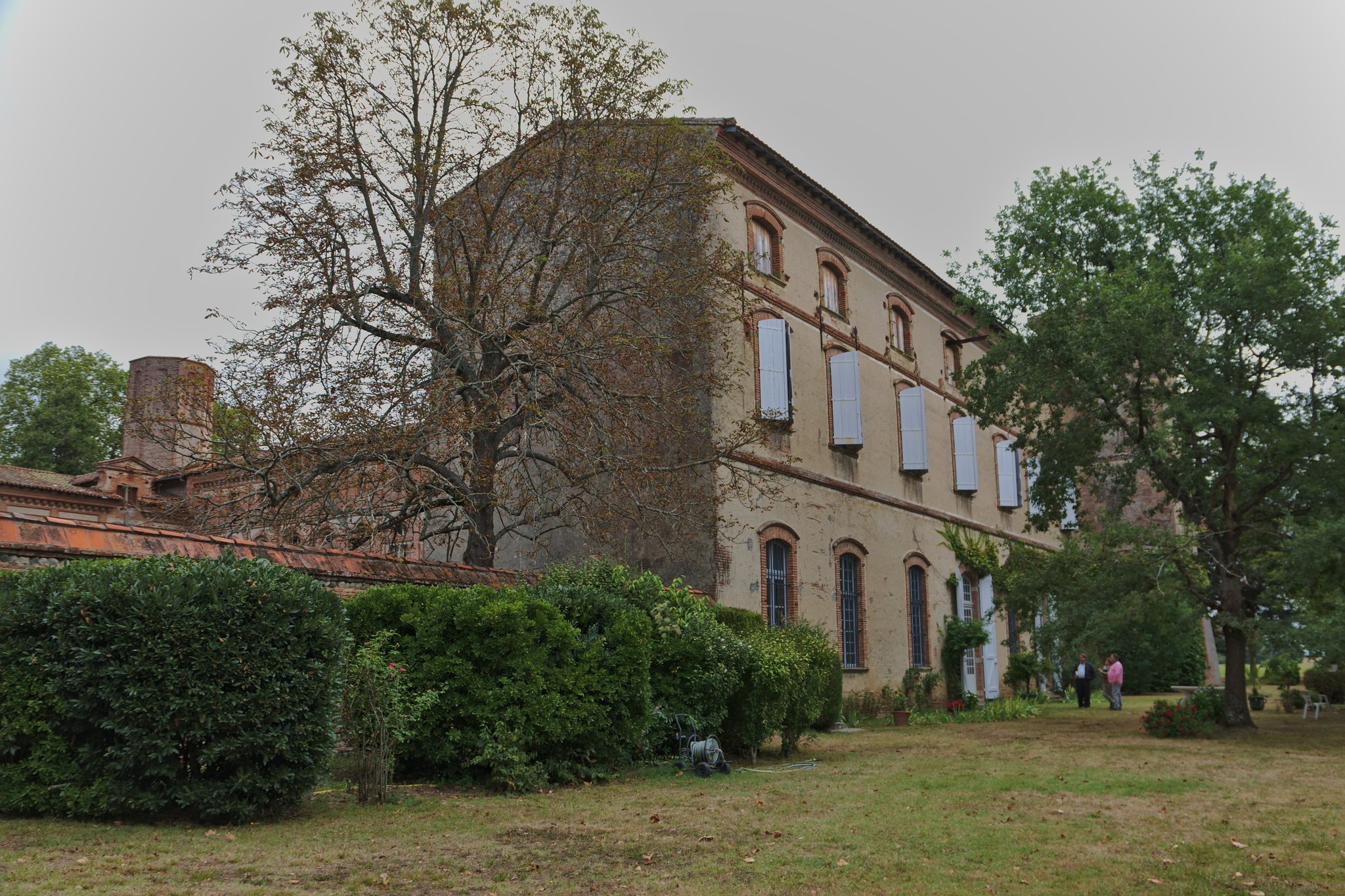
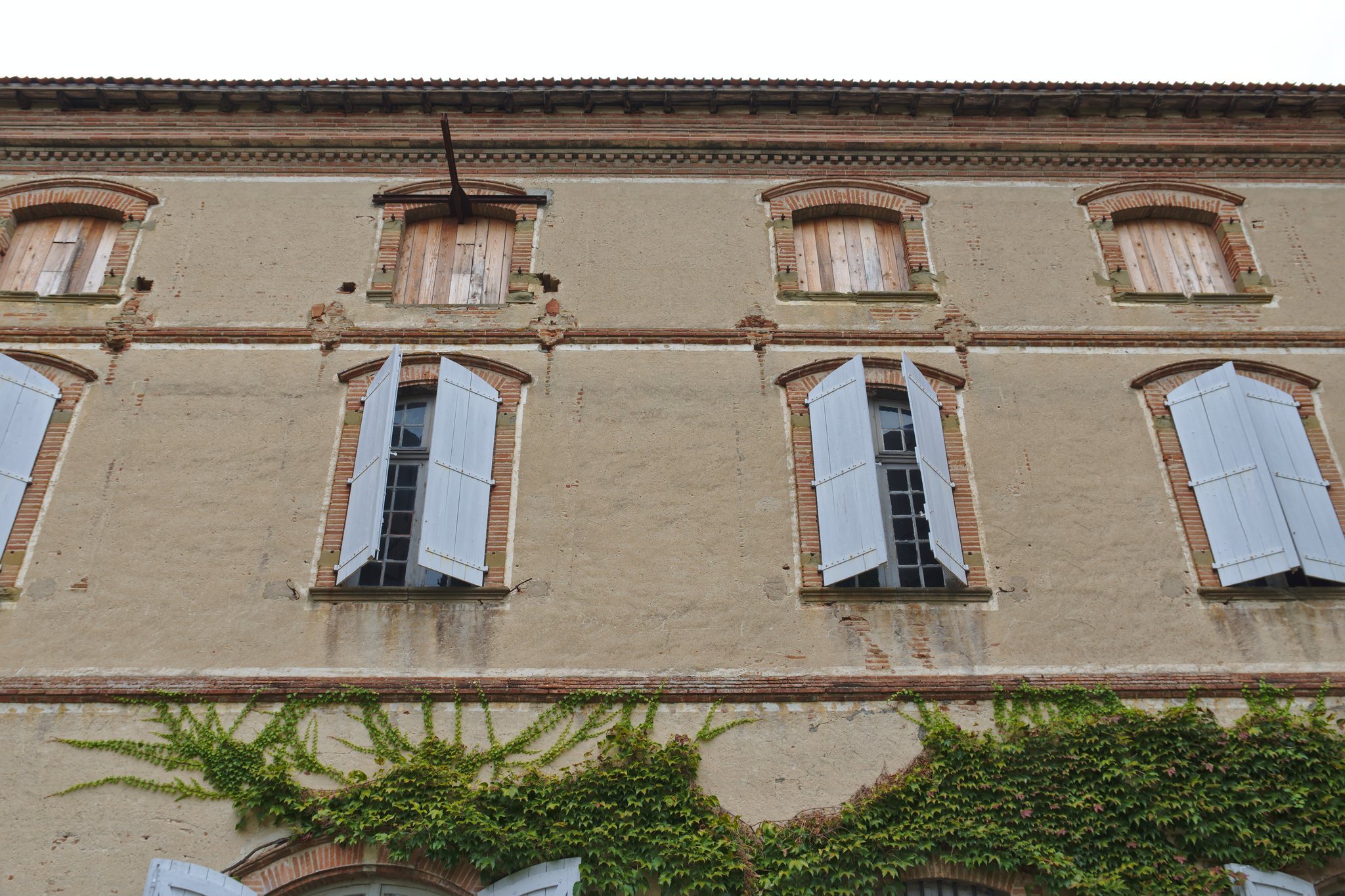
The surviving abbey stands at Tramesaygues, where the Hers-Vif and Ariège rivers meet. The place-name comes from the Latin expression intra ambas aquas, meaning “between two waters.” The remaining complex includes several facades, a brick entrance portal dated 1738, the chapter house, refectory, two cloister corridors, dovecotes, stables, and a corner tower. A chapter house was the room where a monastic community met for official business, discipline, and readings from its rule.
Monastic buildings
Entrance and cloister
The brick entrance portal bears the date 1738 and forms part of the surviving approach to the abbey buildings. The cloister is a restored covered walkway around an enclosed monastic court. Its structure uses cross-rib vaulting, a form of vault supported by intersecting structural ribs. The first-floor windows were reduced in size, and each room on that level has a fireplace.
Chapter house and refectory
The chapter house survives among the principal monastic rooms. The refectory, dated to 1740, contains a mural painting identified as one of four mural paintings associated with the building. Four large paintings formerly kept in the refectory were lost or otherwise disappeared. Part of the abbey’s furnishings was transferred to Notre-Dame Church in Cintegabelle.
Church and funerary remains
Abbey church
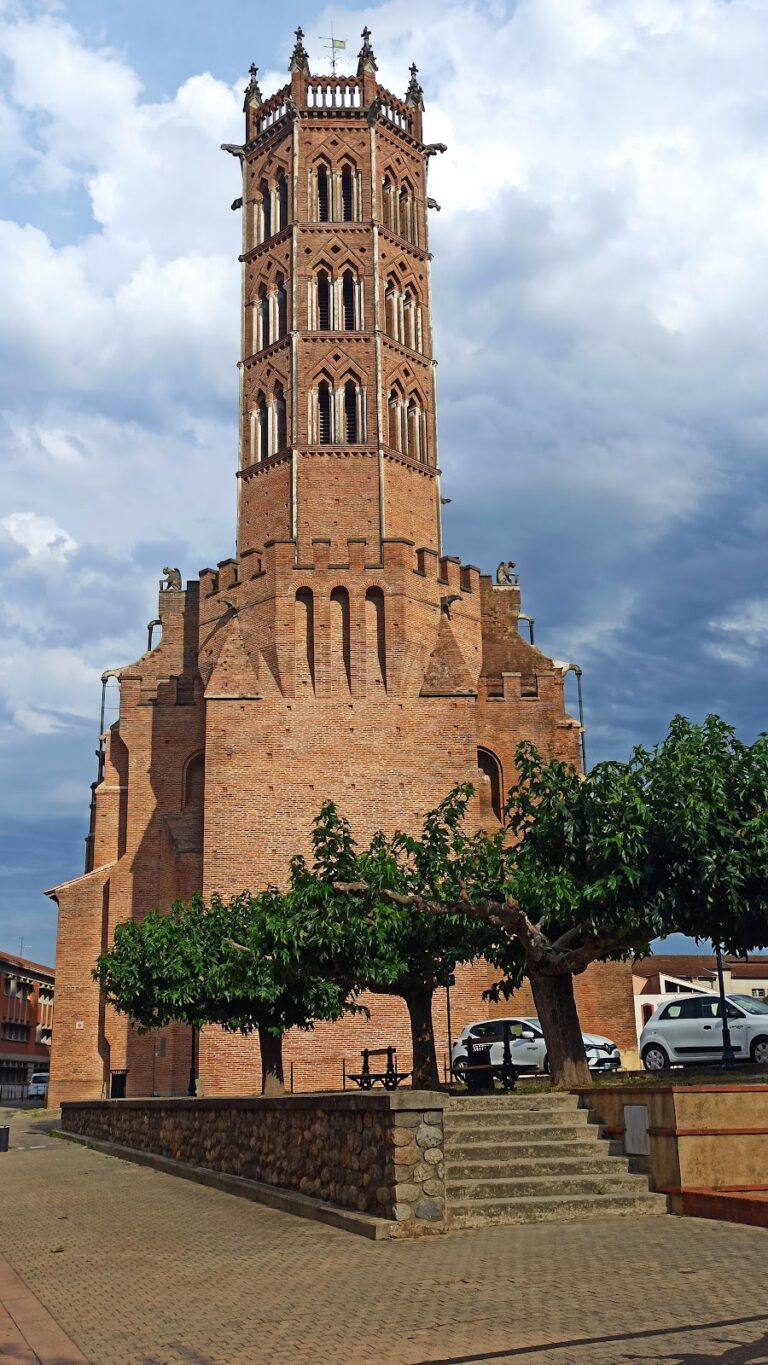
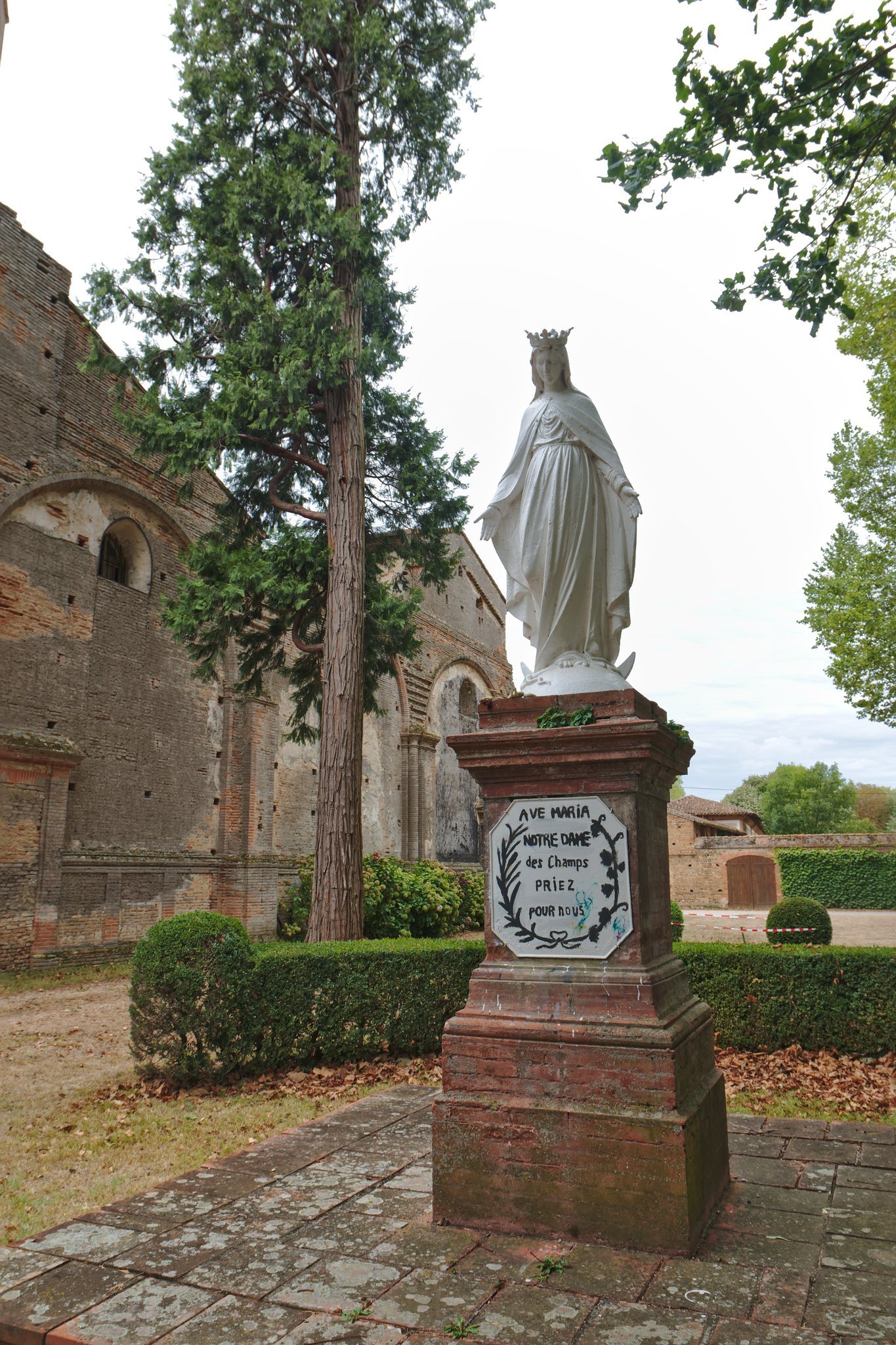
The abbey church, destroyed during the Revolution, is represented by one surviving wall. Its former right transept contained a mausoleum set into the wall and enclosed by a black marble slab carrying a gilded inscription.
Counts of Foix mausoleum
The mausoleum held the bones of the Counts of Foix and Cardinal Curti, a professed monk of Boulbonne and its benefactor. These remains had been transferred from the earlier monastery near Mazères after that site was destroyed, before their ashes were ceremonially moved to Cintegabelle in 1753.