Baumgarten Abbey: A Cistercian Monastery near Bernardvillé, France
Site at a Glance
- Popularity
- Medium
- Country
- France
- Primary era
- Medieval
- Eras represented
- Medieval, Early Modern, Modern
- Civilizations
- French, Holy Roman Empire
- Site type
- Religious
- Remains
- Monastery
On this page12 sections
History
Baumgarten Abbey, a former Cistercian monastery near Bernardvillé in France, was founded around 1125 by Bishop Cunon de Michelbach on land belonging to Epfig and the Strasbourg bishopric. Cunon dedicated the foundation to the Virgin Mary, with support from Archbishop Adalbert of Mainz and Gerard, cardinal of the Holy Cross, a papal envoy who later became Pope Lucius II. An emperor had expelled Cunon from Strasbourg and his diocese, though the reason remains uncertain. Later explanations accused him of colluding with subjects rebelling against Count Hugo of Dabo or of neglecting church property. The priest Gloekler of Stotzheim claimed that Cunon established the abbey as penance for scandals attributed to him. Cunon died on 14 April 1125.
Construction took eight years. Bishop Gebhard consecrated the abbey in 1133 in the presence of people from Epfig and Dambach, and granted the community rights and privileges. Its charter was drawn up during Emperor Lothair’s reign. Baumgarten was the first Cistercian abbey in Alsace after Lucelle. Cistercians were a Catholic monastic order that sought a stricter observance of the Rule of Saint Benedict, with emphasis on poverty, withdrawal from worldly life, and manual work.
On 10 May 1148, Bishop Burckard brought monks from the French abbey of Beaupré. The church, cloister, and enclosure were consecrated on 26 March 1153 in honor of the Holy Cross, the Virgin Mary, and other saints. The community initially included twelve brothers and many lay brothers, members who generally undertook manual work. Baumgarten was later detached from Beaupré and placed under Neubourg. Neubourg’s monastic lineage ran through Bellevaux and Lucelle to Morimond.
Land, protection, and patronage
Gifts from benefactors, including Duke Mathieu of Lorraine, Simon de Perreia, Walfrid, and the Bischofsheim family, gave the community extensive holdings. Around 1172, Duke Mathieu I granted it land at Fouchy and part of the forest of Allemand-Rombach, now Rombach-le-Franc. By the end of the twelfth century, the monks were cultivating vines on Muenchberg, a name meaning monks’ mountain. In 1182, Abbot Constantin sought the intervention of Pope Lucius III. Pope Celestine confirmed the abbey’s rights in a bull in 1195, after which Count Albert of Dabo took it under his protection.
Around 1214, the abbey acquired Falkenberg Castle in a sale approved by Adelaide, abbess of Andlau. Duke Mathieu II granted additional pasture in 1222 and confirmed a land transfer made by the knight Wirric, called Gorger, in Rombach territory. With the consent of Wirric’s wife and son Philippe, the abbey paid 30 Toul sous, a white cow, and ten cheeses. The castle passed to the Empire in 1330, and the abbey received further gifts in compensation.
In 1312, Emperor Henry VII donated property and gave the abbey the right to appoint a holder of the church benefice at Burner, a village near Sélestat that disappeared during the Swedish invasion of the sixteenth century. He also granted Eichelberg and charged Godfrey, Count of Leiningen and imperial bailiff of Alsace, with protecting the monks and securing their possessions. Andlau Abbey gave Baumgarten Sohlenberg, a hill in Reichsfeld territory between Baumgarten and Ungersberg.
Religious life and late-medieval troubles
In 1317, nobles of Eckerich granted Baumgarten the parish church of Saint-Guillaume at Saint-Blaise, a hamlet of Sainte-Marie-aux-Mines, together with its tithes and the right to appoint its clergy. Bishop John I of Strasbourg confirmed the gift in 1323. A dispute with William of Ribeaupierre was settled in 1494: the church and its saints were assigned a quarter of the tithes, while the abbey retained the other three quarters. A quarter of the collection was also reserved for the church and its lighting, with the remainder going to the abbot. The churchwarden had to account each year to both the abbot and the lord of Ribeaupierre.
Gözzo of Haguenau, a canon of Saint Thomas, physician, and poet, endowed the abbey on condition that the community celebrate the Feast of the Immaculate Conception of Mary, the doctrine that Mary was conceived free from original sin. The monks also held a Mass for the Fourteen Holy Helpers, a group of saints invoked for aid, especially against illness and plague. In 1487, the Cistercian General Chapter assigned Abbot Nicolaus Salicetus to oversee a new printed edition of the order’s missals and choir books. Salicetus, abbot from 1482 until before 1490, also wrote a devotional work on the life and passion of Saint Bridget, printed in Strasbourg in 1489.
Wars and uprisings repeatedly damaged the abbey. In 1493, peasants from Epfig and Dambach-la-Ville reduced it to ruins; the uprising was quickly suppressed. The community then consisted of twelve monks and several lay brothers. Facing financial difficulties, they sold valuable manuscripts.
Destruction and renewed monastic use
During the German Peasants’ War in 1525, insurgents from Epfig and Dambach attacked the bishop’s lands and religious houses. Baumgarten was devastated and never reoccupied. Its stones were taken to fortify Benfeld, while its revenues became part of the Strasbourg bishop’s estate and remained there until the French Revolution.
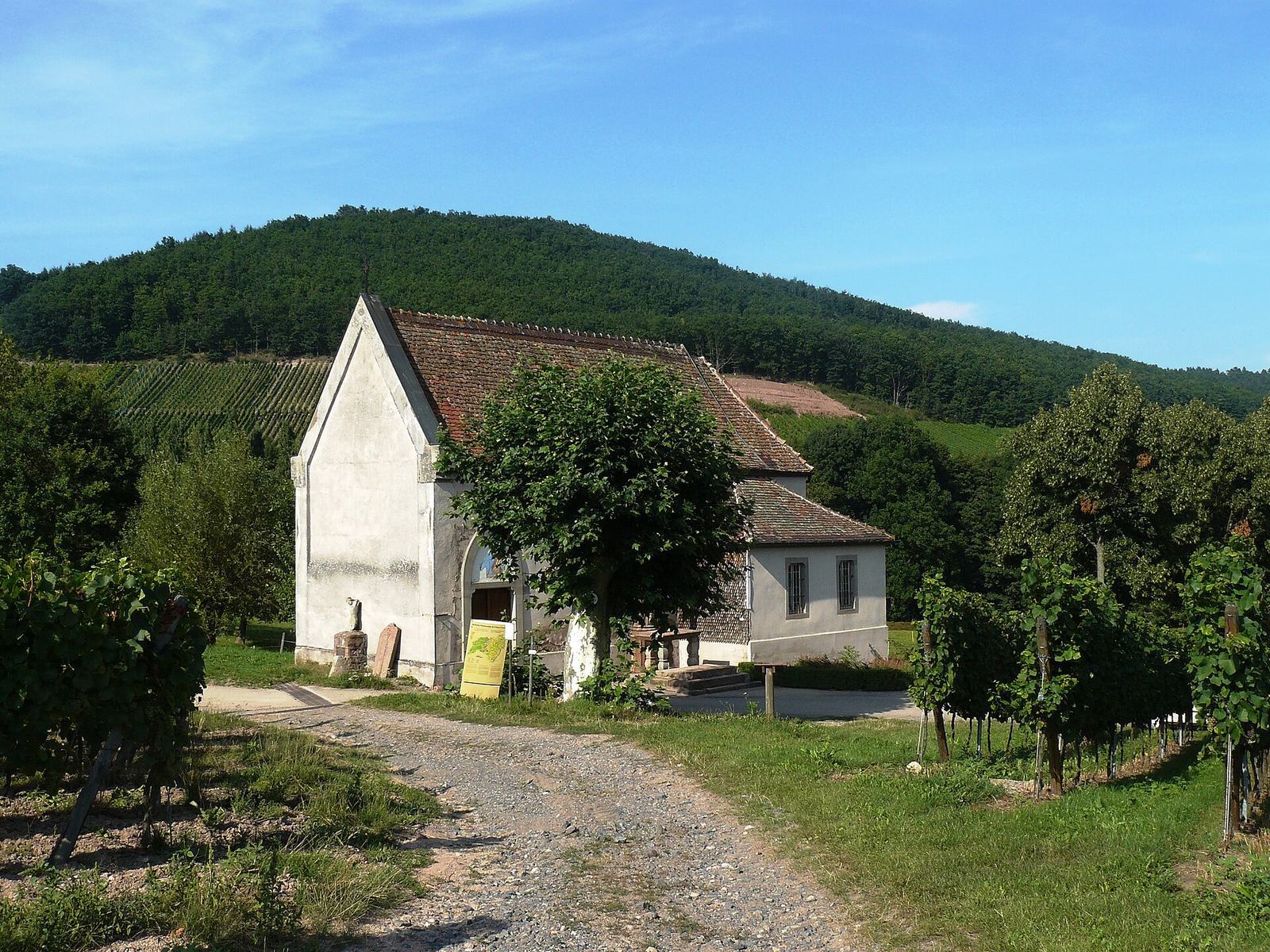
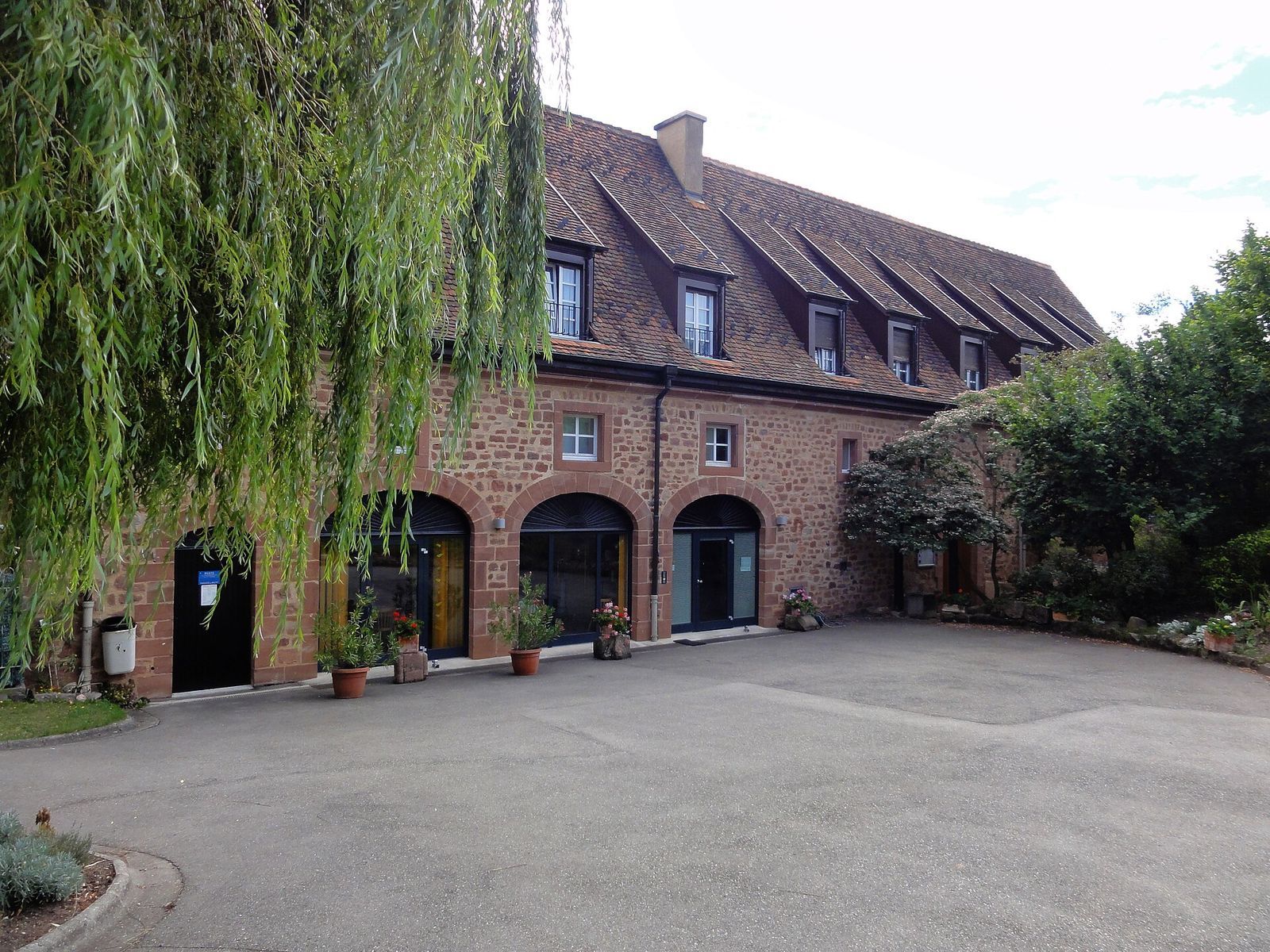
In 1790, Jean Burrus, a farmer on the bishop’s Baumgarten estate, acquired the chapel when it was sold as national property. He hoped to return it to the bishopric and religious use when circumstances permitted. The former abbey buildings later served various purposes, including as cattle stalls and, around 1970, as a hotel-restaurant of 1,200 square metres. The chapel reopened for worship in 1925 and continues to receive pilgrims, particularly on Whit Monday and Saint Bernard’s day, 20 August. The restored Stations of the Cross made by Anna Maria Riffel were classified as a historic monument in 1999. On 3 December 2009, Trappist nuns from the Altbronn monastery at Ergersheim moved into Baumgarten, restoring monastic use. Trappists are Cistercians of the Strict Observance, a reformed branch of the order.
Remains
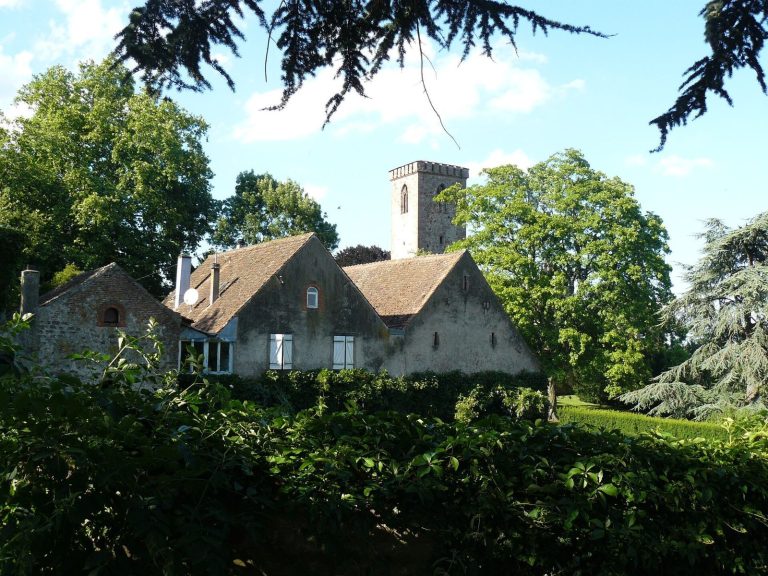
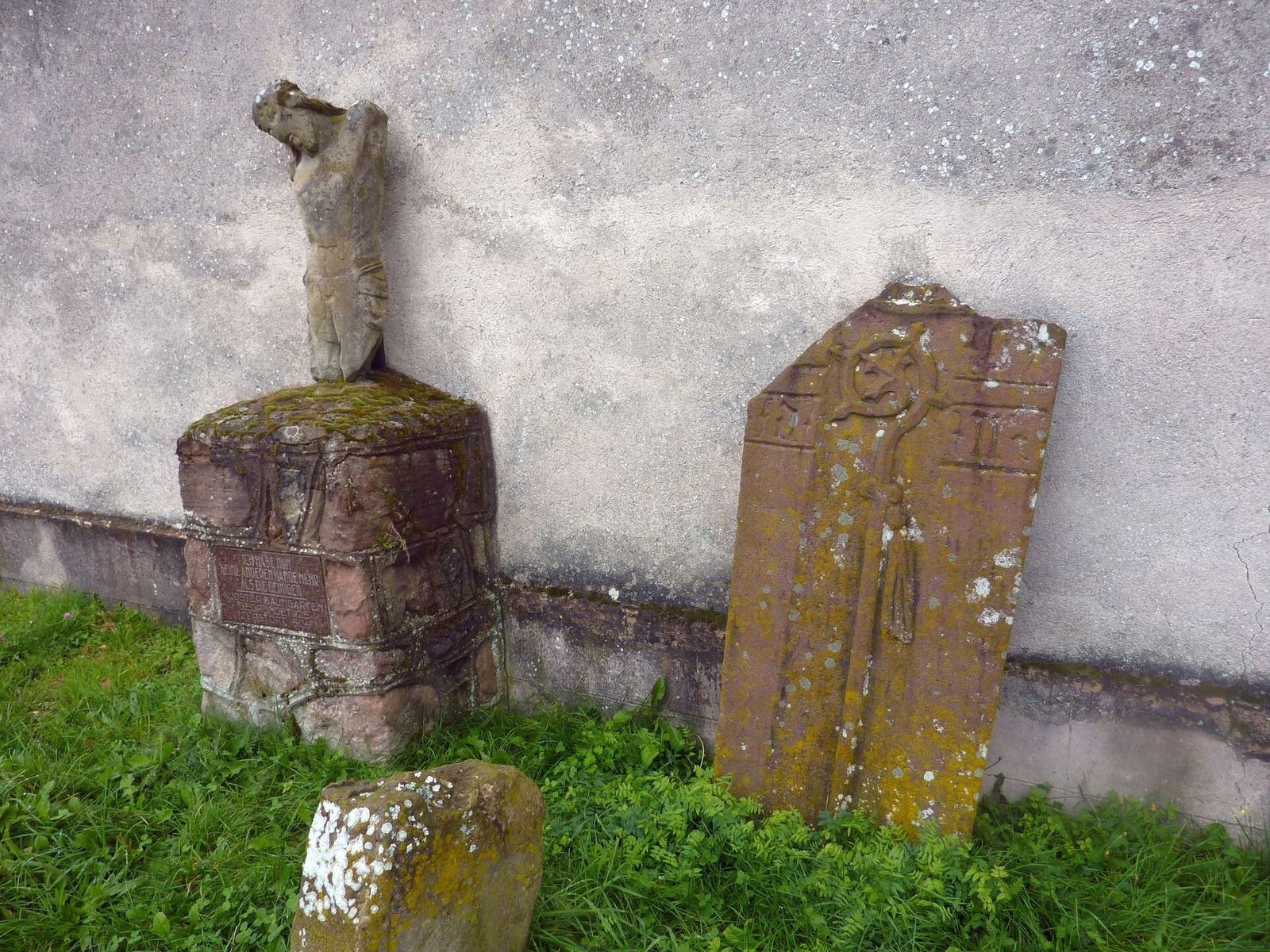
The surviving buildings stand between Bernardvillé and Reichsfeld, southeast of Bernardvillé and west of Reichsfeld, at the foot of Ungersberg and on the right bank of the Schernetz. Vineyards, meadows, and apple trees surround the site. The remaining fabric includes a hall, part of an abbey cellar beneath a later dwelling, and the chapel attached to the monastery.
Monastic buildings
Hall
A two-aisled hall, probably the former communal dining room, has a vaulted ceiling and retains four columns and several carved capitals, the upper parts of columns. One capital, dating to around 1200, survives in the kitchen.
Cellar
Part of the abbey cellar remains beneath a later dwelling. In an 1887 family recollection, Sister Luitgarde, a nun and great-granddaughter of Jean Burrus, said that Cardinal Louis René de Rohan had built the existing house before the Revolution. She attributed the second half of the cellar to Burrus. That extension, toward Eichelberg, was demolished in the 1840s, and its columns were reused in a cellar at Nothalten.
Chapel and devotional works
Chapel
The chapel was partly destroyed in 1525 and rebuilt in the eighteenth century, possibly in a different location. Its nave is Gothic and dates to the fifteenth century; the choir was built in the nineteenth-century Neo-Gothic style. An oak altar was made during a major restoration around 1897–1898.
Fittings and paintings
An older painting above the altar shows Saint Bernard praying before the glorified Virgin Mary, surrounded by the Fourteen Holy Helpers, each identified by an attribute. Saint Giles appears in a monk’s habit with his hind. Two stained-glass windows illuminate the choir. The right-hand window depicts Saint Arbogast, venerated as an early bishop of Strasbourg, while the left shows Saint Odile, a medieval abbess and patron saint of Alsace. M. Hieter made and donated both a ceiling medallion and an image of Christ in the panel above the entrance door. A grille made in 1889 by Bernardvillé artisan Jean-Louis Stotz separates the choir from the nave.
Stations of the Cross
Anna Maria Riffel, a young Baden artist, made a fifteen-panel Way of the Cross in 1832. The paintings, made under glass, were restored and placed on display at the Unterlinden Museum in Colmar. A separate series of fifteen stations stood in the surroundings of Baumgarten. Its fifteenth station, a painting of Saint Helena holding the cross, was stolen in 1970. After further thefts at the chapel, the set was first stored at the Bernardvillé presbytery and later transferred, by decision of the diocesan commission for sacred art, to the Benedictine convent of the Holy Sacrament at Rosheim.