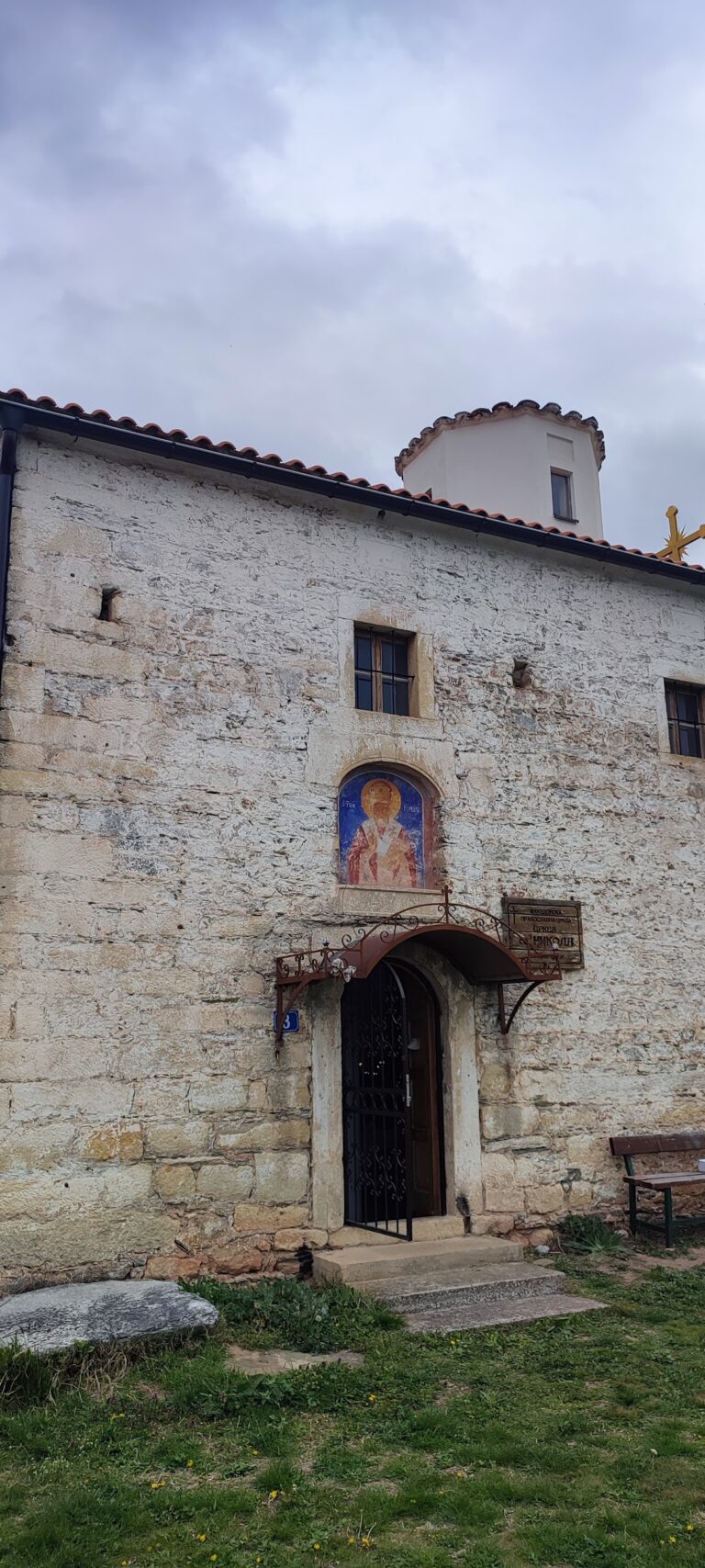
Šiševo Monastery: A Medieval Orthodox Monastery in North Macedonia


Site at a Glance
- Rating
- 5
- Popularity
- Very Low
- Country
- North Macedonia
- Primary era
- Medieval
- Eras represented
- Medieval, Early Modern
- Civilizations
- Ottoman, Serbian
- Site type
- Religious
- Remains
- Monastery
On this page9 sections
History
Šiševo Monastery is a medieval Orthodox monastery dedicated to Saint Nicholas in North Macedonia, near the village of Šiševo. Its church belongs to the later fourteenth-century medieval tradition, although its exact construction date is unknown. The monastery was formerly affiliated with the Ohrid Archbishopric, later with the Bulgarian Exarchate, and is now under the Skopje Diocese of the Macedonian Orthodox Church–Ohrid Archbishopric.
Fourteenth-century foundation
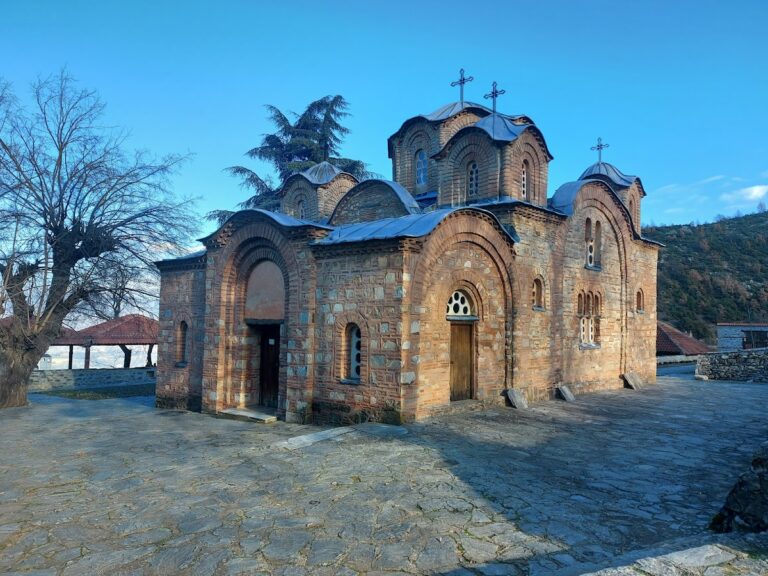
The church was built or restored in 1345 by the priest Nenad and other benefactors. A copy of a monastery commemorative book states that King Marko, the fourteenth-century Balkan ruler also known in some traditions as Prince Marko, supported the construction and painting of the older church. This association led to his recognition as its benefactor, meaning a person who financially supported a religious building. Comparisons with the nearby Church of Saint Andrew have consequently placed the monastery’s older church in the second half of the fourteenth century.
The medieval paintings were produced by two artists associated with a tribal-monastic group of painters active in the territory of the Skopje Metropolis during the second half of the fourteenth century. By the middle of the fifteenth century, only one monk was recorded at the monastery church. Details of the monastery’s life from the late fifteenth through the sixteenth century are not known.
Seventeenth-century additions
The western entrance hall, or narthex, was added during the first half of the seventeenth century. The identity of the benefactor of this newer part is unknown, although Skopje Metropolitan Simeon, a senior bishop responsible for a major ecclesiastical district, is presumed to have contributed personally to its construction. The narthex was painted in 1630 during his tenure.
Destruction and survival
In 1844, Albanians destroyed and burned all the monastery buildings except the church. The event was recorded in 1854 by the Macedonian educator Yordan Hadzhikonstantinov-Dzhinot. The surviving church and the traces of the former monastic complex remain protected as a legally designated cultural monument.
Remains
Setting and church structure
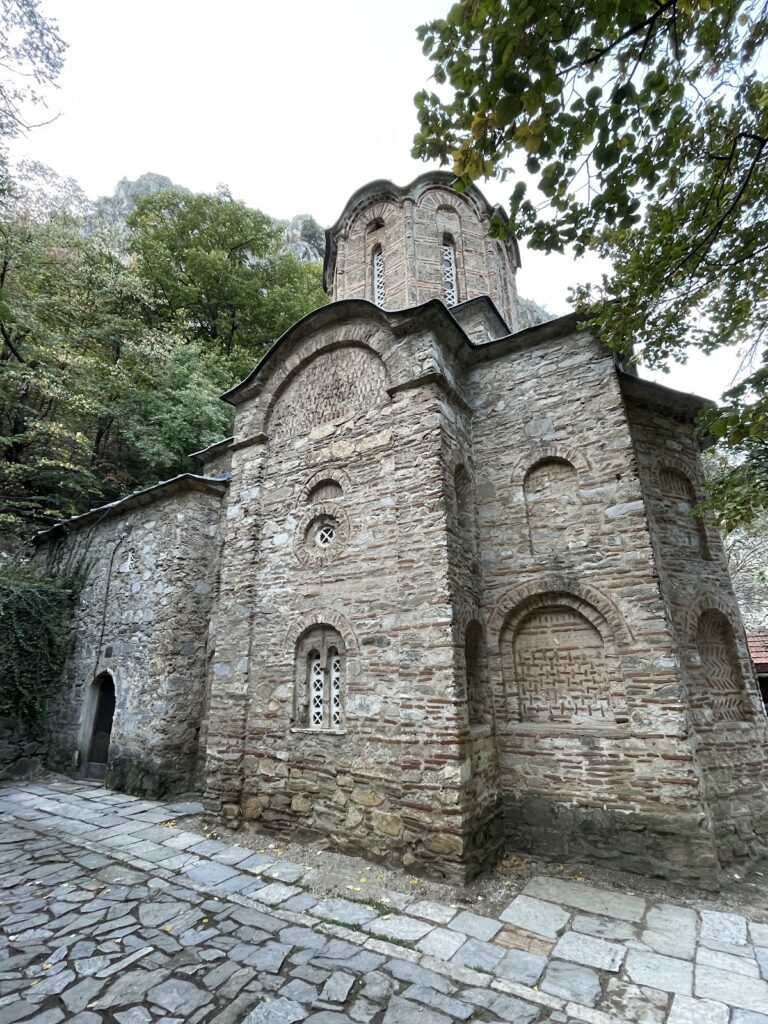
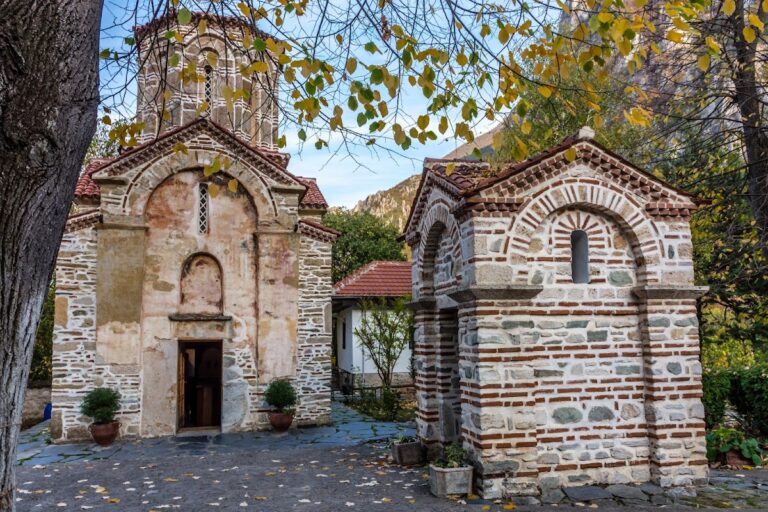
The monastery stands on a flattened terrace high on the cliffs of Mount Vodno, above the right bank of Lake Matka on the Treska River. The terrace lies approximately 480 metres above sea level and 160 metres above the lake. The church is formed from two structurally distinct sections. The older part is a single-nave church with a three-sided, or triconch, apse at the east end and a semicircular vault. It is built from roughly broken stone.
The western addition is a compact, narrow structure with an inscribed-cross plan, a layout organized around a cross-shaped internal arrangement. It serves as the narthex and carries a slender octagonal dome supported on consoles. Pilasters, which are shallow vertical projections, and blind arcades, decorative arches without open passages, articulate its façades. This section uses stone masonry and brick, distinguishing it from the rough-stone construction of the older church.
Frescoes and interior decoration
A large fresco of Saint Nicholas, the fourth-century Christian bishop widely venerated in Eastern Christianity, is positioned above the entrance. The narthex also contains an oculus, or circular opening, in its central part. An arch frames the oculus, while a rectangular low-relief plaque around it carries vegetal and animal imagery, including a crowned two-bodied lion. A cable pattern borders the opening.
The church preserves two layers of fresco painting. Four holy fathers appear on the northern and southern walls of the altar, while the naos, the principal worship space, contains images of the holy warriors George and Demetrius. They wear contemporary royal garments and tall caps resembling those represented in the Heavenly Court at Marko’s Monastery. The fourteenth-century paintings are partly visible beneath the seventeenth-century layer.
The narthex paintings from 1630 are very well preserved. Individual saints occupy the lowest zone, scenes from the life of Saint Nicholas appear above them, and the upper zones show the miracles and sufferings of Jesus Christ. Their style relies on strong drawing, precise lines, crowded narrative compositions, a limited palette, and predominantly reddish-brown coloring.
Later furnishings and traces of use
The cross from the iconostasis, the screen separating the sanctuary from the main worship space in an Eastern Christian church, dates from 1645. The iconostasis was later transferred to the nearby cemetery Church of Saint Athanasius in Šiševo. Names and surnames of visitors survive as graffiti on the frescoes from visits made between 1860 and 1924.
Former monastery lodgings
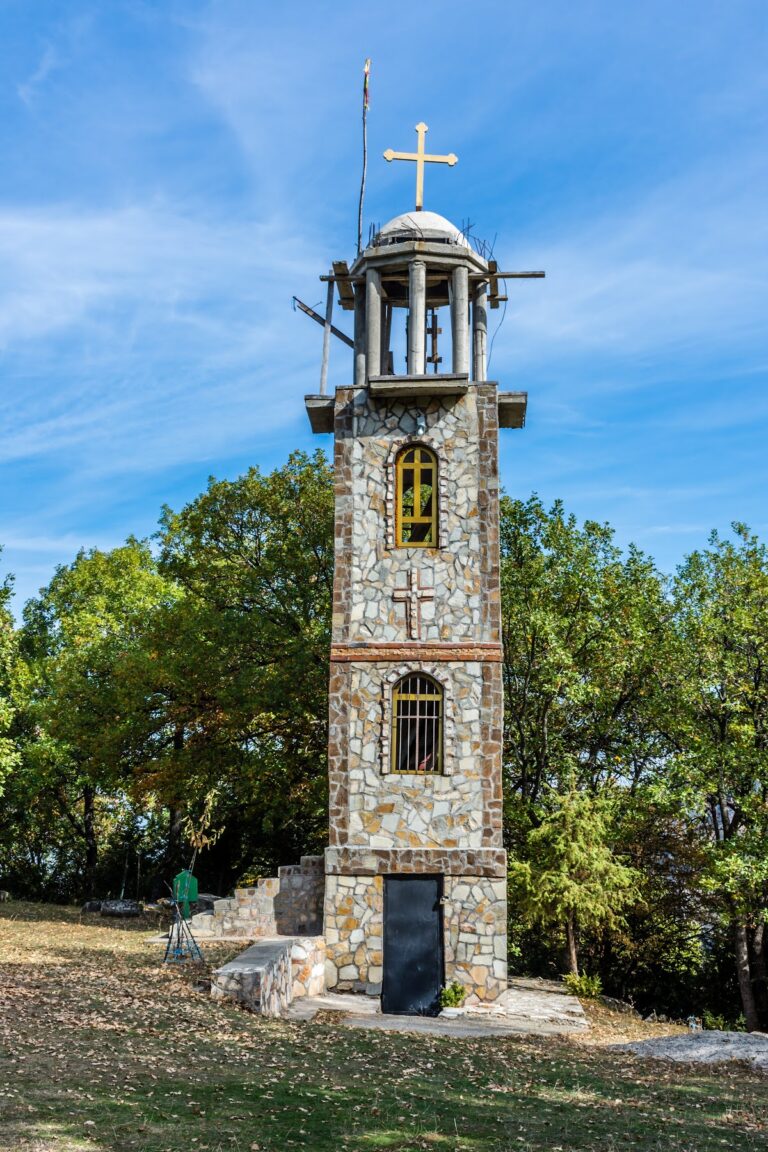
Foundations of the former monastery lodgings remain visible south and east of the church. Summerhouses now stand on these foundations, while the surviving remains extend toward views across the lake in the direction of Saint Andrew’s Church.
Nearby sites