Orthodox Church of the Holy Martyr Paraskeva: A Historic Pilgrimage Church in Vranje, Serbia


Site at a Glance
- Rating
- 4.9
- Popularity
- Very Low
- Country
- Serbia
- Primary era
- Modern
- External website
- Open
- Eras represented
- Medieval, Modern
- Civilizations
- Serbian
- Site type
- Religious
- Remains
- Church
On this page13 sections
History
The Orthodox Church of the Holy Martyr Paraskeva is a small Serbian Orthodox church in Vranje, Serbia, in the Tulbe district beside the Vranje River and near the White Bridge, also known as the Love Bridge. Tradition places its foundation in the early medieval period, while stone foundations in front of the church date from the thirteenth century. The medieval Serbian church and its later transformations gave the site a history that crosses religious and political boundaries.
Medieval origins
The church is also known as the Church of Saint Petka. Saint Paraskeva of Tarnovo, or Saint Petka, is a widely venerated Orthodox saint associated with the medieval Balkans. The foundations in front of the present building belong to a thirteenth-century Serbian church and are protected by the state.
Ottoman transformation
After the Ottoman conquest of Vranje, the church was enlarged and converted into a mosque. Wealthy Ottoman residents, including aghas and beys, settled in this part of the town and decided to construct a mosque on the walls of the Orthodox church. An agha and a bey were Ottoman titles used by members of the military, administrative, or landed elite.
Local tradition connects the mosque’s construction with repeated failures to raise its minaret, the tower traditionally associated with a mosque and historically used for the call to prayer. According to the story, newly built sections collapsed at night until a cross was pressed into the masonry. Construction then continued without another collapse. Other versions say that four minarets were arranged in the form of a cross, or that a cross was placed on top of the minaret.
The former mosque became known locally as the Cross Mosque because a cross was retained or incorporated into the building. Pilgrimage to the place continued during Ottoman rule. One customary practice became associated with Good Friday, the Christian day commemorating the crucifixion of Jesus Christ. Serbian Christians were traditionally said to have used the Muslim day of rest to visit their former church without interference.
Rebuilding after 1878
The Cross Mosque survived until Vranje was liberated from Ottoman rule in 1878. After the liberation, Serbian insurgents demolished eight mosques in the town, including the Cross Mosque. A new Church of Saint Petka was soon built on its ruins. The present church is also associated with traditions that relics of a saint may be concealed within its masonry, although the stories differ in their details.
A continuing pilgrimage tradition
Pilgrimage continued through the Ottoman period, the communist era, and into the present. Visitors of Orthodox Christian, Muslim, Jewish, and Catholic backgrounds came from areas extending from Niš and Vranje through Kosovo and Metohija to Macedonia, as well as from northern Greece and southeastern Bulgaria. These visits centered on healing and prayer.
The principal gathering takes place on Good Friday rather than on Saint Petka’s feast day. Several thousand people from Vranje and its surroundings pass through the church during the observance. The rites include anointing with chrism, consecrated oil applied as an Orthodox blessing, and sprinkling with blessed water. Pilgrims venerate the Crucifixion icon, drink and wash with water from the courtyard fountain, leave offerings for healing or household health, and light candles for the living and the dead.
A customary sequence begins with quiet entry into the church and veneration of an icon. A priest of the Diocese of Vranje applies chrism, after which another priest sprinkles the participant three times with blessed water. The pilgrim then kisses a prayer cross, circles the courtyard from left to right, venerates the Crucifixion icon, leaves an offering, visits the fountain, and lights candles before departing. Believers regard the fountain water as miraculous and healing, particularly for improving eyesight and treating other illnesses when used with prayer and observance of religious rules.
Stories of healing
Local tradition also associates healing with a courtyard pillar and a nearby carved stone slab. Believers were said to kiss the pillar and sit briefly on the stone to receive divine grace. Older residents described a step beside the pillar that supposedly led to a small sunken room containing a cross and a water spring. In this account, people of different faiths venerated the cross, drank the water, and carried it home in earthen vessels.
Another story concerns the only son of a wealthy Serbian family in Prizren. During Ottoman rule, his family is said to have brought him to the Cross Mosque. After kissing the courtyard pillar and sleeping on the stone, he reportedly awoke, asked for water, and declared that he had been healed.
Remains
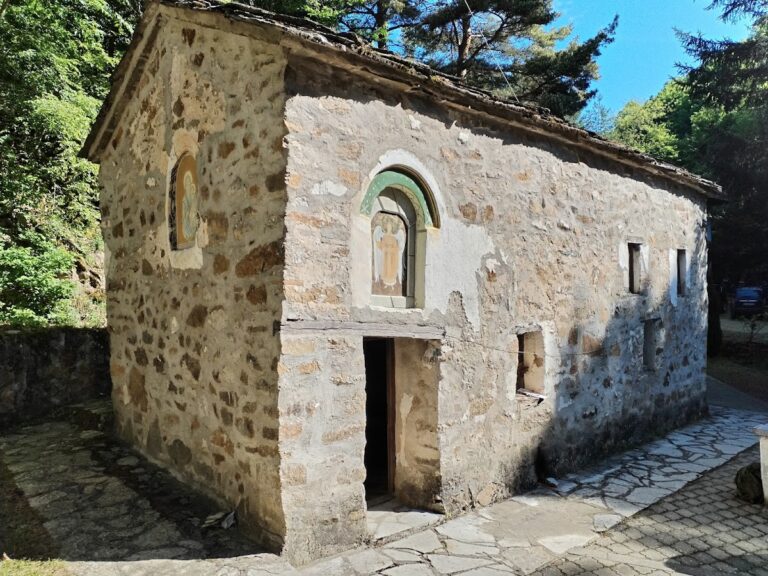
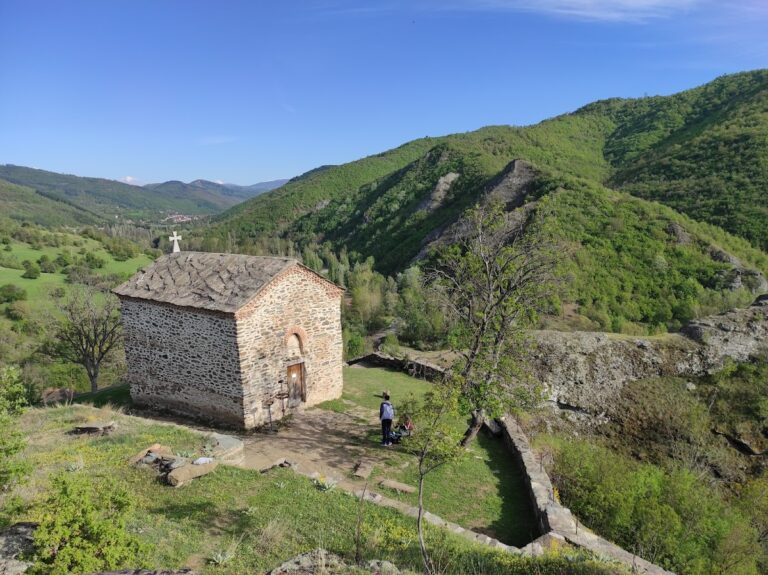
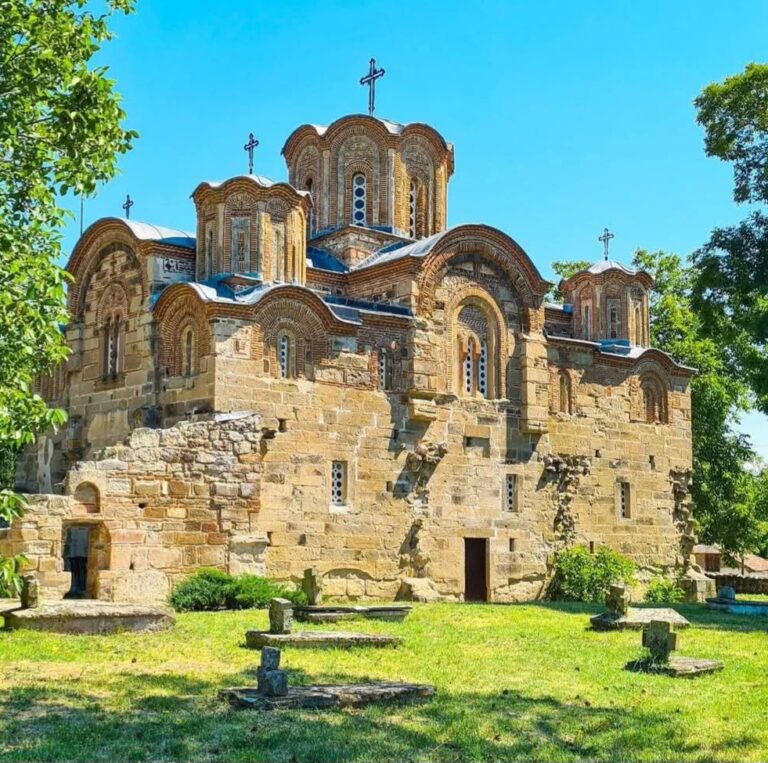
The site consists of a small church beside the Vranje River, with the present building standing over the ruins of the former mosque. Its physical setting includes the medieval foundations in front of the church and a courtyard containing a fountain, a pillar, and a carved stone slab associated with religious practice and healing traditions.
Medieval foundations
Thirteenth-century church remains
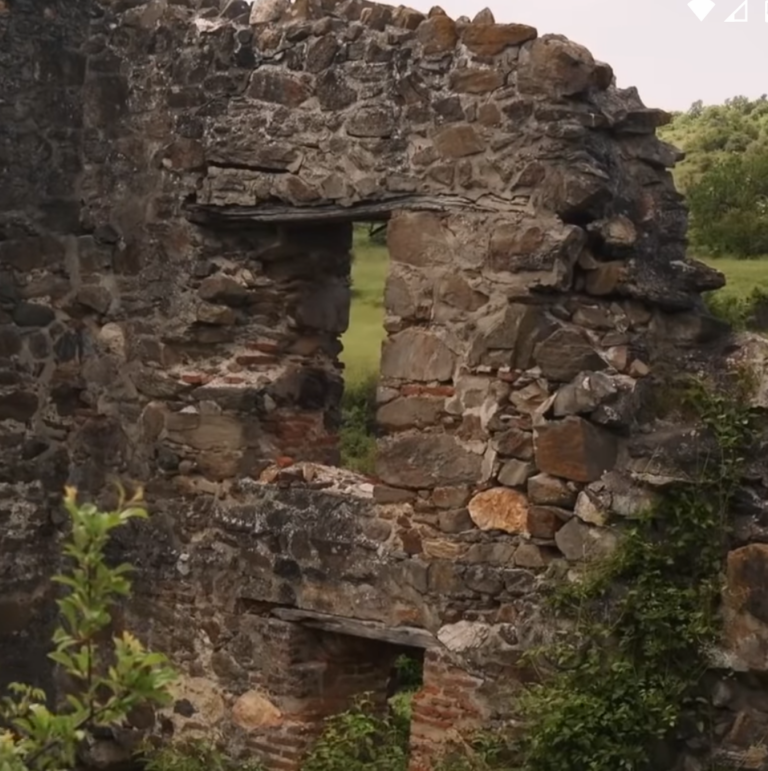
The stone foundations in front of the church belong to a thirteenth-century medieval Serbian church. They survive as the principal visible remains of the earlier structure and are protected by the state. Their position in front of the present church preserves a physical connection between the medieval foundation and the later buildings that occupied the site.
Church and courtyard features
Present church
The current Church of Saint Petka was built over the ruins of the former mosque. It is much smaller than the original church and is described as one of the smallest churches in Serbia. The building is associated with the tradition that saintly relics may be concealed within its masonry. The earlier mosque phase enlarged the structure and included a minaret, while the tradition of the Cross Mosque recalls a cross incorporated into the masonry.
Fountain and healing features
A courtyard fountain supplies water used in the Good Friday rites. Pilgrims drink and wash with it, and believers regard the water as healing when used with prayer and religious observance. The courtyard also preserves a pillar and a carved stone slab linked by local tradition with healing acts. The church is associated with a Crucifixion icon for veneration and with a prayer cross used in the Good Friday sequence.
Tradition of the underground room
Oral tradition concerning the former mosque describes a small sunken room beside the courtyard pillar, with a cross and a spring. The story forms part of the site’s healing traditions and includes the use of the spring by believers of different faiths. Its physical survival is not established in the historical and architectural account of the church.
Nearby sites