Monemvasia Mosque: An Ottoman Mosque and Archaeological Museum in Greece


Site at a Glance
- Rating
- 4.8
- Popularity
- Low
- Country
- Greece
- Primary era
- Early Modern
- External website
- Open
- Eras represented
- Early Modern
- Civilizations
- Ottoman
- Site type
- Religious
- Remains
- Mosque
On this page8 sections
History
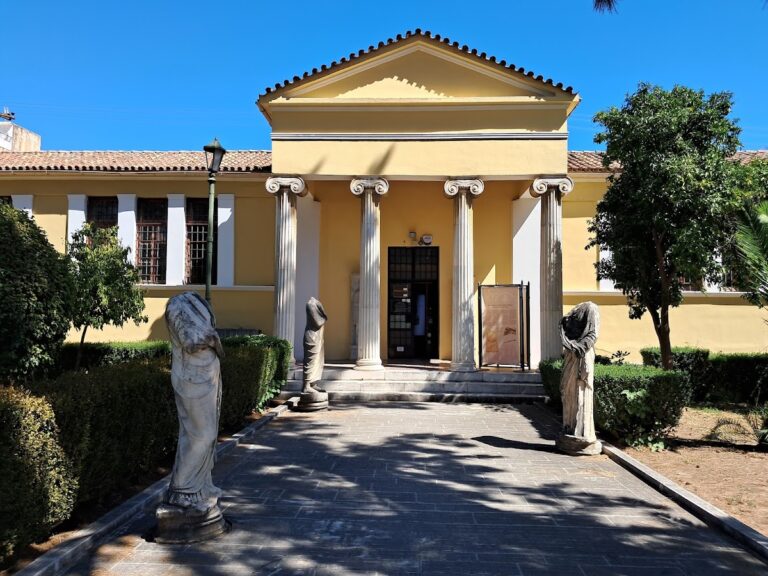
Monemvasia Mosque is a former Ottoman mosque in the lower medieval town of Monemvasia, Greece, built in 1540 shortly after the Ottoman conquest of the Venetian-ruled fortress. The Ottoman Empire, the Islamic imperial power that controlled Monemvasia after the conquest and again from 1715 to 1821, placed the mosque south of the lower town’s central square, opposite the Metropolitan Church of Christos Elkomenos.
Ottoman and Venetian rule
Monemvasia fell to the Ottomans in November 1540, and the mosque was erected soon afterward. Local tradition connects the building with a sixteenth-century Venetian church dedicated to Saint Peter, identified as an eighth-century bishop of Monemvasia. Historian Charis Kalliga instead considered an unfinished Venetian loggia a more likely predecessor, while the surviving lower crypt architecture does not identify an earlier church.
During the second Venetian rule, from 1690 to 1715, the building was converted into a hospice, probably through the initiative of Capuchin monks, a branch of the Franciscan order, or possibly into a church dedicated to Saint Anthony of Padua, a thirteenth-century Franciscan friar and preacher. When the second Ottoman domination began in 1715, the building returned to Muslim worship and remained in that use until 1821.
Later uses and museum history
After Greek independence in 1830, the building ceased to function as a mosque and was briefly used as a prison, a use recorded by the diplomat Thomas Wyse. At the beginning of the twentieth century, the architect and historian Ramsay Traquair described it as a café.
Following restoration, the former mosque became the home of Monemvasia’s archaeological collection in 1999. It also accommodated the offices of the 5th Ephorate of Byzantine Antiquities, the regional Greek archaeological service responsible for protecting and administering Byzantine and related antiquities. The building is now used as a history museum.
Remains
The monument is an Ottoman-style building made of brick and stone. Successive reconstructions and changes of use complicate the interpretation of its architectural form. Its principal surviving space is a square prayer hall with interior sides measuring 6.5 metres. A rectangular extension projects westward, while a two-storey room on the north side is used for reception and archaeological-service offices.
Prayer hall and surviving structure
Dome and prayer hall
The original building had a single dome, approximately 8.5 metres high externally. Four squinches, structural elements that support the transition from a square room to a dome, carry the dome above the prayer hall. The mosque’s former prayer arrangement included a mihrab, the niche indicating the direction of Mecca, and a porch. A minaret formerly stood at the southwest corner and was later destroyed.
Western and northern extensions
The west side is defined by a rectangular extension, and the north side contains a two-storey room incorporated into the present building. These additions and alterations reflect the successive changes in the monument’s function, from mosque to hospice and later secular uses before its conversion into a museum.
Archaeological collection
The museum collection brings together material from the early Christian period through the end of Ottoman rule. It includes marble remains from a twelfth-century church, carved architectural elements from the church of Hagia Sophia, ceramics, and everyday objects. Displayed within the former mosque, these objects represent the long sequence of religious, civic, and domestic activity associated with Monemvasia.
Nearby sites