Church of Elkomenos Christos: A Middle Byzantine Church in Monemvasia


Site at a Glance
- Rating
- 4.9
- Popularity
- Low
- Country
- Greece
- Primary era
- Medieval
- Eras represented
- Medieval, Early Modern, Modern
- Civilizations
- Byzantine, Venetian
- Site type
- Religious
- Remains
- Church
On this page8 sections
History
The Church of Elkomenos Christos is a Middle Byzantine church in Greece and the principal church of Monemvasia. Originating in the sixth or seventh century, it belongs to the Metropolis of Monemvasia and Sparta, an ecclesiastical district of the Church of Greece, and follows Greek Orthodox worship. The name Elkomenos Christos means “Christ in Chains,” referring to an Orthodox image of Christ associated with his binding and Passion.
Byzantine origins and later alterations
An earlier Byzantine monastery occupied the site before the church developed into its present form. The Middle Byzantine period, conventionally dated from the seventh to the twelfth centuries, shaped the church’s early history. In the eleventh century, spaces beside the altar were added for preparing the Eucharistic offerings and for liturgical storage and service.
Repairs followed in 1520, financed by Arsenius, the Catholic archbishop. In 1538, George Koungydas, a legal official serving the Count of Corinth, paid for the replacement of the original columns with piers. This change allowed stone vaults to be built in place of the earlier timber roof.
Venetian additions and destruction
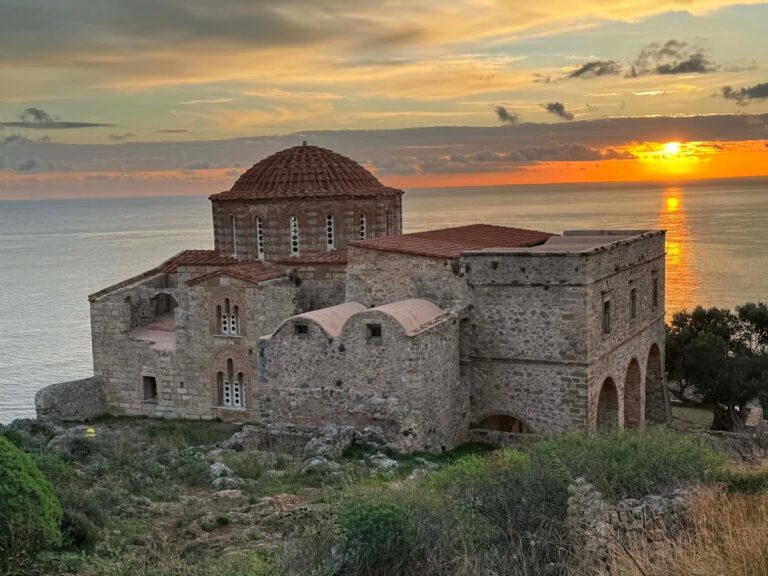
During the second Venetian period, the later phase of Venetian rule in Monemvasia, the church underwent major expansion in the seventeenth century. An outer vestibule, a chapel on the south side, and a dome at the centre were added. The church’s present form and its campanile, or bell tower, are associated with this period and the later architectural development that followed it.
Turco-Albanian forces destroyed the church during the 1770 revolution. Repeated repairs took place in the following years, and a bell tower was constructed during the later rebuilding history. A marble templon, the screen separating the sanctuary from the main body of an Orthodox church, was made for the interior in 1901 by George Kaparias of Tinos.
The Elkomenos Christ icon
The church’s principal feast is celebrated on Holy Thursday. A separate observance on 23 May commemorates the return of the Elkomenos Christ icon. In 1979, the icon and about 35 other icons were stolen and taken to Athens for sale. An Athens security officer posed as a purchaser, leading to the thief’s arrest.
The fourteenth-century Elkomenos Christ icon had been cut into three pieces. After restoration, it was transferred to the Byzantine Museum of Athens, where it remained until its return to the church in Monemvasia in 2011. The church also has associated works from the seventeenth and eighteenth centuries.
Remains
The basilica and Byzantine spaces
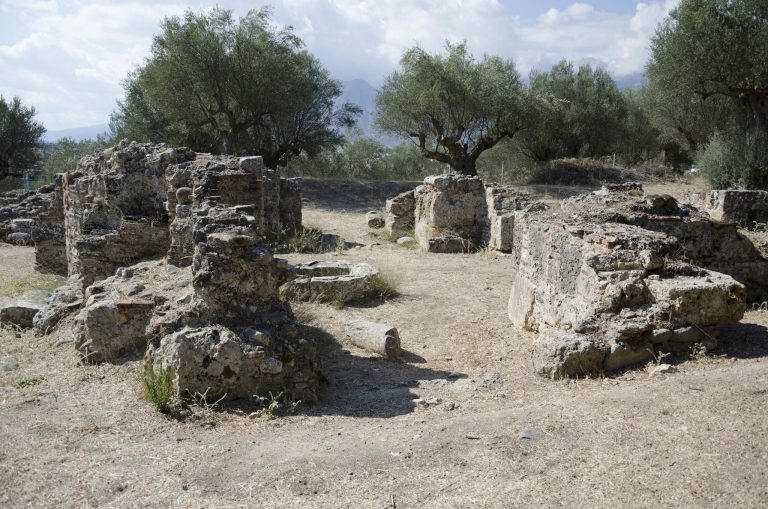
The original building was a three-aisled basilica with a narthex, the entrance or vestibule area of a church. Its central nave was flanked by lateral aisles, and the roof was made of timber rather than masonry. In the eleventh century, apses for the prothesis and diakonikon were added beside the altar. These spaces served respectively for preparing the Eucharistic offerings and for liturgical storage or service.
Vaults and later additions
The replacement of the original columns by piers in 1538 created the support needed for stone vaults. The seventeenth-century building campaign added an exo-narthex, an additional outer vestibule, along with a chapel on the south side and a central dome. The campanile forms part of the church’s later architectural development, while the present building also reflects repairs made after its destruction in 1770.
Interior furnishings and artworks
A marble templon made in 1901 by George Kaparias of Tinos separates the sanctuary from the main body of the church. The chapel of Saint John contains the Elkomenos Christ icon, a sacred religious image used in Orthodox devotion. Other works dating from the seventeenth and eighteenth centuries are located within the church.