Kasteel Montfoort: A Defensive Castle in the Netherlands


Site at a Glance
- Rating
- 4.3
- Popularity
- Low
- Country
- Netherlands
- Primary era
- Medieval
- External website
- Open
- Eras represented
- Medieval, Modern
- Civilizations
- Dutch, Holy Roman Empire
- Site type
- Military
- Remains
- Castle
On this page10 sections
History
Foundation and Episcopal Rule
Kasteel Montfoort is a defensive castle in Montfoort, Netherlands, built in 1163 by Bishop Godefried van Rhenen of Utrecht to protect the Sticht, the historical territory governed by the bishops of Utrecht, against the County of Holland. It initially belonged to the bishopric and was administered on the bishop’s behalf by a hereditary burgrave, an official responsible for managing and defending a castle or territory for its lord.
The burgraves adopted Van Montfoort as their family name. When that line ended in 1260, the office passed through the marriage of Alix van Montfoort to the knight Boudewijn van Renderode. Their only daughter, also named Alix, married Roelant de Roover. In 1270, Roelant bought the high lordship of Montfoort from the bishop. This territory carried elevated judicial and administrative authority, and Roelant’s family thereafter used both the title burgrave and the name Van Montfoort.
Conflict with Utrecht
The Van Montfoort burgraves eventually became opponents of the bishops of Utrecht. Shortly before 1300, Zweder van Montfoort assisted the city of Utrecht in capturing the bishop. In 1301, the Van Montfoorts fought the bishop’s successor at the Battle of Hogewoert, where the bishop was killed.
In 1353, Zweder II van Montfoort again came into conflict with a bishop. The bishop captured Kasteel Montfoort and compelled Zweder to surrender the high lordship. During a later dispute over the succession to the episcopal office, the Van Montfoorts supported the successful claimant and recovered the high lordship in 1430.
Imperial Ownership and Destruction
Emperor Charles V, who also ruled the Netherlands during the sixteenth century, bought Montfoort from the last Van Montfoort, Jan de Roover, in 1545. De Roover died in 1580, and the property then passed to the De Merode family. Ferdinand Philips van Merode sold it to the States of Utrecht, the provincial governing body representing Utrecht’s political estates, in 1648.
French troops serving Louis XIV destroyed the castle with explosives on 6 and 7 November 1672, during the Dutch disaster year, a period of military crisis in the Netherlands. Kasteel Montfoort was never rebuilt. In 1688, the States of Utrecht placed the grounds and the surviving forecourt and gate on long-term loan to the city of Montfoort. The city leased the property to its mayors, and a boarding school was established there in 1833.
Institutional Use and Conservation
In 1859, the state Domains Service, which administered government-owned lands and properties, became the owner of the grounds. A prison for girls under sixteen was established there, together with a reform institution for girls convicted of minor offenses. Around the turn of the twentieth century, the division between a disciplinary school and a state reform institution was implemented more fully.
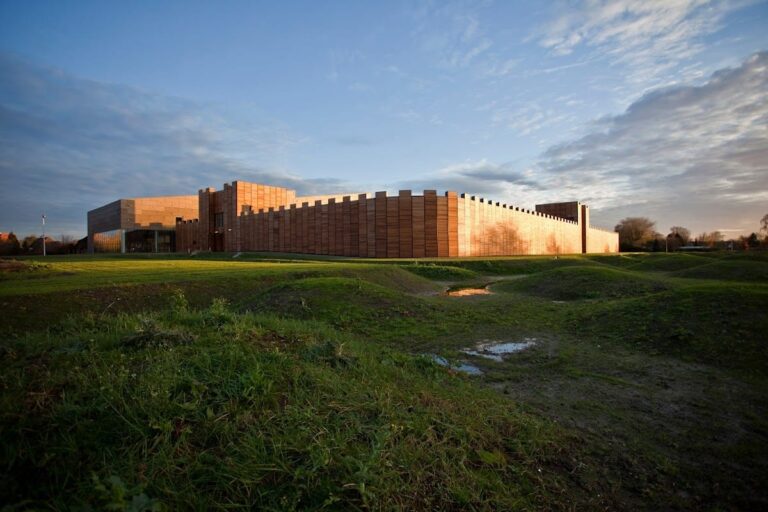
The disciplinary school closed in 1968. The municipality of Montfoort acquired the grounds from the state Domains Service in 1974. The surviving remains were restored in 1984, while the more recent buildings were demolished. The municipality then constructed a new municipal office on the cleared main castle grounds. It opened in 1990 after municipal reorganization had left the former town hall too small. Kasteel Montfoort is protected as a Rijksmonument, a nationally important heritage property in the Netherlands, under monument number 30061.
Remains
Forecourt and Entrance
Entrance Gate
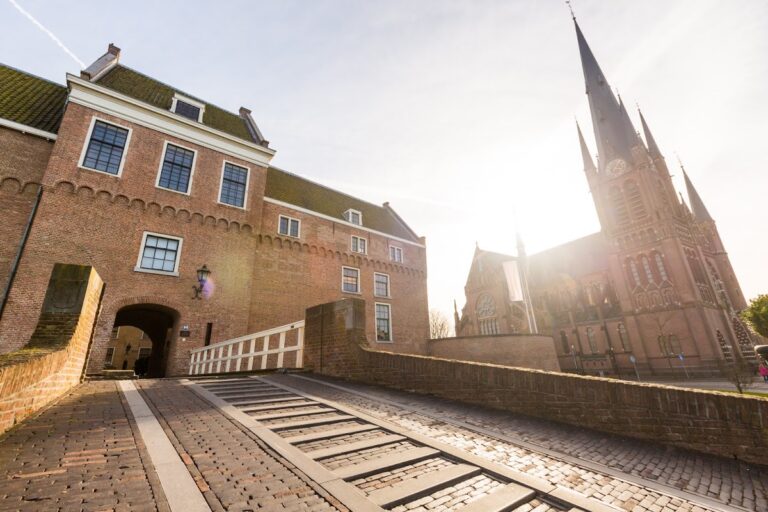
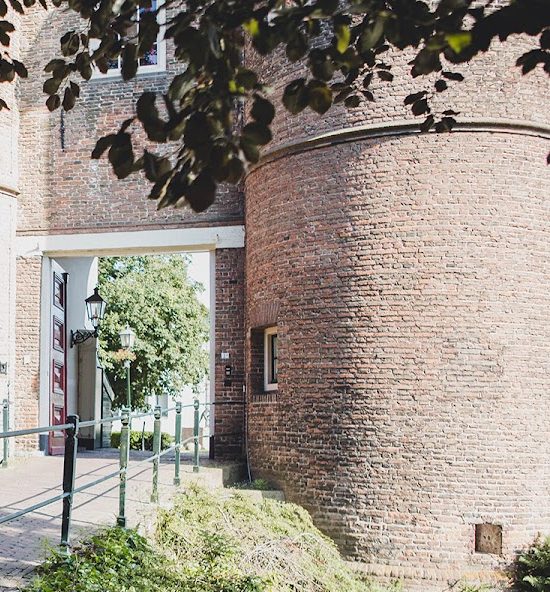
Only part of the former forecourt survives. Its preserved entrance gate has two massive round towers and opens onto the courtyard of the walled forecourt. The gate building now serves as a restaurant and function venue, a use that began in 2008.
Outer Wall
Sections of the outer wall remain along the moat. Together with the gate and forecourt, these fragments preserve part of the castle’s defensive enclosure and indicate the relationship between the entrance area and the surrounding water boundary.
Main Castle Site
The main castle site lies beneath the provincial road. Houses now occupy the outline of the former castle, while the cleared main grounds contain the modern municipal office. These present-day structures mark the area of the former castle without recreating the destroyed building.
Nearby sites