Manoir de La Perraudière: A Historic Manor Estate and Town Hall in France


Site at a Glance
- Rating
- 4.7
- Popularity
- Medium
- Country
- France
- Primary era
- Modern
- External website
- Open
- Eras represented
- Early Modern, Modern
- Civilizations
- French
- Site type
- Civic
- Remains
- Town Hall
On this page12 sections
History
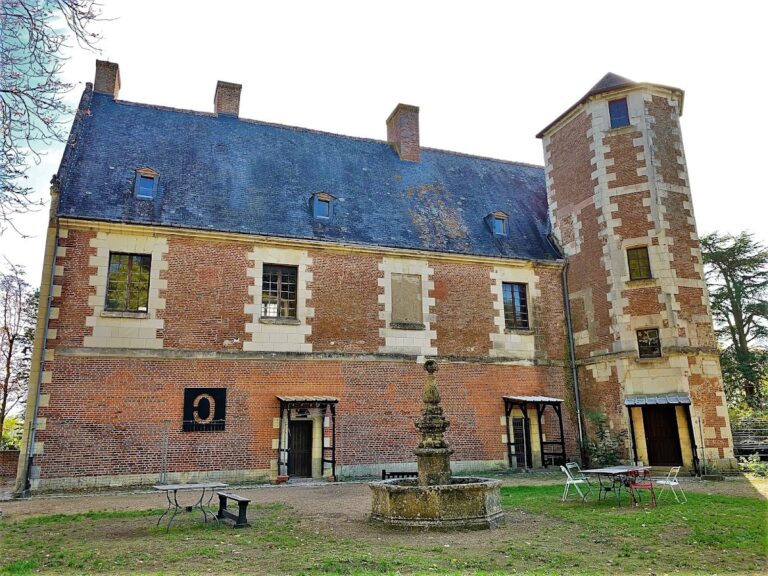
Manoir de La Perraudière is a historic manor estate in Saint-Cyr-sur-Loire, France, whose documented development began in the seventeenth century. Then known as Périgaudière, it consisted of a manor house and a small attached farm. The property was enlarged and altered over the following centuries, and it now accommodates the municipal administration of Saint-Cyr-sur-Loire.
Seventeenth-century origins
René Boüault, lord of Saint-Cyr and a military commissary responsible for royal military administration, acquired the estate in 1624 through his marriage to Marie Perrault. In 1653, he bought from the chapter of Saint-Martin, a corporate body of canons administering church property, the seigneurial residence of the Saint-Cyr-sur-Loire parish fief. This landed estate or jurisdiction was called Chaumont. After the acquisition, Boüault replaced the name Périgaudière with Perraudière.
Changes of ownership in the eighteenth century
Pierre Denis, an esquire and counsellor to the king, acquired the Perraudière in 1713. The estate changed hands again in 1747, when it was sold to Françoise d’Hallais, widow of the Tours merchant Joseph Pézeron. In 1749, Jean Tabareau and his wife, Françoise Leroux, became its owners.
On 19 September 1751, Tabareau bought from the churchwardens of Saint-Cyr a tract called the Grand Cemetery. Covering 30 chaisnées, an old French land measure whose precise area varied by locality, it adjoined the walls of the Perraudière. Tabareau also paid for a new processional canopy for the parish church and received permission for a bench there. In 1768, however, he and his wife stated that they had not used this privilege.
The property passed to Louis-Julien Bellanger and Geneviève Abraham on 18 April 1768. In 1779, Jean-André du Coudreau, an esquire, knight of the Royal and Military Order of Saint Louis, and senior captain of engineers at Saumur, acquired it with his sister. The order was a French chivalric distinction awarded for military service.
Revolutionary and nineteenth-century owners
During the French Revolution, Jean-Baptiste Chicoyneau de Lavalette, a tax farmer who held a contract to collect royal revenues, bought the Perraudière in 1791. He intended to place his family in safety away from Paris.
François-Charles Moisant, who already owned the Château de Langeais and the Cinq-Mars estate, became the owner around 1800 and lived at the Perraudière. He was the brother-in-law of the banker Henri Jacques Goüin-Moisant. His widow, Josèphe Le Gobien, died at the estate in 1834. François-Charles’s brother, Mériadec Moisant, later acquired the property, which passed by inheritance in 1836 to François-Charles’s daughter, Zéphirine Moisant, also known as Madame René Boisseau de Beaulieu.
In 1870, François Washington Mélizet, an American living in Paris, purchased the estate. A keen traveller, he introduced exotic plants and acclimatized them at the Perraudière. The park dates from this period, and the main house acquired the appearance it retains today.
Twentieth-century restoration and municipal use
Alain de Malleray and Andrée Dargouge, owners of a button manufactory at Langeais, bought the property in 1931. Patrick de Warren and his wife, Marie Piston d’Eaubonne, acquired it in 1975 and restored the building. The commune of Saint-Cyr-sur-Loire purchased the Perraudière on 6 June 1981, then restored and adapted the buildings and park for use as the town hall. The domain currently serves the municipal administration.
Remains
The surviving domain combines a manor house, associated estate buildings, and a park. Its physical form reflects the seventeenth-century manor and attached farm, later enlargement and alteration, and the major reshaping carried out after 1870. The buildings and grounds were subsequently restored and adapted for municipal use.
Manor house and estate buildings
Seventeenth-century manor complex
The original estate comprised a manor house accompanied by a small attached farm, an agricultural holding associated with the larger property. The complex grew and changed over the following centuries. The seigneurial residence known as Chaumont stood within the Saint-Cyr-sur-Loire parish fief before René Boüault incorporated it into the estate in 1653.
Entrance portal and terrace
Pierre Denis’s escutcheon, a shield bearing a coat of arms, was placed above the entrance portal leading to the terrace along the Loire. This feature belongs to the period when Denis owned the Perraudière in the early eighteenth century.
Nineteenth-century house and park
Main house
The main house has the appearance established after François Washington Mélizet acquired the estate in 1870. Its later history also includes the 1975 restoration, during which the veranda and the colonnade on the northern facade were removed. The building was later restored and adapted for municipal use.
Park and former greenhouses
The park dates from Mélizet’s ownership and included exotic plants that he introduced and acclimatized. The greenhouses were dismantled during the 1975 restoration. The park was subsequently restored and incorporated into the municipal domain.
Nearby sites