Palazzo del Giardino: The Farnese Ducal Palace in Parma


Site at a Glance
- Rating
- 4.5
- Popularity
- Low
- Country
- Italy
- Primary era
- Early Modern
- Eras represented
- Early Modern, Modern
- Civilizations
- Duchy of Parma and Piacenza, Italian
- Site type
- Domestic
- Remains
- Palace
On this page16 sections
History
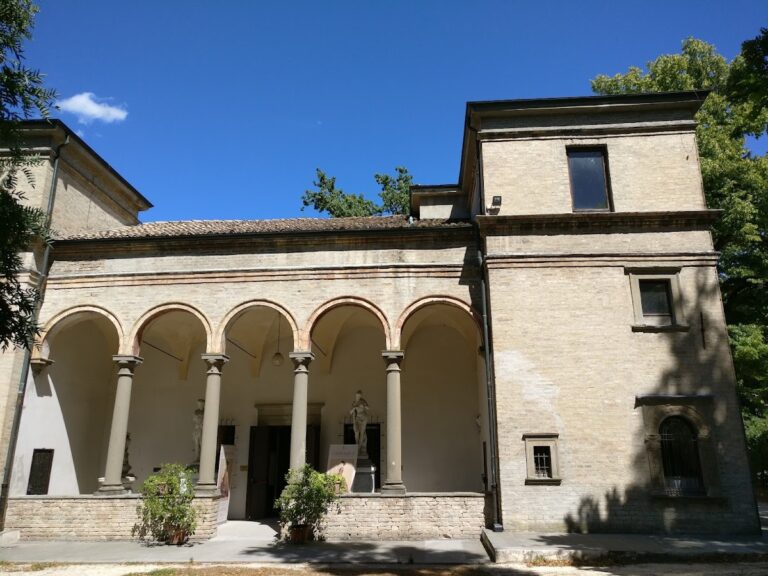
Palazzo del Giardino, also called Palazzo Ducale del Giardino, is a historic palace in Parma, Italy, built for the Farnese dynasty from 1561 as a permanent residence for the court of the Duchy of Parma and Piacenza. Located within the Parco Ducale, it followed the sixteenth-century Renaissance tradition of Florentine and Roman court residences and became one of the principal settings of ducal life in Parma.
Farnese foundation
Duke Ottavio Farnese selected the site near a small tower conceived by the Sforza. The project was entrusted to Jacopo Barozzi da Vignola, an important sixteenth-century Italian architect, while Giovanni Francesco Testa directed construction. The design followed the residential model adopted by the Farnese elsewhere, including the Palazzo Farnese in Rome and the palace at Caprarola.
The palace housed the ducal court until the second half of the seventeenth century, when the seat of the duchy moved to other palaces beside the Palazzo della Pilotta. Its period of greatest splendour came under Ranuccio I Farnese. During the rule of his son Odoardo, however, the duke’s military commitments left less attention for court life, and the palace entered a progressive decline.
Expansion and eighteenth-century renewal
At the end of the seventeenth century, Ranuccio II Farnese began renewal works on both the palace and the ducal garden. Earlier in the century, Simone Moschino and later Girolamo Rainaldi had already altered and enlarged the original building by adding courtyards and projecting side wings.
During the eighteenth century, Ennemond Alexandre Petitot, a French architect who worked extensively in Parma, carried out major modernisation works. These interventions renewed the appearance of the building and altered elements of the surrounding garden, including the elaborate fountain that had stood before the palace.
Military use and wartime destruction
Following the unification of Italy, Palazzo del Giardino became the home of the School of Application for Infantry and Cavalry. On 8 and 9 September 1943, during the fighting that followed Italy’s armistice, its commander, Colonel Gaetano Ricci, refused a German demand that the school surrender. The unequal engagement continued until German armoured vehicles intervened. Five Italian defenders died and about twenty were wounded.
The school’s flag received the Silver Medal of Military Valour for this resistance. After the fighting, people with free access to the palace carried out acts of vandalism. The building was then severely damaged by aerial bombardment during the Second World War and was largely devastated by the end of the conflict.
Reconstruction and present role
Reconstruction faced substantial bureaucratic obstacles. In 1953, the palace became the headquarters of the Carabinieri Legion of Parma. The Carabinieri are Italy’s national gendarmerie, combining police and military functions. The southwest wing, which had been completely destroyed, was rebuilt between 1959 and 1968.
Restoration and enhancement interventions have continued since 2004. Palazzo del Giardino currently houses the Provincial Command of the Carabinieri of Parma and one of the Carabinieri’s scientific-investigation offices, the RIS, which carries out forensic and technical examinations. It is intended to become a representative office of the European Food Safety Authority, a European Union agency that provides scientific advice on risks affecting the food chain. The municipality of Parma is identified as the owner, and the palace is recognised as an Italian cultural property.
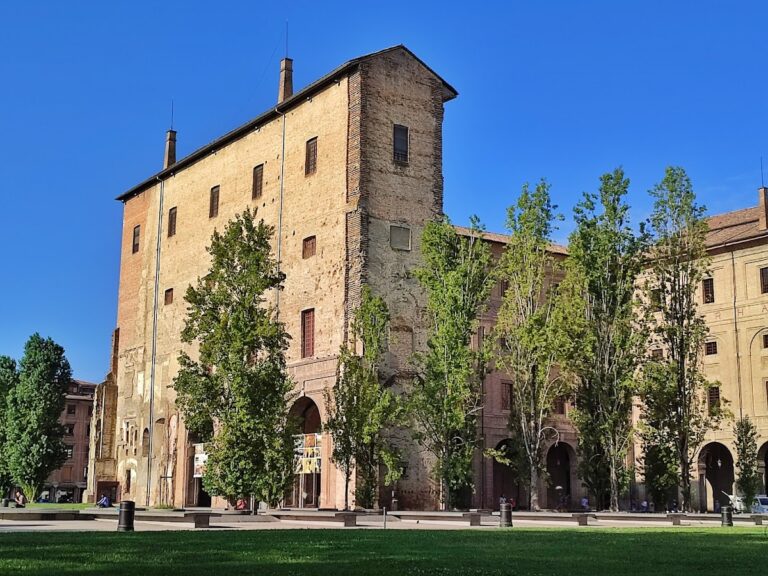
Palazzo del Giardino should be distinguished from the former official residence of Duchess Marie Louise at the present Piazzale della Pace, between the Palazzo della Pilotta and the Palazzo della Provincia. That older Palazzo Ducale was destroyed by an air raid on 13 May 1944, together with parts of the Palazzo della Pilotta and the Teatro Reinach.
Remains
Plan, additions, and garden setting
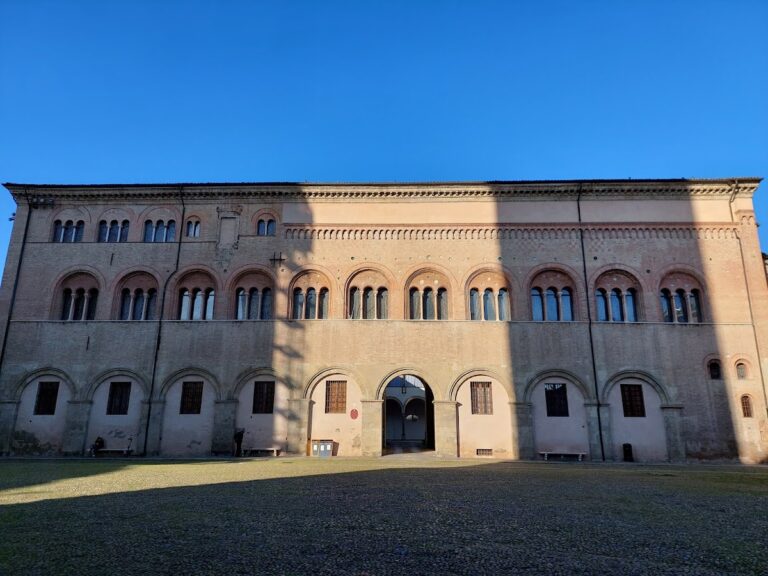
The original palace had a quadrilateral ground plan. Its later development added courtyards and lateral projecting wings, giving the building a more complex arrangement than the first design. The architecture combines Baroque and Neoclassical characteristics, reflecting the successive alterations and renewals carried out after the sixteenth-century foundation.
Monumental fountain
A monumental fountain once stood in front of the palace. Giovanni Boscoli created it with numerous statues and water features, and its elaborate design made it famous. The fountain was completely demolished in the second half of the eighteenth century, possibly because of sanitation problems, during Petitot’s modernisation works.
Principal decorated rooms
Birds’ Hall
An eighteenth-century monumental staircase leads to the large first-floor salon known as the Sala degli Uccelli, or Birds’ Hall. Its ceiling carries stucco and fresco decoration by Benigno Bossi, depicting 224 species of birds. Paintings by Cesare Baglioni, made during the first years of the seventeenth century, are located on the ground floor.
Sala di Alcina
The Sala di Alcina is the oldest room in the palace. Around 1568, Girolamo Mirola decorated it with frescoes assisted by Jacopo Zanguidi, known as Bertoja. The scenes derive from Book Six of Ludovico Ariosto’s Orlando Furioso, an Italian Renaissance epic poem.
Sala dell’Aetas Felicior
The Sala dell’Aetas Felicior, also called the Sala del Bacio, was frescoed by Bertoja between 1570 and 1573. Its scenes present the myth of Venus, the Roman goddess associated with love, and Cupid, the god of desire. The room takes its principal name from the Latin inscription Aetas Felicior on a cornice running along the ceiling.
The alternative name, Sala del Bacio, refers to a dance scene in which a partially concealed kiss appears between transparent crystal columns. This illusionistic device reflects late Mannerism, a late-sixteenth-century style known for artificial spatial effects, elaborate forms, and complex visual illusion.
Sala d’Orfeo
Mirola and Bertoja frescoed the Sala d’Orfeo between 1568 and 1570. Its scenes depict the love story of Orpheus, the legendary musician of Greek mythology, and are interspersed with architectural figures.
Sala di Erminia
In 1628, Alessandro Tiarini of Bologna decorated the Sala di Erminia with frescoes showing scenes from Torquato Tasso’s Jerusalem Delivered, an epic poem about the First Crusade. Carlo Bossi added stucco decoration representing intertwined branches.
Sala dell’Amore
The vault of the Sala dell’Amore contains frescoes by Agostino Carracci presenting three forms of love. Maternal love appears through Venus watching her son Aeneas depart for Italy; celestial love is represented by Venus and Mars, the Roman god of war; and human love is represented by Peleus and Thetis.
Carracci died in 1602 before completing the work. Carlo Cignani finished it in 1679 and 1680, adding further representations of love. The room’s decoration therefore preserves a collaboration extending across different phases of the palace’s artistic history.
Sala delle Leggende
Three walls of the Sala delle Leggende bear frescoes by Giovanni Battista Trotti, known as Il Malosso, painted between 1604 and 1619. Their subjects are Jupiter crowning Bacchus in the presence of Venus, the sacrifice of Alcestis, and Circe restoring human form to the companions of Odysseus. Jupiter was the chief Roman god, Bacchus was associated with wine and revelry, and Circe was the enchantress in the story of Odysseus.
Two additional frescoes by the Flemish painter Jan Soens occupy the wall beside the window. Other works associated with the palace include Carlo Cignani’s Abduction of Europa, Jacopo Zanguidi’s fresco in the Sala dell’Aetas Felicior, Agostino Carracci’s Venus and Mars, and Giovanni Battista Trotti’s Circe Restoring Human Form to the Companions of Odysseus.
Nearby sites