Archaeological Museum of the Lemesos (Limassol) District: Cyprus’s Regional Archaeological Collections


Site at a Glance
- Rating
- 4.6
- Popularity
- Low
- Country
- Cyprus
- Primary era
- Classical
- External website
- Open
- Eras represented
- Stone Age, Bronze Age, Iron Age, Classical
- Civilizations
- Egyptian, Roman
- Site type
- Museum
On this page6 sections
History
The Archaeological Museum of the Lemesos (Limassol) District is a public museum in Limassol, Cyprus, founded in 1948 to preserve and present the region’s archaeological heritage. It first operated inside Limassol Castle, where it remained until the conflicts of 1963 led to its indefinite closure. In 1964, the castle became the headquarters of the National Guard.
Foundation and relocation
As Limassol expanded, archaeological excavations brought numerous finds to light, creating the need for a larger purpose-built museum. Construction of the present building began in 1972, and the museum opened there in 1975. The building stands in central Limassol, approximately two kilometres northeast of Limassol Castle. After the archaeological collections moved, the castle was used for a medieval museum, forming a chronological continuation from the region’s ancient past to the medieval period.
The archaeological history of the district
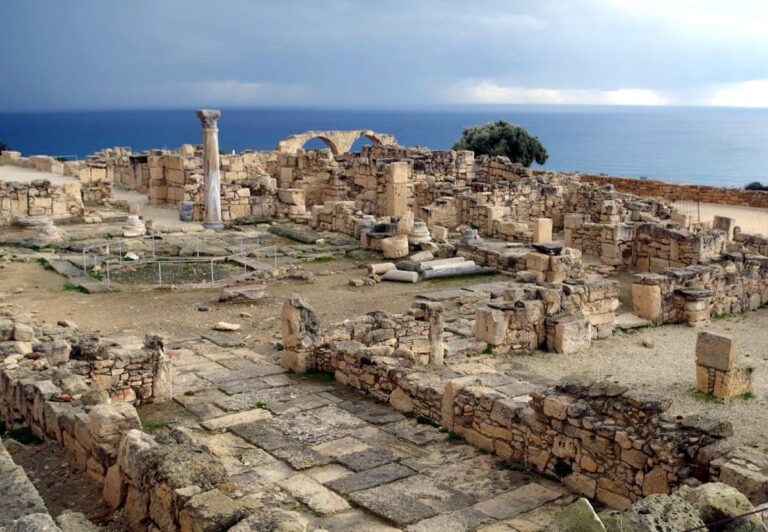
The museum covers the history of the Limassol District from the Neolithic period through the Roman period. Its collections draw on material from Aetokremnos, Parekklishia-Sillourokambos, Amathus, Kourion, smaller settlements, regional sanctuaries, and excavated tombs. Amathus and Kourion were major ancient urban centres on Cyprus, and many of the museum’s principal ancient finds come from Amathus.
Amathus produced art shaped by strong connections with Phoenicia, Egypt, and other parts of the Near East. Objects from the museum’s wider collections likewise reflect Cyprus’s cultural contacts with those regions, illustrating the range of influences present in the archaeological record of the district.
Remains
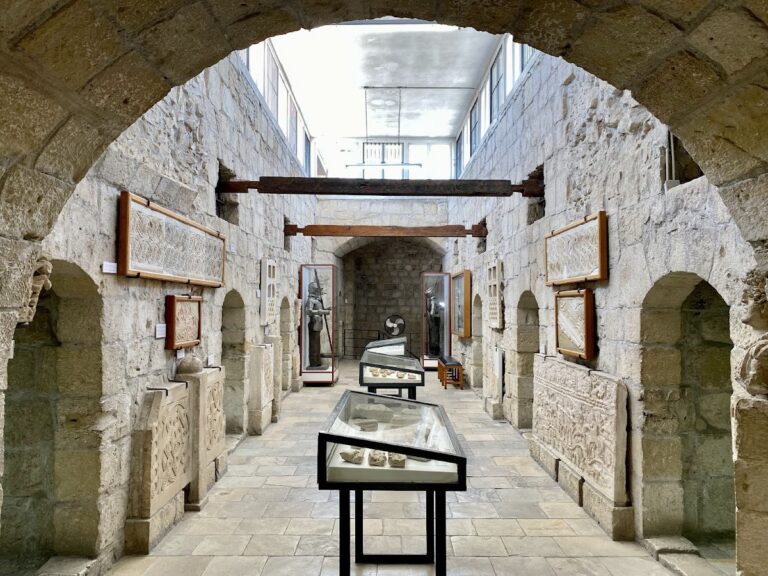
The present museum is a purpose-built structure immediately north of Limassol Zoo. Its displays are arranged in three halls that group the archaeological material by broad category. Together, they present pottery, metalwork, personal objects, sculpture, inscriptions, and other remains dating from the Neolithic period to the Roman period.
Exhibition halls
Hall I is devoted mainly to pottery from different periods. Hall II contains copper objects, coins, jewellery, tools, ritual objects, and other artefacts. Hall III presents sculptures, gravestones, architectural decorative elements, inscriptions, and other objects made of stone.
Selected archaeological material
The holdings include the remains of a cat burial dated to approximately 7500–7000 BCE and a bathtub from the eleventh century BCE. A kernos, a ritual vessel with a central container and smaller attached receptacles, comes from Amathus and dates to the tenth or ninth century BCE. Geometric-period pottery dates to approximately 1050–750 BCE. The Amathus collection also includes a terracotta figurine from approximately 900–750 BCE, further terracotta figurines from approximately 600–480 BCE, and a sixth-century BCE amphora bearing a Cypriot inscription.
Other Amathus objects include a fifth-century BCE gravestone decorated with two lions, a Hathoric capital from approximately 480 BCE, and a fourth-century BCE priestly figure wearing a bull mask. The museum also holds a figure of Bes, an ancient Egyptian protective deity commonly shown in a frontal, dwarf-like form, together with heads of Zeus and limestone statues from a sanctuary of Zeus.