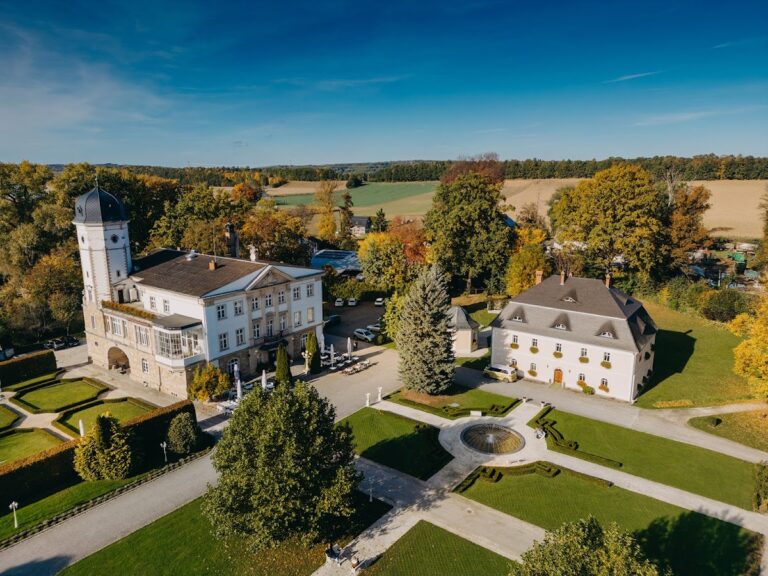
Castle in Warta Bolesławiecka: A Medieval Stronghold and Renaissance Manor Site


Site at a Glance
- Rating
- 4.3
- Popularity
- Very Low
- Country
- Poland
- Primary era
- Medieval
- Eras represented
- Medieval, Early Modern
- Civilizations
- Holy Roman Empire
- Site type
- Military
- Remains
- Castle
On this page6 sections
History
Castle in Warta Bolesławiecka is a ruined castle in Poland, probably built at the end of the fourteenth century during the transition between the fourteenth and fifteenth centuries. It stood on a rise amid meadows beside the Bobrzyca River and formed the earlier phase of a historic site later expanded with a Renaissance manor house.
Medieval Castle
By 1498, the castle was in existence. During the sixteenth century, its northern side was protected by a double moat and an earthwork rampart, strengthening the site’s defensive character.
Renaissance Expansion
In 1540, Hans von Zedlitz built a manor house beside the castle. The Renaissance was a European artistic and architectural period shaped by renewed interest in classical forms, and it developed in Central Europe mainly from the fifteenth century onward. The manor was rebuilt in later centuries, creating a second major phase in the history of the site.
The property is listed in the heritage register under number A/3175/747, with registration dated 26 September 1960.
Remains
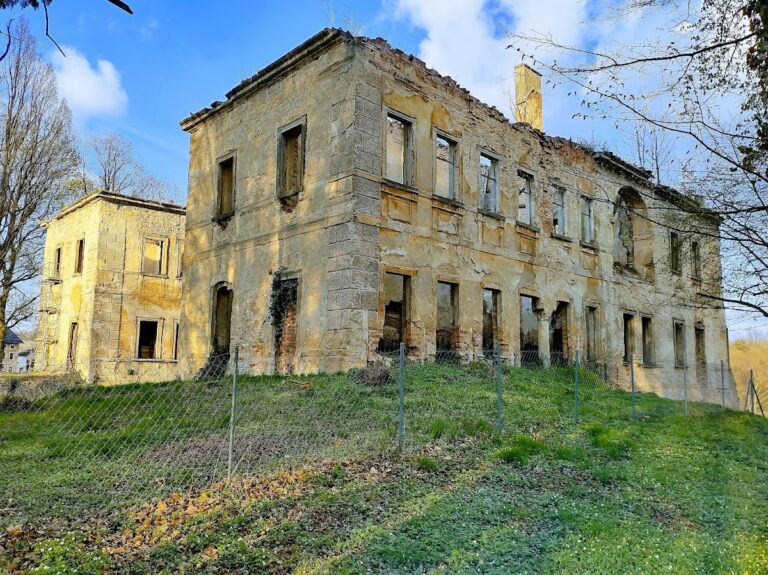
The surviving site combines fragments of the castle walls with the ruins of the adjacent manor house. The castle occupied a rectangular plan measuring 15 by 20 metres and contained an internal courtyard. Its northern defensive works included a double moat and an earthwork rampart.
Castle Remains
Fragments of the castle walls preserve part of the rectangular medieval structure. The internal courtyard formed the centre of the 15-by-20-metre layout, while the northern moat and rampart belonged to the later defensive arrangement.
Manor House Ruins
The manor house stands beside the castle as the remains of a two-storey Renaissance building erected in 1540. Its ruins represent the later residential phase of the site, which was rebuilt during subsequent centuries.