Fort Ia in Poznań: A Fort of the Poznań Fortress


Site at a Glance
- Rating
- 4.5
- Popularity
- Very Low
- Country
- Poland
- Primary era
- Modern
- External website
- Open
- Eras represented
- Modern
- Civilizations
- German
- Site type
- Military
- Remains
- Fort
On this page8 sections
History
Fort Ia in Poznań, Poland, is one of the 18 forts of the Poznań Fortress, a nineteenth- and early-twentieth-century defensive system built around the city. Originally called Zwischenwerk Ia, it was constructed at Starołęka between 1887 and 1890 during the second stage of the fortress system’s development.
Names and changing military roles
In 1902, after the polygonal fortress ring, a perimeter system arranged around the city in angular defensive lines, was abolished, the fort received the name Boyen. This name had previously belonged to Cavalier I Boyen, an elevated defensive work within or behind a fortified position, and commemorated Hermann von Boyen, a Prussian general and military reformer.
In 1931, the fort’s patron was changed to the Polish military commander and writer Krzysztof Arciszewski, whose name it then bore. During the Second World War, the fort served as a warehouse.
Capture in 1945
During the Battle of Poznań in 1945, the 1083rd Infantry Regiment attacked Fort Ia from the south, advancing from the fork of the railway line. The fort was captured on 3 February 1945, approximately a dozen hours after Fort I.
Protection and later changes
Fort Ia entered the register of monuments under number A-245 on 25 May 1983. Until December 2002, the rampart master’s house behind the rear area survived. Its very poor technical condition led to a decision to demolish the building.
The fort’s grounds are part of the Natura 2000 protected area “Fortifications in Poznań” (PLH300005), a European Union conservation designation for important habitats and species. The designation protects bat populations that use the fort for wintering. Interior visits from mid-September to mid-April can disturb the animals and breach nature-protection law.
Remains
Layout and defensive works
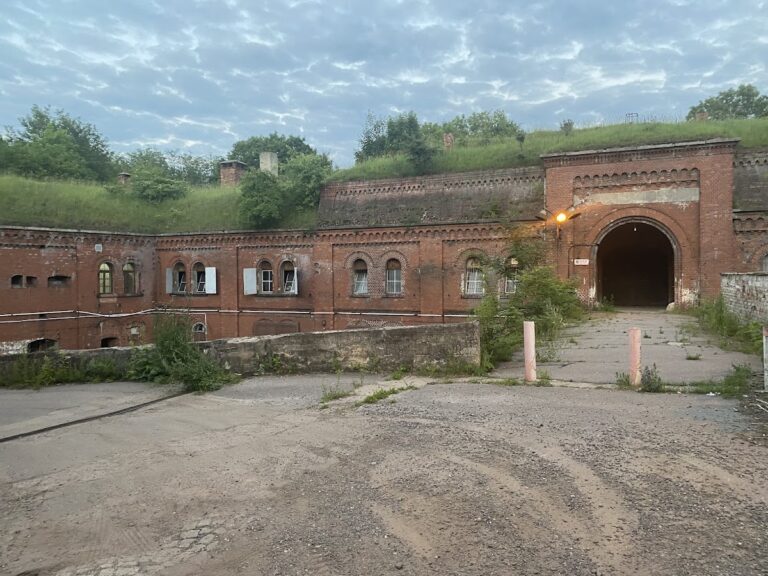
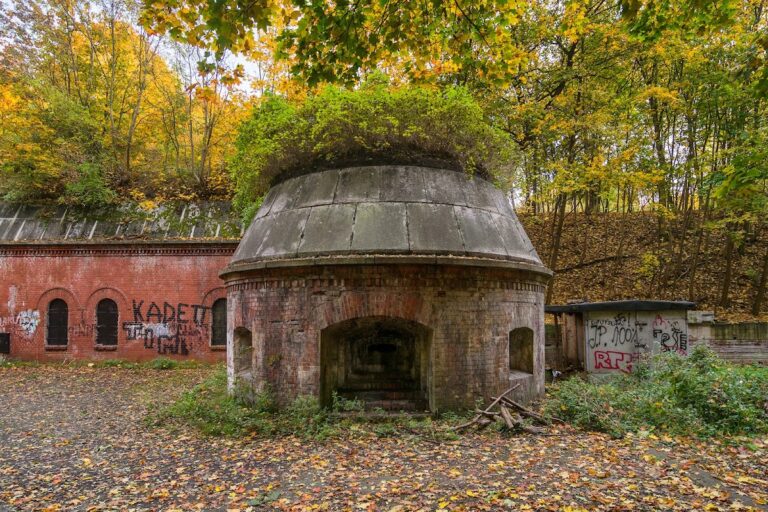
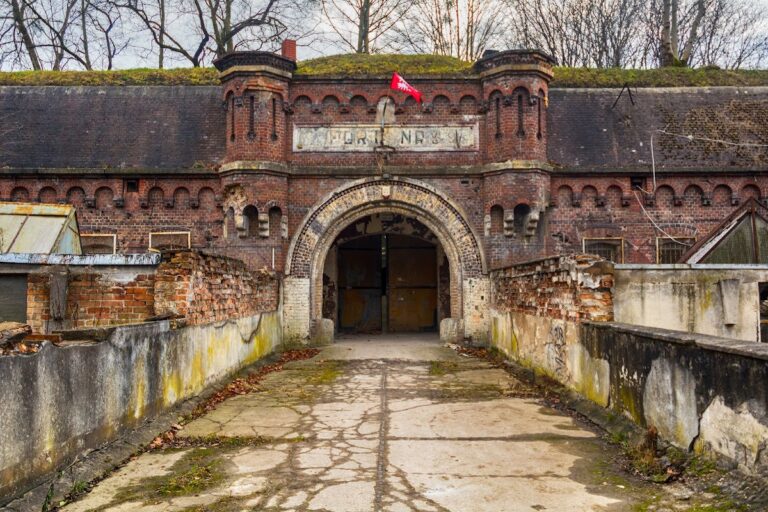
Fort Ia has a trapezoidal plan and five traverses, raised banks that protect defenders from fire along the length of the rampart. Corridors passing through the counterscarp, the outer slope or retaining side of a defensive ditch, provided communication with the caponiers, fortified structures projecting into or beside the ditch.
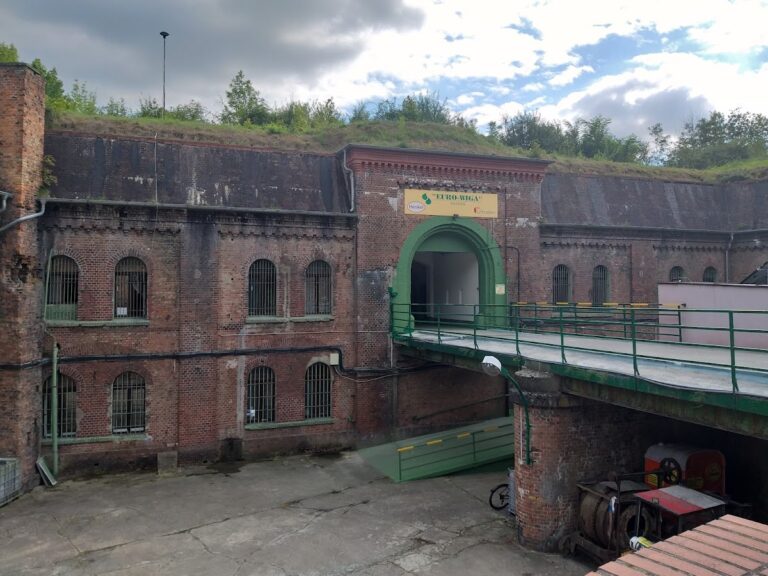
The fort’s outer walls are faced with alternating light and dark bricks, giving the structure an appearance described as exceptional among the works of the Poznań Fortress. A fortress road, now Warowna Street, served the site, while a lateral military road, now Forteczna Street, provided another connection.
Barracks, entrances, and shelters
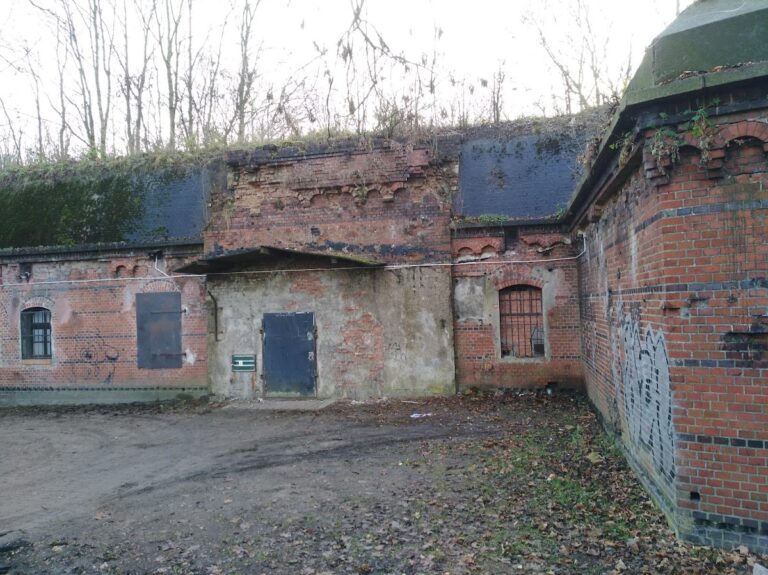
Front barracks form part of the fort. During modernization in 1913 and 1914, some windows and entrances were rebuilt and equipped with new doors. Two small concrete shelters were added to the counterscarp, and two more were built beside the fort entrance.
The drainage channel serving the ditch was interrupted, and parts of the moat consequently became flooded. This surviving waterlogged element forms part of the fort’s present defensive setting.
Bat wintering site
Several bat species use the fort, including the greater mouse-eared bat, Daubenton’s bat, Natterer’s bat, serotine, grey long-eared bat, brown long-eared bat, and western barbastelle. Between several dozen and more than 110 bats winter at the site, making it a wintering area of more than regional importance.
Nearby sites