Castello di Gossolengo: A Medieval Fortress in Italy


Site at a Glance
- Rating
- 3.6
- Popularity
- Very Low
- Country
- Italy
- Primary era
- Medieval
- Eras represented
- Medieval
- Civilizations
- Holy Roman Empire
- Site type
- Military
- Remains
- Castle
On this page7 sections
History
Castello di Gossolengo is a medieval lowland fortification in Gossolengo, Italy, in the Po Plain of Emilia-Romagna near the Trebbia River. Its exact construction date is unknown, but it may have been built during the final years of the twelfth century. The castle’s later history reflects local political conflict, military occupation, ecclesiastical ownership, and changing state uses.
Medieval Gossolengo
Historical records concerning the castle are scarce. In 1254, the settlement of Gossolengo belonged to the chapter of Piacenza Cathedral, the corporate body of clergy responsible for a cathedral’s administration and religious life. This record does not specifically establish ownership of the castle.
In 1314, fighting in the countryside around Gossolengo involved the Popular faction supporting Alberto Scotti, a Guelph lord of Piacenza whose faction backed the papacy and opposed Visconti power. The opposing side was aligned with the Viscontis, the ruling dynasty centered in Milan, and was led by Nello da Massa, a condottiere, or professional military commander who led troops under contract. The Visconti faction was defeated, 16 of its members were killed, and many others were captured.
Seventeenth-century occupation and later ownership
In 1636, a Spanish garrison occupied the castle during military operations against Odoardo I Farnese, the seventeenth-century Duke of Parma and Piacenza. By 1647, both Gossolengo and its fortress belonged to the monastery of San Sisto in Piacenza.
State use and conservation
After the unification of Italy, the castle entered the state military estate and housed the local shooting school until 1914. Frescoes were discovered during conservation work in 1936, and their restoration was directed by the Piacenza painter Luciano Ricchetti. The castle is now described as restored and in good condition.
Remains
Plan and defensive features
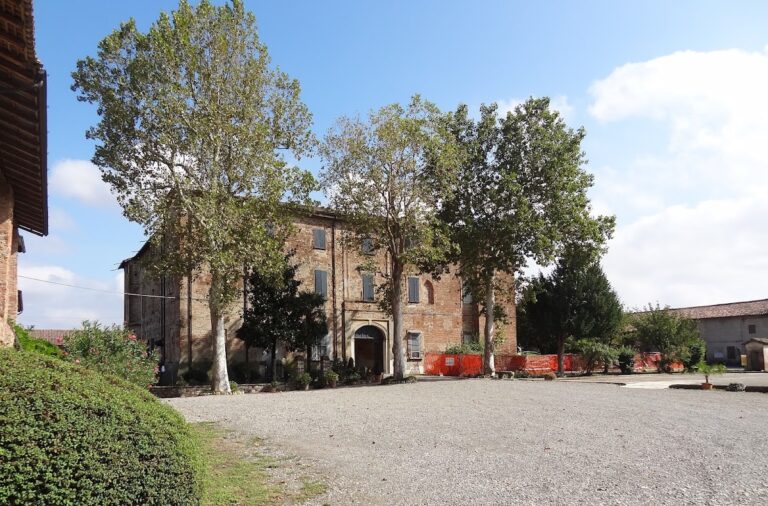
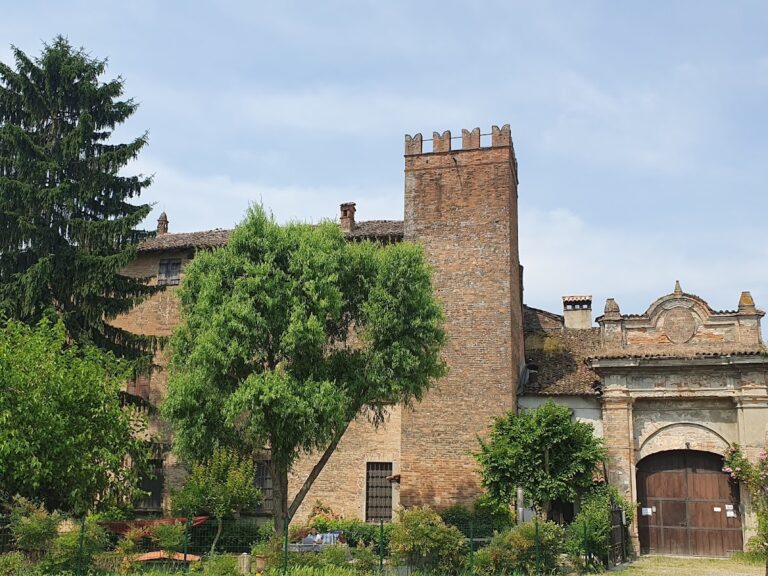
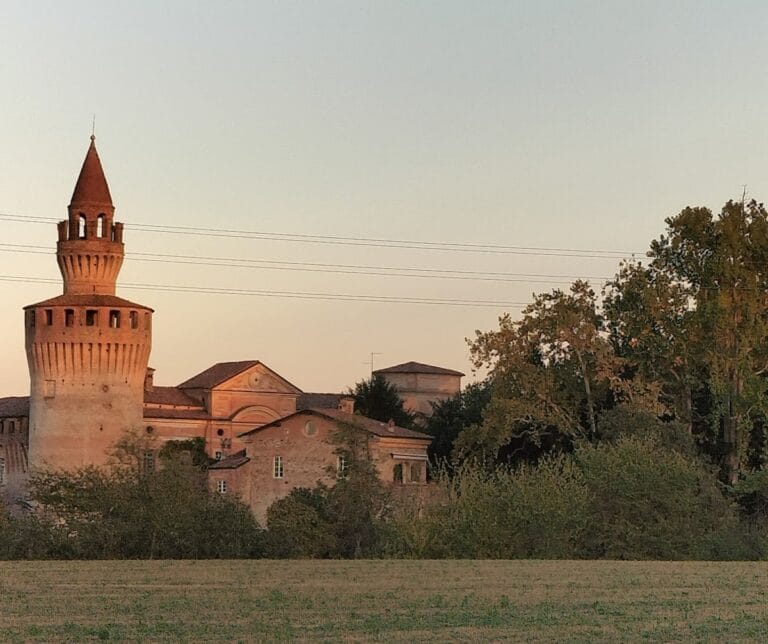
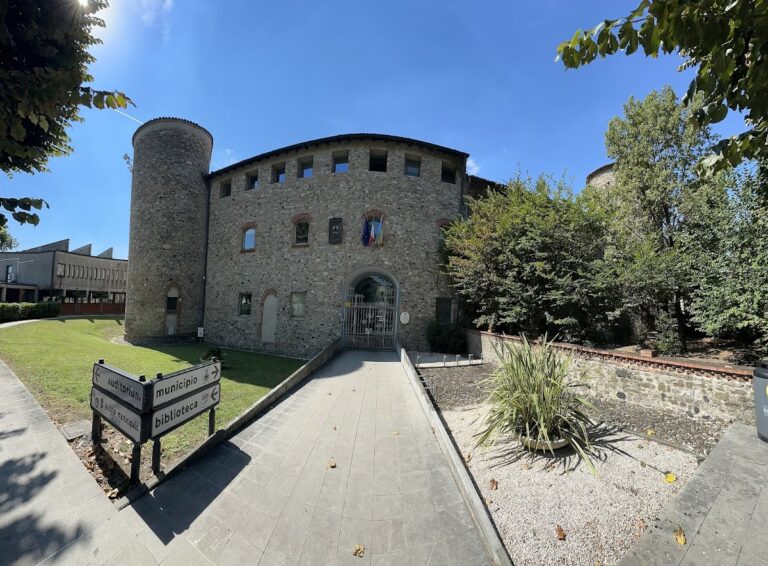
The castle is a rectangular brick-and-stone building with an internal courtyard. Its walls use terracotta brick and river pebbles from the Trebbia, covered by plaster. Two low towers stand on the entrance facade. The structure has been substantially altered from its original form. Access was once controlled by a large drawbridge and a smaller drawbridge, both spanning a moat. The moat was later filled, and the bridges were removed, although traces of their former positions remain visible.
Frescoed vaulted room
A vaulted room near the base of one tower contains frescoes on a rear wall divided into three sections by the ceiling vaults. The paintings include a Nativity with saints set against military fortifications and rocky walls, as well as an Annunciation scene with blessed figures. They are attributed to an anonymous artist and date from between the fourteenth and fifteenth centuries.