Fortezza del Tocco: A Spanish Coastal Fortress at Acireale


Site at a Glance
- Rating
- 4.6
- Popularity
- Very Low
- Country
- Italy
- Primary era
- Early Modern
- External website
- Open
- Eras represented
- Early Modern
- Civilizations
- Kingdom of Sicily, Spanish
- Site type
- Military
- Remains
- Fort
On this page5 sections
History
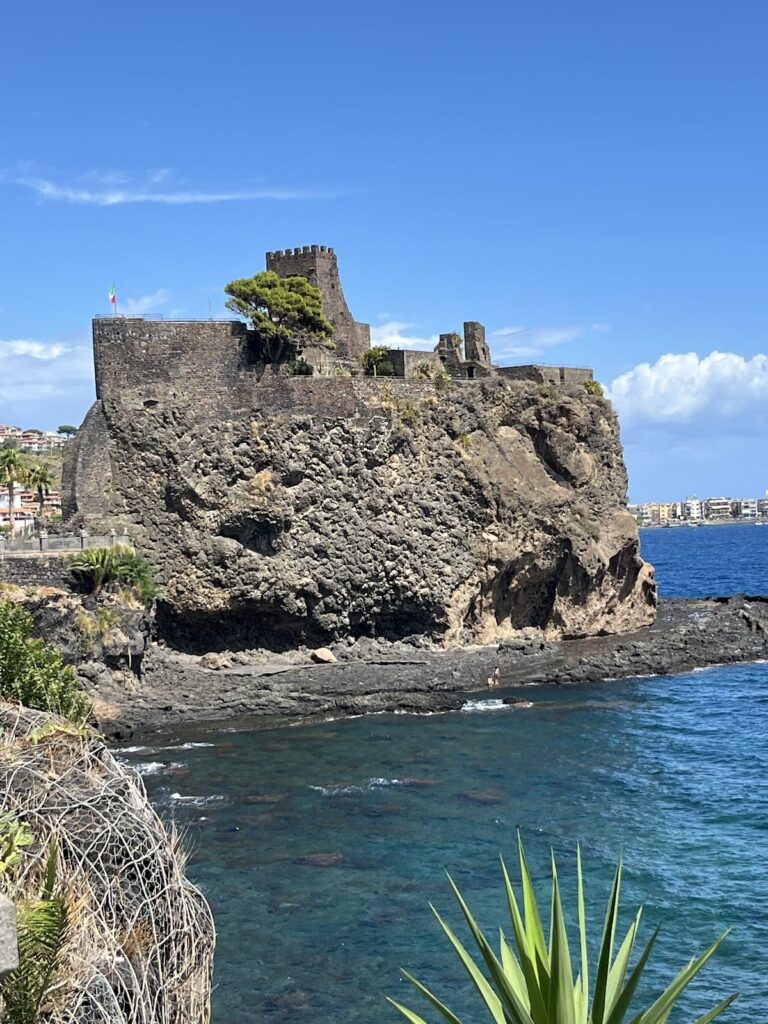
Fortezza del Tocco is a Spanish coastal fortress in Acireale, Italy, built between 1592 and 1616 during Spanish rule of the Kingdom of Sicily. It formed part of a defensive system intended to protect the city and its coast from raids by Barbary pirates, maritime raiders based mainly along the North African coast.
Coastal Defense after Lepanto
The fortress emerged from growing concern over attacks on the Italian and Sicilian coasts after the Battle of Lepanto in 1571, the major naval clash between the Ottoman fleet and the Christian Holy League. In 1582, Uluç Ali, an Ottoman naval commander and governor of Algiers, attempted to land near Santa Tecla with seven Turkish galleys. The local population mobilized and drove the force away, encouraging Acireale to strengthen its coastal defenses.
Fortezza del Tocco belonged to a late-sixteenth-century Spanish network along the Acireale coast. Its associated defenses included Torre Alessandrano, Torre di Sant’Anna at Capo Mulini, and the Garitta di S. Tecla. This network became part of the broader system of coastal towers that had developed from earlier fortifications dating to the Swabian period.
Construction and Military Service
The project began with the engineer Camillo Camilliani. Construction was undertaken by Vincenzo Geremia, an engineer from Acireale known as “Porcellana,” who also altered Camilliani’s original plans. Geremia added a portable cannon in 1624, and prisoners sentenced to forced labor carried out further enlargement works in 1626.
In 1675, the fortress acted as a military stronghold during the Franco-Spanish War, a conflict between France and Spain. It bombarded the French fleet as the ships attempted to pass the blockade maintained by Acireale and the Spanish army.
Decommissioning and Protection
The fortress ended its military service in the nineteenth century, after which it was decommissioned and abandoned. In 1834, the portable cannon was removed and transferred to the Pinacoteca Zelantea in Acireale, where it remains visitable. Since 1999, Fortezza del Tocco and the Timpa area have formed part of the La Timpa oriented nature reserve, a legally protected natural area managed to conserve environmental features while allowing regulated use.
Remains
Fortezza del Tocco stands on the Timpa, a volcanic escarpment or rocky outcrop at Santa Maria La Scala near Acireale. Its elevated position gave the fort a broad view over the coast and supported its defensive purpose.
The fortress had an irregular ground plan and contained a large cannon. When pirate ships were sighted, the cannon was fired as a warning to the local population. The fort’s position on the rocky escarpment, its irregular layout, and its relationship to the coast reflect the practical demands of the defensive system established along this part of Sicily.