Fortezza del Giove: A Fifteenth-Century Fortress on Elba


Site at a Glance
- Rating
- 4.7
- Popularity
- Very Low
- Country
- Italy
- Primary era
- Medieval
- Eras represented
- Medieval
- Civilizations
- Unclassified
- Site type
- Military
- Remains
- Castle
On this page6 sections
History
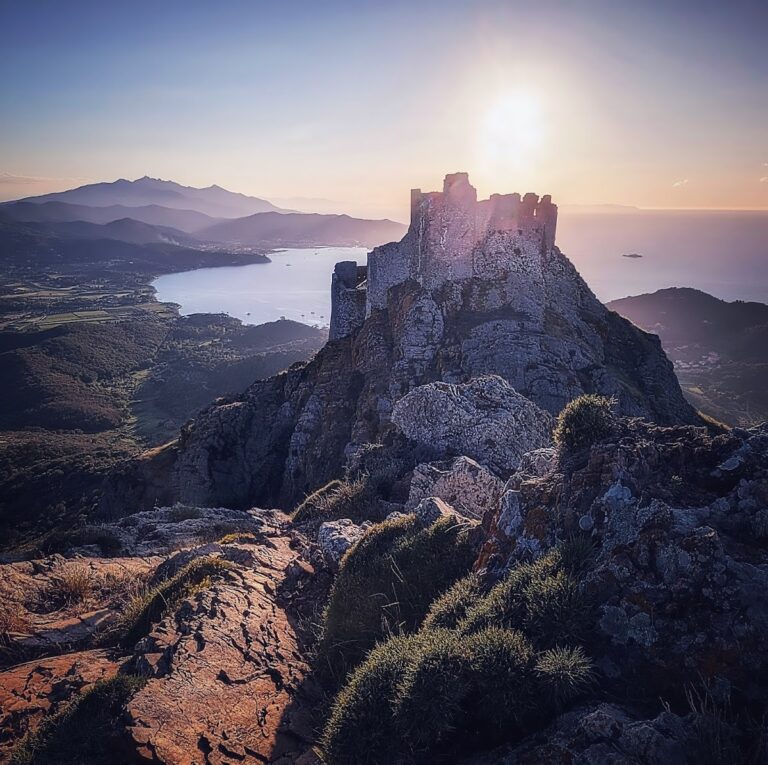
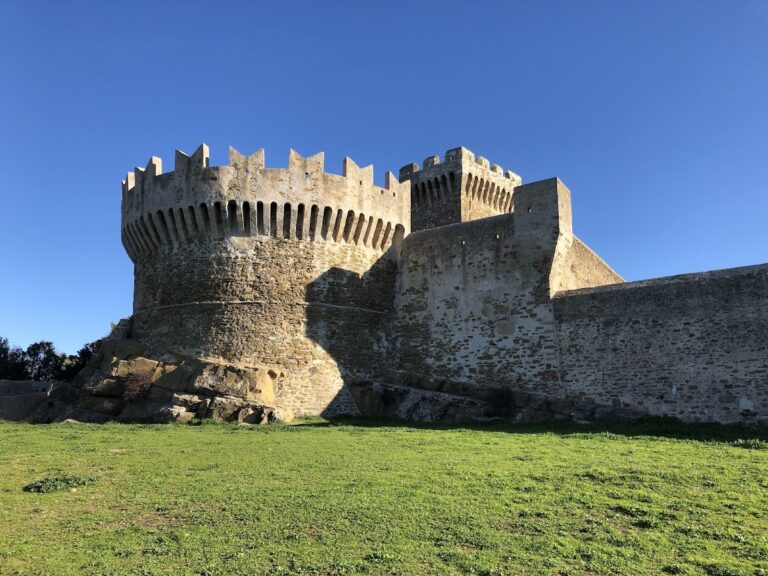
Fortezza del Giove is a fifteenth-century military fortress in Italy, in the municipality of Rio on Elba Island. Built under the Appiano ruling house of Piombino, it was probably constructed around 1459 on the order of Jacopo III Appiano to control the Piombino Channel and the mining hinterland of eastern Elba.
Construction and early role
The fortress was originally called Fortezza del Giogo. The name derives from the Latin iugum, referring to the saddle-shaped hill on which the stronghold was built. It served as a refuge for the inhabitants of the nearby settlements of Grassera and Rio, who defended themselves there on several occasions. Its function as a long-range observation post ended during the sixteenth century.
The attack of 1553
On 11 August 1553, artillery fire struck the fortress during an attack led by Dragut, an Ottoman corsair and naval commander active in the Mediterranean. The stronghold was captured after its commander surrendered. A historical testimony states that Dragut then gave the commander and his companion 20 people, men and women reportedly all elderly, in connection with a promise involving 20 heads.
The fortress later fell into severe deterioration and became unstable, with extensive collapses. By 1967, the Appiano coat of arms that had stood immediately east of the structure had been stolen.
Remains
Keep and defensive enclosure
The fortress was organized around a quadrangular keep, the principal fortified tower, with three vaulted levels and a lower section whose walls sloped outward to thicken the base. A crenellated curtain wall, an enclosing defensive wall linking fortified points, surrounded the keep. Its lower masonry was similarly battered, and a dry moat protected the outer perimeter.
The entrance occupied the southeast front, which remains perfectly preserved. A tower guarded the gateway, while a drawbridge formed part of the exterior approach and could be raised to restrict entry. Extensive collapse has completely filled the first level on the inner side of the keep, and fallen masonry lies around the foot of the entire exterior structure.
Appiano coat of arms
The marble Appiano coat of arms formerly placed on the ground east of the fortress measured 2 by 1 metres and was 30 centimetres thick. It had been stolen by 1967, while the fortress itself survives as a severely deteriorated and unstable ruin.
Nearby sites