Forte Michelangelo: Renaissance Fortress of Civitavecchia’s Port


Site at a Glance
- Rating
- 4.6
- Popularity
- Very Low
- Country
- Italy
- Primary era
- Early Modern
- Eras represented
- Early Modern
- Civilizations
- Papal States
- Site type
- Military
- Remains
- Fort
On this page11 sections
History
Forte Michelangelo is a Renaissance fortress in Civitavecchia, Italy, built to protect the town’s port on the Tyrrhenian coast. Construction began in 1508 within the former Papal States, territories governed by the popes as temporal rulers, and the fortress was completed in 1535, with its principal tower finished by 1537. It stands at the southern end of the harbor and reflects the port’s renewed importance during the Renaissance.
Medieval origins and the revival of the port
Between the tenth and eleventh centuries, a fortress was established in a commanding position between the ruins of the ancient city and its devastated port. A small settlement gradually developed beside it along the ancient Roman road. During the thirteenth and fourteenth centuries, Civitavecchia’s harbor served as an anchorage, although poor connections and inadequate facilities limited its use.
After the reorganization of the Papal States that followed the Council of Constance, the church council held from 1414 to 1418, the town regained a more coherent urban structure. Its port was restored, and contemporary records attributed important buildings to Bernardo Rossellino. The discovery of alum in the Tolfa Mountains, a mineral used in dyeing, tanning, and textile production, further encouraged the port’s revival because exports of the valuable material had to be organized.
Renaissance construction
The restoration and development of the port were entrusted to architects and builders associated with the papal court, including Giovannino de’ Dolci, Baccio Pontelli, and Donato Bramante. Pope Julius II, head of the Catholic Church from 1503 to 1513 and a major patron of Renaissance architecture, commissioned the fortress in response to repeated pirate attacks. He laid and blessed its foundation stone on 14 December 1508.
Work began under Bramante and continued with Giuliano Leno and Antonio da Sangallo the Younger, a Renaissance architect and military engineer. The fortress itself was completed in 1535. Its octagonal principal tower was completed by 1537 during the pontificate of Pope Paul III, who became pope in 1534 and continued major Renaissance building and fortification projects. A local tradition without documentary confirmation attributes the design of this tower, or maschio, to Michelangelo Buonarroti, and this tradition gave the fortress its name.
Later military history and restoration
Forte Michelangelo took part in military engagements on several occasions. It suffered extensive damage during aerial attacks in the Second World War and was later restored. Further rehabilitation and reorganization of the fortress’s immediate surroundings took place in the early twenty-first century. The fortress is now used as the headquarters of the port authority.
Leonardo da Vinci was among the notable visitors associated with the fortress, where he carefully studied and drew surviving Roman buildings. His presence places the site within the wider intellectual and architectural interests of the Italian Renaissance.
Remains
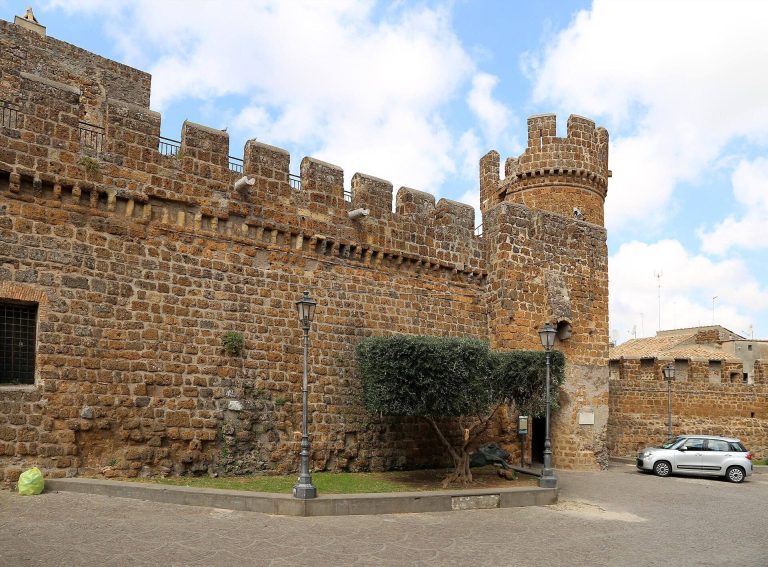
The surviving fortress has an imposing quadrilateral plan measuring approximately 100 by 120 metres. Its exterior is faced with travertine blocks, and four circular corner towers or projecting defensive structures occupy the corners. The northern side is commanded by the octagonal principal tower, while a surviving section of the former drawbridge mechanism remains west of it.
Defensive layout
Corner bastions
The four corner bastions are San Paolo at the southeast, San Pietro at the southwest, San Romolo at the northwest, and San Giulio at the northeast. Some texts also identify them as San Colombano, Santa Ferma, San Sebastiano, and San Giovanni. An oak emblem on the eastern tower derives from Pope Julius II’s heraldic symbol and marks the place where he blessed and set the foundation stone on 14 December 1508.
Principal tower
The fortress’s principal tower, or maschio, is an octagonal structure on the northern side. As the strongest tower of a fortress, it formed the main defensive element. Its completion in 1537 took place under Antonio da Sangallo the Younger during the reign of Pope Paul III. The tower’s traditional connection with Michelangelo remains an attribution rather than a documented authorship.
Chapel and subterranean traditions
Chapel of Saint Fermina
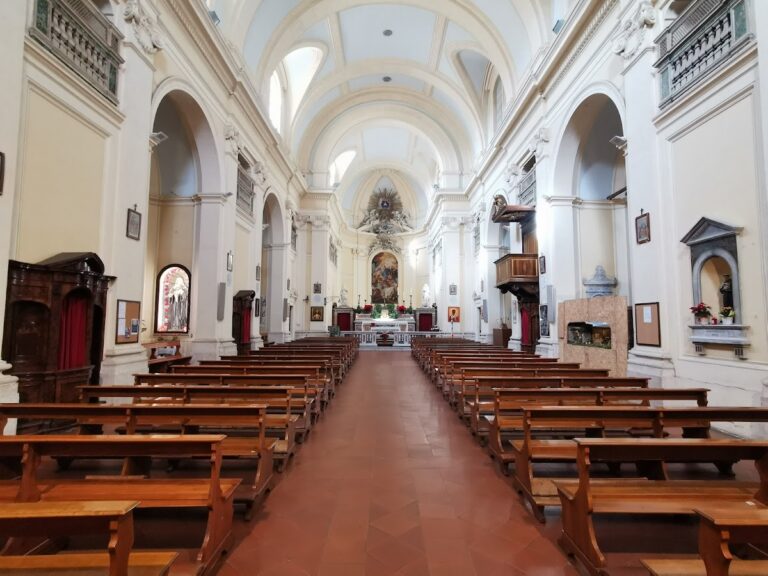
Inside the fortress is a chapel dedicated to Saint Fermina, the patron saint of Civitavecchia. Local tradition holds that the saint found refuge in a cave at this location, linking the chapel with the religious veneration of the city’s patron.
Drawbridge and passage
West of the northern tower, part of the mechanism that operated the former drawbridge survives. A subterranean passage is traditionally said to have led from the fortress toward the city, although its existence and route are not established with certainty here.