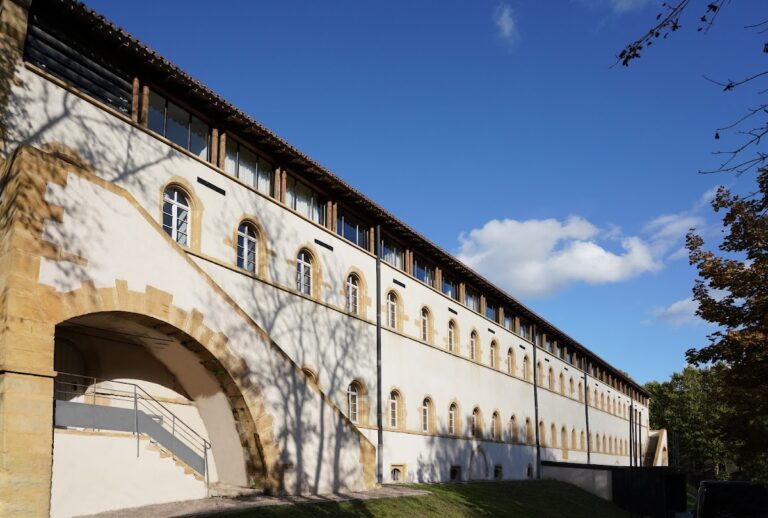
Fort Déroulède: A German Detached Fort near Metz

Site at a Glance
- Rating
- 4.4
- Popularity
- Very Low
- Country
- France
- Primary era
- Modern
- Eras represented
- Modern
- Civilizations
- German
- Site type
- Military
- Remains
- Fort
On this page6 sections
History
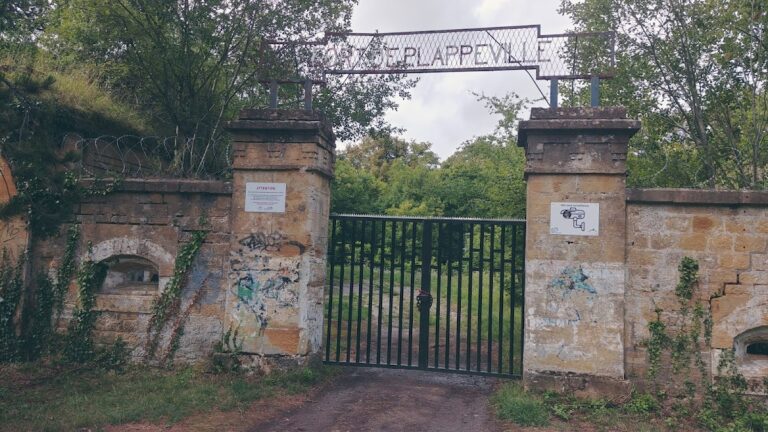
Fort Déroulède is a German military fortification in France near Metz, built by German engineers between 1876 and 1879 in the detached-fort tradition. Originally called Feste Kameke, it formed part of Metz’s first fortified belt, a defensive zone of forts and related works arranged around a city. The installation belonged to the wider transformation of Metz into a principal stronghold of the German state.
The fortified belt of Metz
Metz’s first fortified belt developed after the Franco-Prussian War of 1870, when many planned or unfinished works still required completion. Its forts included Saint-Privat, Queuleu, Bordes, Saint-Julien, Gambetta, Déroulède, Decaen, and Plappeville, together with the Saint-Quentin group of fortifications. During the period of German control, Metz’s garrison expanded from approximately 15,000 to 20,000 troops at the beginning of the annexation to more than 25,000 before the First World War.
From 1890, troops of the XVI Army Corps, the large German formation responsible for the Metz and Thionville area, manned the forts. Their presence reflected the continuing military role of the fortified belt and Metz’s place within German defensive planning.
French and German occupation
The French Army occupied Feste Kameke in 1919 and renamed it Fort Déroulède. German forces took the installation again in 1940 and held it until 1944. After the Second World War, it returned to French military control.
Until 2002, the fort was used as a repository for chemical weapons and unexploded bombs and shells, principally from the First World War. The stored munitions included weapons containing phosgene and sulfur mustard, toxic chemical warfare agents, the latter commonly known as mustard gas. The fort is now disused.
The Battle of Metz in 1944
During the Battle of Metz in late 1944, German commanders incorporated Fort Déroulède into the defensive system around the city. On 2 September, Adolf Hitler declared Metz a fortress of the German Reich and ordered it defended to the last. German commanders had sworn loyalty to him, and the decision placed the city’s forts at the center of the coming resistance.
On 3 September, General Krause’s troops occupied positions along a line extending from Pagny-sur-Moselle to Mondelange, west of Metz through Chambley, Mars-la-Tour, Jarny, and Briey. After a withdrawal on 6 September, the German defensive line depended firmly on Metz’s forts. The American offensive against the western line began on 7 September, but stopped at the Moselle after American forces captured two bridgeheads south of Metz.
While the Americans suspended their attacks to prepare new plans for the 90th Infantry Division, troops of the 462nd Volksgrenadier Division continued to hold the forts. A Volksgrenadier division was a German infantry formation created or reorganized during the later years of the Second World War. Its defenders faced worsening supply conditions, artillery fire, and frequent bombing.
On 9 November, 1,299 American heavy bombers, B-17s and B-24s, dropped 3,753 tons of bombs weighing between 1,000 and 2,000 pounds on fortified works and strategic points in the Third Army’s combat zone. The 689 bomb loads aimed at seven priority forts at Metz caused only collateral damage.
On 15 November, fire from Fort Déroulède, Fort Gambetta, and Fort Saint-Julien stopped the advance of the 377th Infantry Regiment of the 95th U.S. Division at Woippy. The German defenders included the 1515th Grenadier Regiment “Stössel” of the 462nd Volksgrenadier Division, reinforced by a reserve company of the 38th SS Panzergrenadier Regiment.
The German-held forts in northwest Metz were encircled on 17 November. On 21 November, the 377th Infantry Regiment occupied the former Feste Kameke. German resistance, difficult weather, flooding, and the underestimation of Metz’s fortifications slowed the American offensive. The delay enabled German forces to withdraw in good order toward the Siegfried Line, a major German defensive system along the country’s western frontier, while postponing the American advance in that direction.
Remains
Fort Déroulède survives as a detached fort of the Biehler type. Its design formed part of a German system developed by Hans Alexis von Biehler, a military engineer associated with the defense of major fortified cities. The fort belonged to a discontinuous defensive enclosure rather than a continuous city wall.
Detached-fort design
In this system, artillery forts were placed at intervals around Metz, with the spacing related to the range of their guns. Each installation therefore contributed to the wider defensive belt while remaining a separate military work. Fort Déroulède’s surviving identity as Feste Kameke and its later use as Fort Déroulède reflect the successive German and French phases of the site.
The physical remains also retain the fort’s later military history. Its use for storing chemical munitions and unexploded First World War bombs and shells continued until 2002, after which the installation became disused.