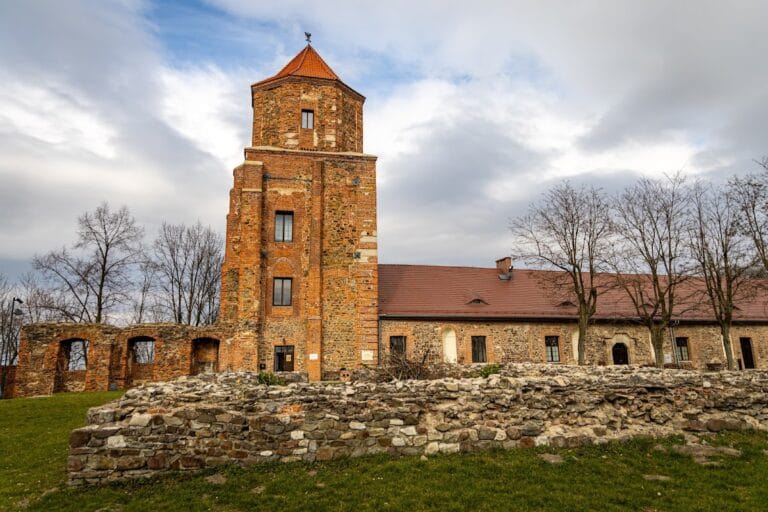
Lubliniec Castle: A Baroque and Classicist Residence in Poland
Site at a Glance
- Rating
- 4.1
- Popularity
- Very Low
- Country
- Poland
- Primary era
- Early Modern
- External website
- Open
- Eras represented
- Medieval, Early Modern
- Civilizations
- Habsburg, Holy Roman Empire, Kingdom of Prussia
- Site type
- Domestic
- Remains
- Castle
On this page7 sections
History
Lubliniec Castle is a palace-type historic building in Lubliniec, Poland, dating to the thirteenth century and combining Baroque and Classicist elements. Its first known mention is from 1397, when it belonged to Duke Władysław Opolczyk. The Opole-Racibórz dukes ruled the lands around Lubliniec for several centuries.
From Ducal Estate to Noble Residence
After the death of Duke Jan II the Good, his duchy, including Lubliniec, passed to the Habsburgs, the dynasty that controlled the Bohemian lands and much of Central Europe. The castle, town, and surrounding territory were subsequently leased to successive tenants.
Jan Kochcicki had leased the castle since 1576 and purchased it in 1587. He then extensively rebuilt it as one of the residences of the Kochcicki family. Further work followed during the seventeenth and eighteenth centuries. King Władysław IV Vasa stayed briefly at the castle in 1638.
In 1645, the Habsburgs confiscated the Kochcicki estates because the family supported Protestantism. Andrzej Cellary acquired the castle, which remained a Cellary residence until 1722. A great fire in 1650 destroyed almost the entire town and damaged part of the castle. The rebuilding that followed gave the residence a Baroque character.
In 1655, the castle sheltered the Jasna Góra painting, a major Catholic image associated with the Pauline monastery at Częstochowa. It had been removed from the monastery because of fears that Swedish forces would requisition it.
Eighteenth-Century Owners and Political Refuge
Piotr de Garnier purchased the castle in 1727, and the de Garnier family held it until 1763. It later passed to Anna Gaschin, Karol Ludwig Niemiecki, Zofia Karolina Dyhrn, Fryderyk Wilhelm Schlabrndorf, and Dionizy Jeanneret.
During the Bar Confederation of 1768 to 1772, an armed Polish-Lithuanian movement formed against Russian influence and the policies of King Stanislaus Augustus, the residence hosted several participants. They included Franciszka Krasińska, wife of the Saxon crown prince and son of Augustus III, Antoni Lubomirski, and Bishop Adam Krasiński. Kazimierz Pułaski, a Polish nobleman and military commander who later took part in the American Revolutionary War, visited Franciszka Krasińska at the residence several times in 1770 and 1771.
Franciszek Grotowski owned Lubliniec from 1784 to 1814 and lived at the castle. His will intended the building to become the seat of an institution for orphaned children. After his widow, Maria Blacha, died in 1826, the Prussian authorities took control of the castle and chose to build a new facility for that purpose. The final eighteenth-century rebuilding had already given the elevations their present Classicist appearance.
Public Institutions and Hospital Use
Andrzej Renard bought the Lubliniec estates, including the castle, from the Prussian authorities in 1832. Although he lived in Strzelce Wielkie, he made the building available for public functions. A district court, a regional judicial institution, occupied it from 1848 to 1892, while the county administration, the local government authority for the surrounding district, used it from 1854 to 1874.
Between 1859 and 1862, Fryderyk Kielmann acquired part of the Lubliniec estates, including the castle, from Renard. In 1892, the Opole Regency, a German administrative authority, purchased the property from Fryderyk’s son, Reinhold Kielmann.
After a hospital for people with mental illnesses and disabilities opened in Lubliniec in 1893, the castle became part of the hospital and was partly rebuilt. When Lubliniec was formally taken over by the Polish authorities in 1922, the castle remained within the psychiatric hospital. An observation ward was installed there in 1939, and the hospital resumed its operations in 1945.
Protection and Restoration
Lubliniec Castle entered the register of historic monuments in 1960, with a further registration recorded in 1978. The psychiatric hospital withdrew it from use in 1979 because of its poor technical condition.
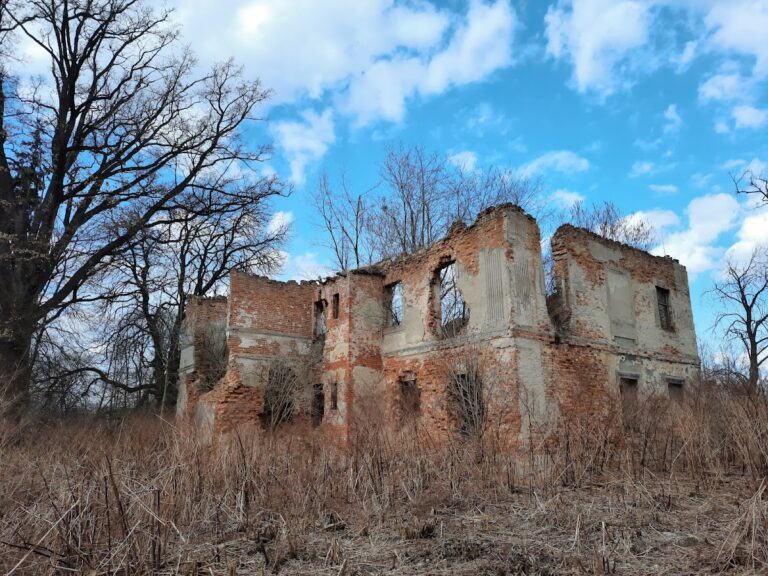
The Zamek Lubliniecki Foundation was established in 1999 by the city of Lubliniec and 83 other entities to support restoration. In 2002, the city took ownership of the property from the Silesian Marshal’s Office in Katowice. By 2005, the surviving historic fabric consisted only of the walls, vaulted ground-floor spaces, and several steps from the old staircase.
The restoration was carried out by Zamek Lubliniec and managed by the Stier family, headed by the German entrepreneur Manfred Stier. He later became an honorary citizen of Lubliniec in recognition of this work. Ownership changed in July 2020, and Hotel ZL Sp. z o.o. currently owns the castle.
Remains
Building and Surviving Fabric
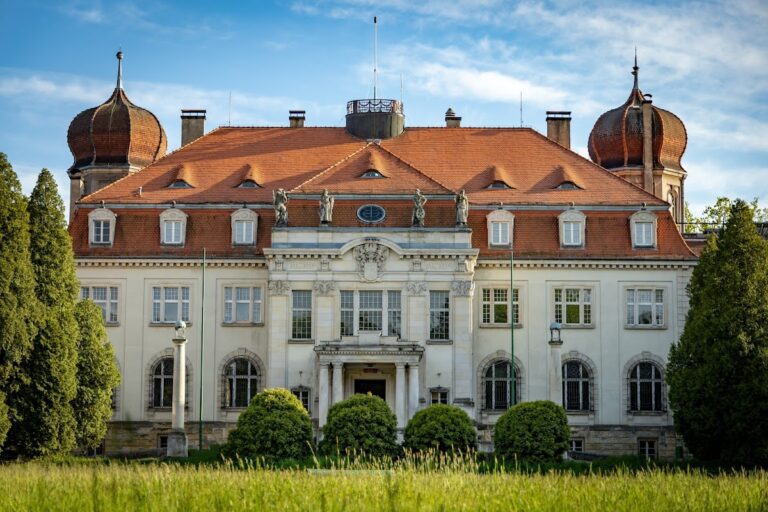
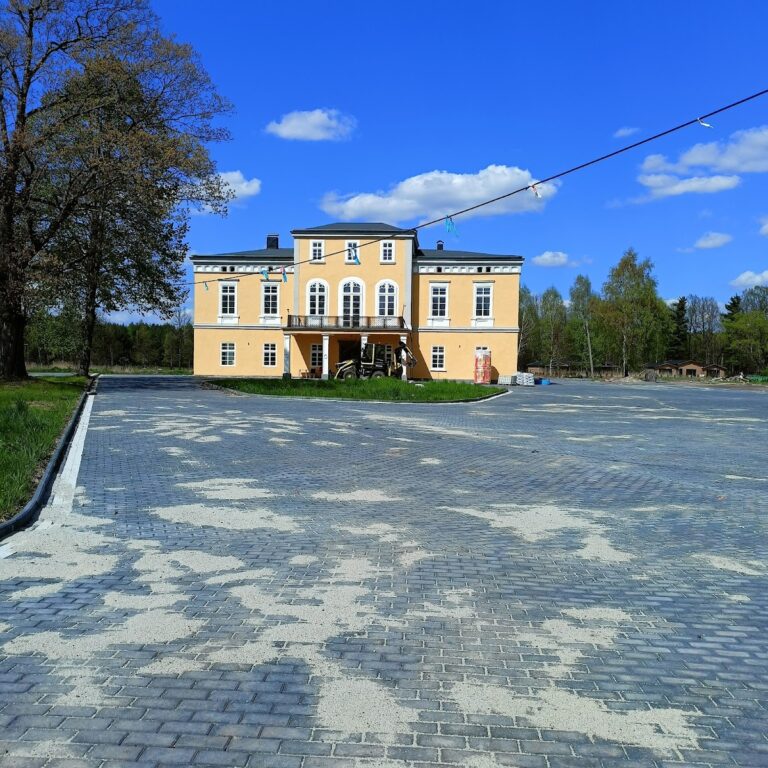
Lubliniec Castle is a palace-type building whose architectural character brings together the Baroque reconstruction after the fire of 1650 and the Classicist treatment of the elevations created during the final eighteenth-century rebuilding. Major rebuilding phases took place in 1576 and during the seventeenth and eighteenth centuries. The restored structure now functions as a hotel.
An early-eighteenth-century seal of the Schloss Lublinitz municipality shows the castle from the front as a two-storey building with two towers and an entrance gate. The physical remains identified in 2005 included the castle walls, historic vaulted spaces on the ground floor, and several historic steps from the former staircase. These elements formed the surviving fabric incorporated into the restoration.