Fort de Bouc: A Bastioned Coastal Fort in France


Site at a Glance
- Rating
- 3.9
- Popularity
- Very Low
- Country
- France
- Primary era
- Early Modern
- External website
- Open
- Eras represented
- Medieval, Early Modern
- Civilizations
- County of Provence, French
- Site type
- Military
- Remains
- Fort
On this page6 sections
History
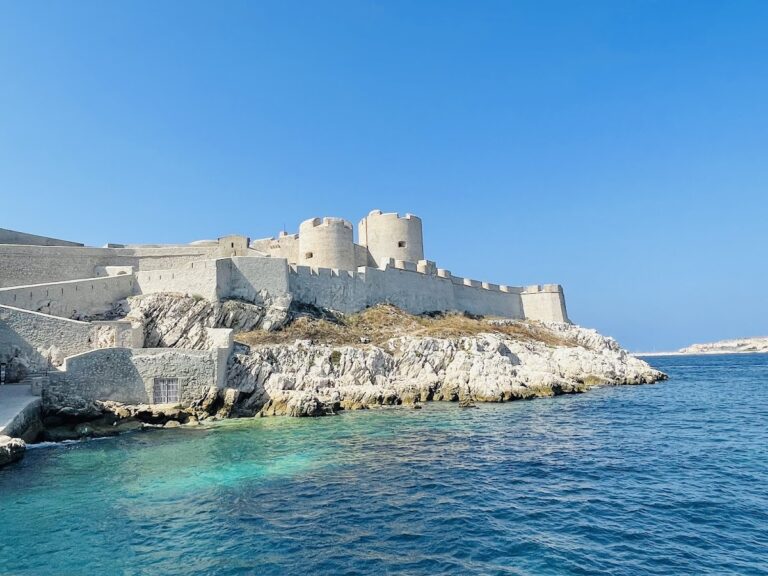
Fort de Bouc is a coastal fort in France, at Martigues, guarding the entrance to the Caronte Channel from Bouc Island. Its origins lie in a defensive tower built in the thirteenth century, while the present fortified enclosure took shape between 1605 and 1610 during the reign of Henry IV.
A Medieval Defensive Tower
Known originally as the Tour de Bouc, the structure was established at the end of Bouc Island to protect the channel entrance. Its position also placed it on the edge of the Gulf of Fos, where control of the waterway gave the tower a defensive role.
The Attack of 1536
In 1536, during the Eighth Italian War, the tower resisted an assault led by Andrea Doria, the Genoese admiral serving Charles V, Holy Roman Emperor. The Italian Wars were a series of conflicts in the late fifteenth and sixteenth centuries in which major European powers contested territories in Italy. The attack took place during the wider struggle between the Kingdom of France under Francis I and the Holy Roman Empire under Charles V. Fort de Bouc resisted alongside the towns of Roquevaire and Toulon.
The Seventeenth-Century Fort
Under Henry IV, work began in 1605 to surround the medieval tower with a fortified enclosure. Raymond de Bonnefons, the king’s engineer for fortifications in Provence and Dauphiné, directed the construction from plans by François Martelleur. After Raymond de Bonnefons died in 1607, his son Jean de Bonnefons continued the project, which was completed in 1610.
The fort was declassified in 1889. From that time, the only resident was the lighthouse keeper. Fort de Bouc was listed as a historic monument in 1930.
Remains
Island Fortification
Fort de Bouc stands on Bouc Island beside the Caronte Channel and the Gulf of Fos. The original Tour de Bouc was a square tower placed at the island’s end. Between 1605 and 1610, builders enclosed it within a bastioned fort, a fortified enclosure with projecting defensive works that enabled defenders to cover the walls and approaches with flanking fire. This enclosure transformed the earlier tower into the larger defensive complex known as Fort de Bouc.