Fort Masotto: An Umbertine Powder Magazine and Fortification in Italy

Site at a Glance
- Rating
- 4.4
- Popularity
- Very Low
- Country
- Italy
- Primary era
- Modern
- Eras represented
- Modern
- Civilizations
- Italian
- Site type
- Military
- Remains
- Fort
On this page8 sections
History
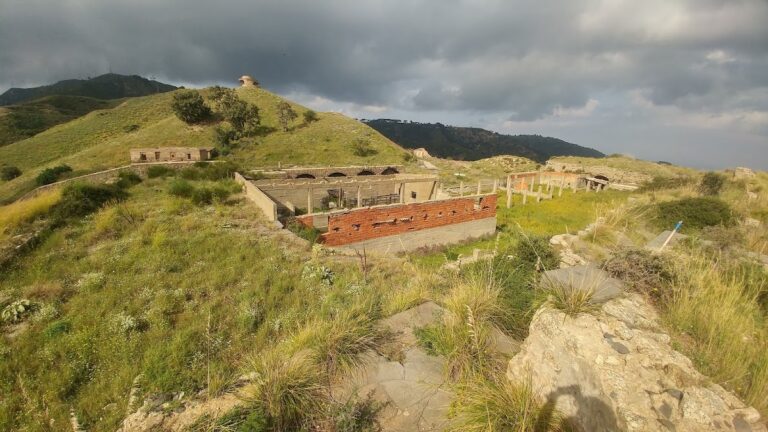
Fort Masotto, in Italy near Messina, is an Umbertine fortification built between 1884 and about 1890 as a powder magazine, a military facility for storing gunpowder and ammunition. It occupied the northern end of the defensive system of the Strait of Messina and is regarded as Messina’s oldest Umbertine work, surpassed in age only by defensive structures commissioned by Charles V, the sixteenth-century Habsburg ruler and Holy Roman Emperor.
Construction and Military Role
Construction began in November 1884, and the fort was completed around 1890. Although conceived primarily for ammunition storage, it was also the Umbertine fortification in the area with the greatest number of howitzer positions. A howitzer is a short-barrelled artillery piece designed to fire at relatively high angles. The fort remained part of the military system through both World Wars.
In 1888, a sudden explosion at the fort killed more than 20 soldiers. Their memory is preserved by a monument in Messina’s Monumental Cemetery. After the Second World War, the Italian Navy used Fort Masotto as a storage depot. It was withdrawn from military service in 1986 and remains state property.
Commemoration and Protection
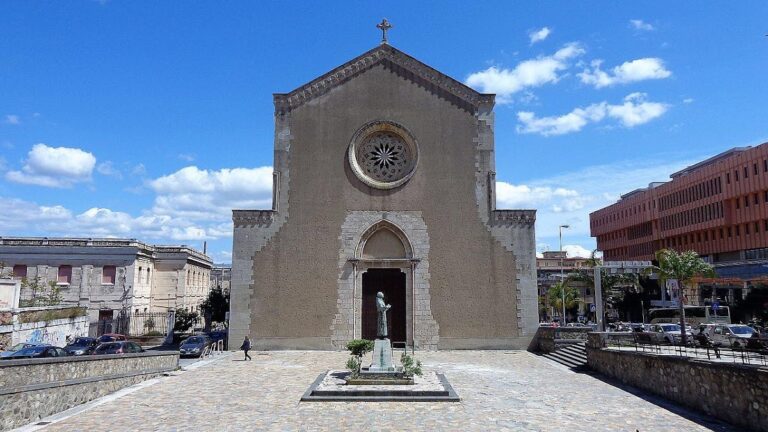
The fort was originally known as the Powder Magazine Battery. It later received the name Fort-Battery Umberto Masotto in honour of artillery captain Umberto Masotto, who was killed at the Battle of Adwa in 1896, when Ethiopian forces defeated the Italian invasion army. In 1899, on the initiative of Messina deputy Nicola Fulci, a commemorative statue was erected. The Italian sculptor Salvatore Buemi created it, and King Umberto I inaugurated it on 20 September 1899. The statue survived the 1908 earthquake and now stands in Viale della Libertà.
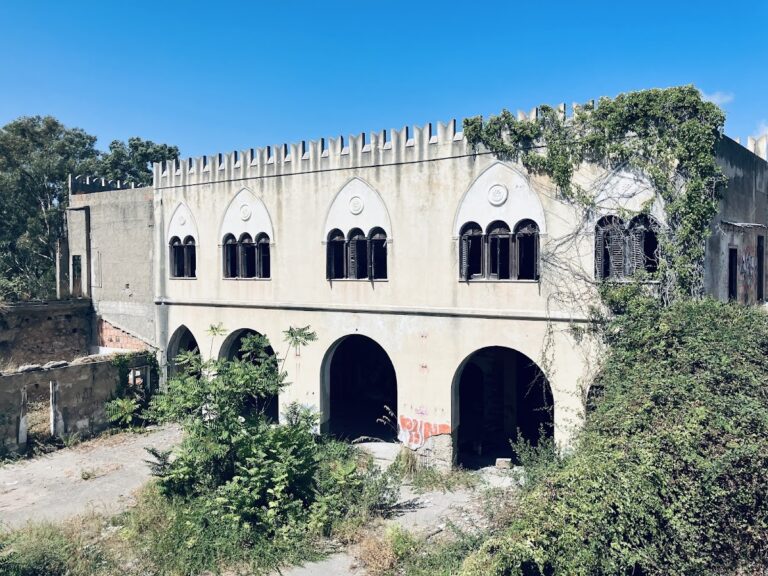
Fort Masotto was placed on the list of protected architectural heritage under decree DA 7520 of 9 November 1999. The fort has since been restored, although it is currently abandoned.
Remains
Fort Masotto stands in the Curcuraci area at Campo Inglese, approximately 415 metres above sea level and about 2,750 metres from the coast. Its orientation is given as 100 degrees east. The structure covers slightly more than 4,000 square metres and rises to a height comparable to a four-storey building. Sedimentary rock, concrete, solid terracotta brick, and volcanic rock form its construction.
Fort Structure
Stepped Levels and Circulation
The fort is organized across three principal stepped levels, with additional intermediate floors. Stairways and passage tunnels connect these levels, creating an internal arrangement adapted to the sloping site and to the fort’s combined storage and defensive functions.
Howitzer Positions
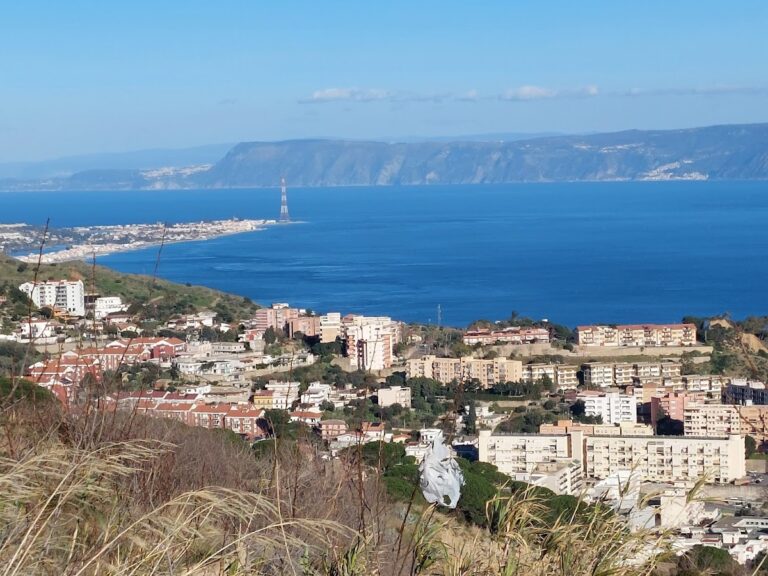
Ten howitzer positions formed the fort’s artillery armament. Its elevated position gives views from northwest to southeast, including the Aeolian Islands, Capo di Pellaro in Calabria, Punta Faro, and the Strait of Messina.
Surrounding Defenses
The surrounding area contains two other late-nineteenth-century Umbertine batteries, Minaia or Crispi and Serra La Croce. It also includes the older Campo Inglese fortified area, built in the early nineteenth century and later replaced by the army’s current ammunition depot. Eighteen bunkers and casemates of different types are visible in the area. A casemate is a fortified chamber intended to shelter weapons or troops.
Nearby sites