Forte Crispi: An Italian Strait-Defense Fort in Messina


Site at a Glance
- Rating
- 3.1
- Popularity
- Very Low
- Country
- Italy
- Primary era
- Modern
- Eras represented
- Modern
- Civilizations
- Italian
- Site type
- Military
- Remains
- Fort
On this page6 sections
History
Forte Crispi is an Italian military fort in Messina, Italy, built during the late nineteenth century as part of the Umbertine fortifications defending the Strait of Messina. These military works were constructed during the reign of King Umberto I and stood alongside older fortifications dating from the era of Charles V, the sixteenth-century Habsburg emperor and king of Spain. Formerly known as Batteria Menaja or Minaja, the fort was later named after Francesco Crispi, a nineteenth-century Italian statesman and politician.
Construction and strategic role
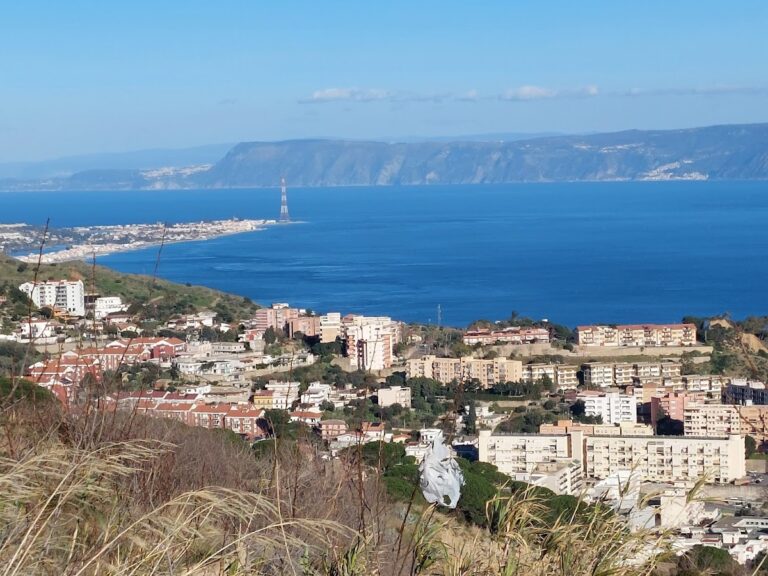
Construction began on 20 August 1887 and was completed around 1890. The fort occupied a position intended to control movement through the Strait from north to south, reinforcing Messina’s wider defensive system. Its function was later adapted to include anti-aircraft defense during the world wars.
Wartime service
In 1943, Forte Crispi hosted several Italian and German artillery batteries. An artillery battery is a military unit or emplacement operating several guns. The installations included 90 Ansaldo guns and 88 mm Flak guns, with Flak being the German term for anti-aircraft artillery. Their task was to defend embarkation points chosen by Italian and German forces for moving troops and equipment toward Calabria.
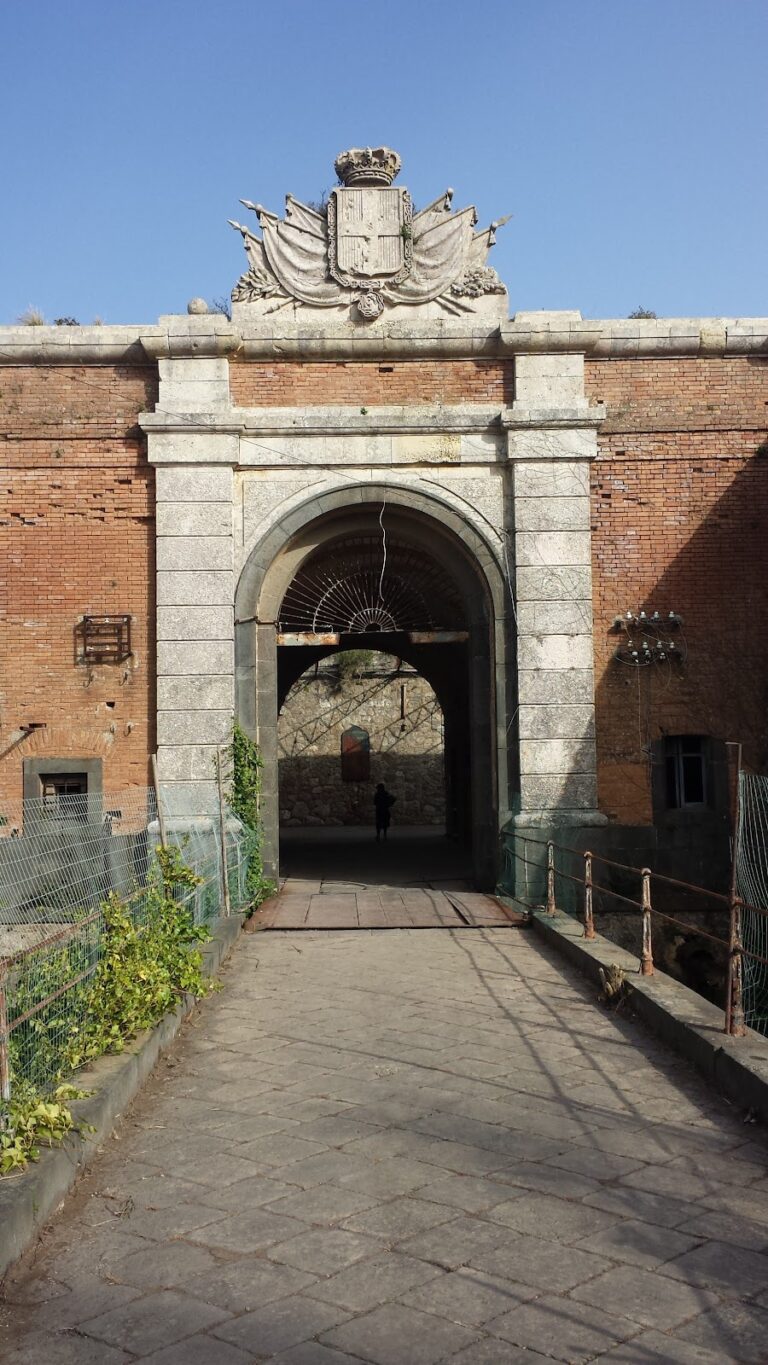
Allied bombing during the Second World War heavily damaged the fort. The entrance wall and gate were completely destroyed, ending the site’s strategic military role with the war. Forte Crispi was subsequently abandoned.
Abandonment and later history
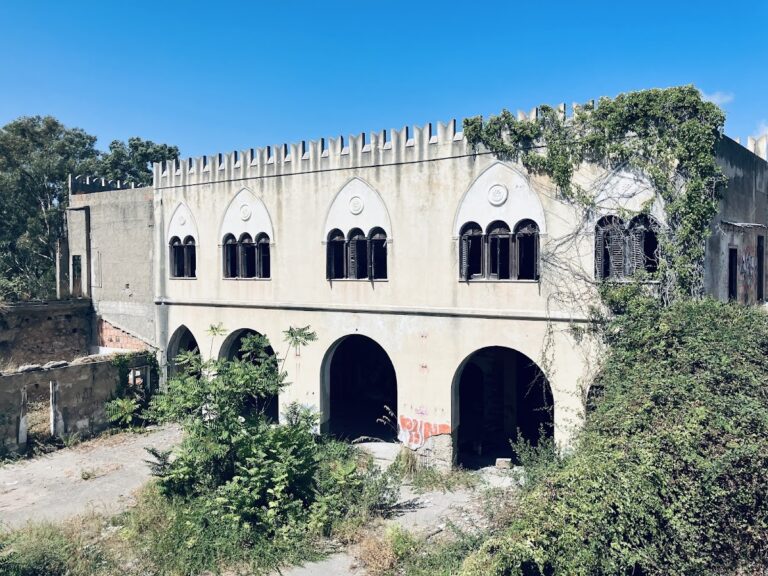
After abandonment, the fort was vandalized and illegally occupied by buildings used for livestock breeding. Those structures later fell out of use and were demolished. In 2007, the fort became a filming location for La vita rubata, directed by Graziano Diana. The film portrays the discovery of Graziella Campagna’s body at Forte Crispi, although the body was actually found at Forte Campone. The production also captured the fort’s poor condition and the former illegal buildings before their demolition.
As of December 2024, Forte Crispi remained legally a military area, although it was not effectively guarded. The abandoned fort continued to face severe deterioration and remained totally uninhabited.
Remains
Forte Crispi survives as a heavily deteriorated military battery overlooking the Ionian Sea and the Borgo Pace district to the east. Campo Italia and Campo degli Inglesi lie to the northwest, while Annunziata Alta is a short distance to the southwest. Built primarily from sedimentary rock, concrete, solid terracotta brick, and volcanic rock, the fort occupied ground that allowed strategic control over the Strait of Messina.
Fort structure and surviving fabric
The entrance area was fundamentally altered by the Second World War bombing, which destroyed both the entrance wall and the gate. Inside the fort, later buildings for illegal livestock breeding were erected and subsequently demolished. Many walls from these structures were still visible during the 2007 filming, while sections of the fort that were visible at that time are now largely half-buried beneath sediment. The surviving complex is a ruin in a state of severe deterioration.
Nearby sites