Fort of Consolation Beach: A Portuguese Coastal Fortification


Site at a Glance
- Rating
- 4.3
- Popularity
- Very Low
- Country
- Portugal
- Primary era
- Early Modern
- Eras represented
- Early Modern
- Civilizations
- Portuguese
- Site type
- Military
- Remains
- Fort
On this page6 sections
History
Fort of Consolation Beach, also known as Fort Nossa Senhora da Consolação, is a Portuguese coastal military fortification in Atouguia da Baleia, within the municipality of Peniche. Built between 1641 and 1645 in the Late Renaissance, or Mannerist, style, it formed part of Portugal’s defenses during the Portuguese Restoration War, the conflict through which Portugal regained independence from the Spanish Habsburg monarchy after the Iberian Union.
Construction during the Restoration War
The fort was initiated in 1641 on the initiative of Jerónimo de Ataíde, 6th Count of Atouguia and Lord of Peniche, and completed in 1645. Its original functions were to defend the coast and reinforce Peniche’s southern approach. Construction belonged to a wider Portuguese defensive strategy that combined a limited number of major fortresses with a succession of smaller coastal forts. The Fort of Consolation Beach and the Fortress of Peniche were positioned so that their artillery fields overlapped.
The site also lay beside a beach associated with the attempted restoration of Portuguese sovereignty before the fort was built. On 26 May 1589, during Spanish Habsburg rule in Portugal, 6,500 English soldiers commanded by Robert Devereux, 2nd Earl of Essex, landed there to join an expedition led by Francis Drake and John Norris. Ordered by Elizabeth I of England, the expedition sought to restore Portugal’s independence.
Expansion and changing defenses
The fort was enlarged in 1665. The earthquake of 1755 severely damaged the structure and destroyed part of its sea-facing battery, a fortified artillery position. Five gun emplacements were added in 1796, followed in 1800 by a new battery with 15 guns east of the main fort. This additional position covered the beach and helped prevent access from the land.
Restoration work took place in 1832 during the Portuguese Civil War. The fort remained in military use until 1834–35. From 1947, it was ceded to a religious order for use as holiday accommodation and was adapted for that purpose in 1954. Interior work followed in 1983. The fort was classified as a National Monument in 1978, and in 2017 the Portuguese State ceded it to Peniche City Council with the intention of establishing museums devoted to the geology of the area and the fort’s military history.
Remains
Star-shaped coastal fort
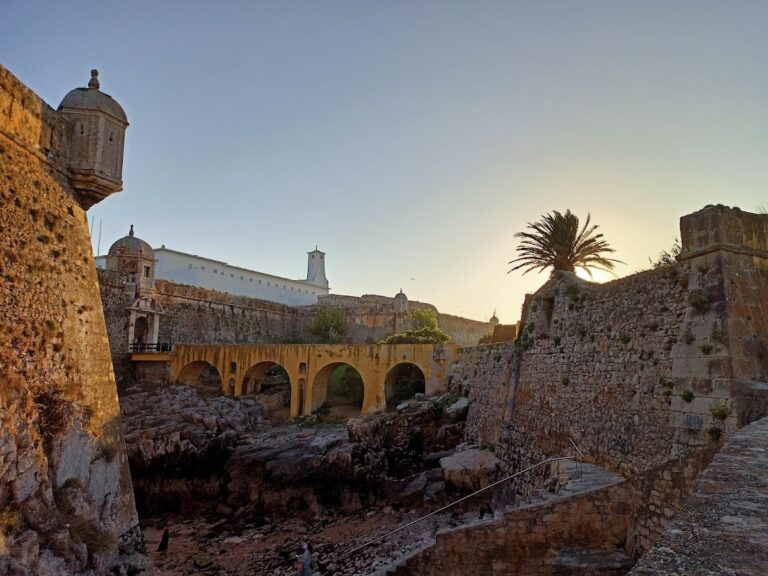
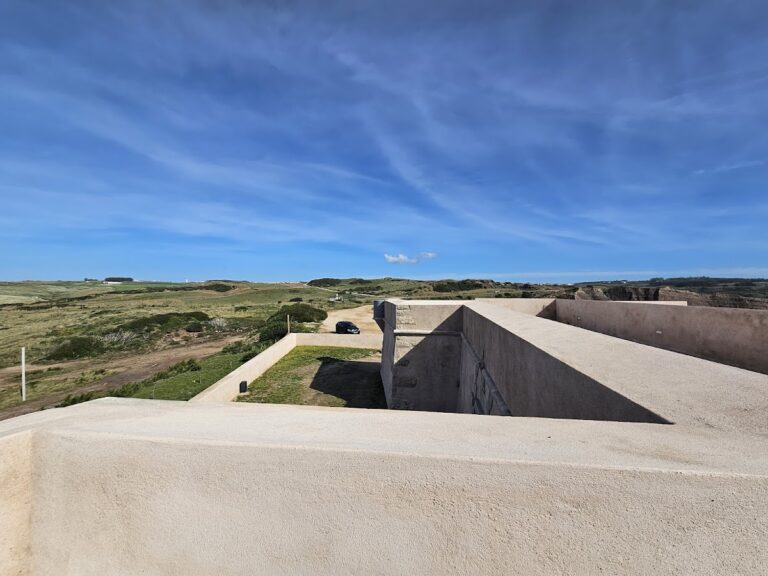
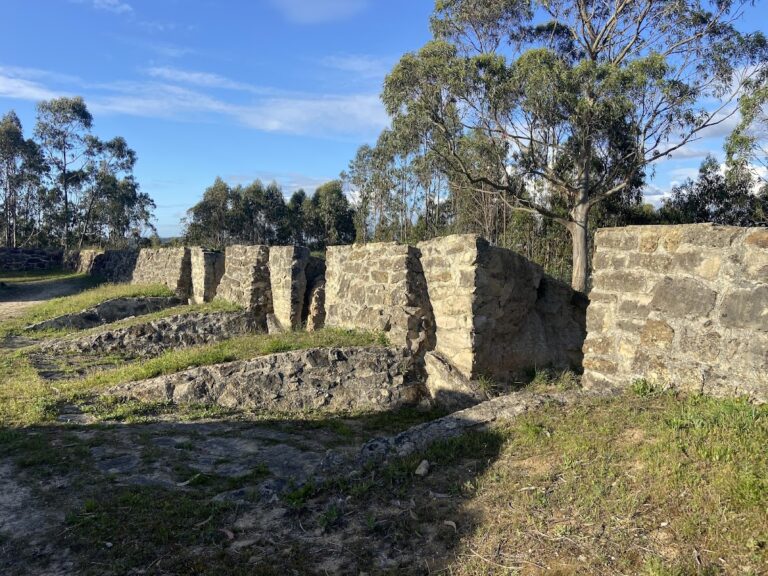
The fort occupies a rocky escarpment at the southern end of Consolation Beach. Its star-shaped plan contains four triangular bastions, projecting elements that allowed defenders to fire along the surrounding walls and cover approaches from several directions. Five artillery platforms form part of the defensive layout. The eastern side is protected by a moat crossed by a bridge, while the main portal originally displayed a crowned national coat of arms and a plaque commemorating the fort’s foundation.
Batteries and surviving fabric
The sea-facing battery was partly destroyed in the 1755 earthquake, while the separate 15-gun battery built in 1800 lies to the east of the main fort. The walls, moat, and bridge panels were restored in 1997, and wall sections beside the stairs leading to the beach were stabilized in 2003. The fort is in good condition, although the cliffs beneath it are in an advanced state of coastal erosion, which continues to threaten its stability.