Šaumburk: A Medieval Castle and Administrative Center in Czechia
Site at a Glance
- Rating
- 3.8
- Popularity
- Very Low
- Country
- Czechia
- Primary era
- Medieval
- Eras represented
- Medieval
- Civilizations
- Holy Roman Empire, Margraviate of Moravia
- Site type
- Military
- Remains
- Castle
On this page6 sections
History
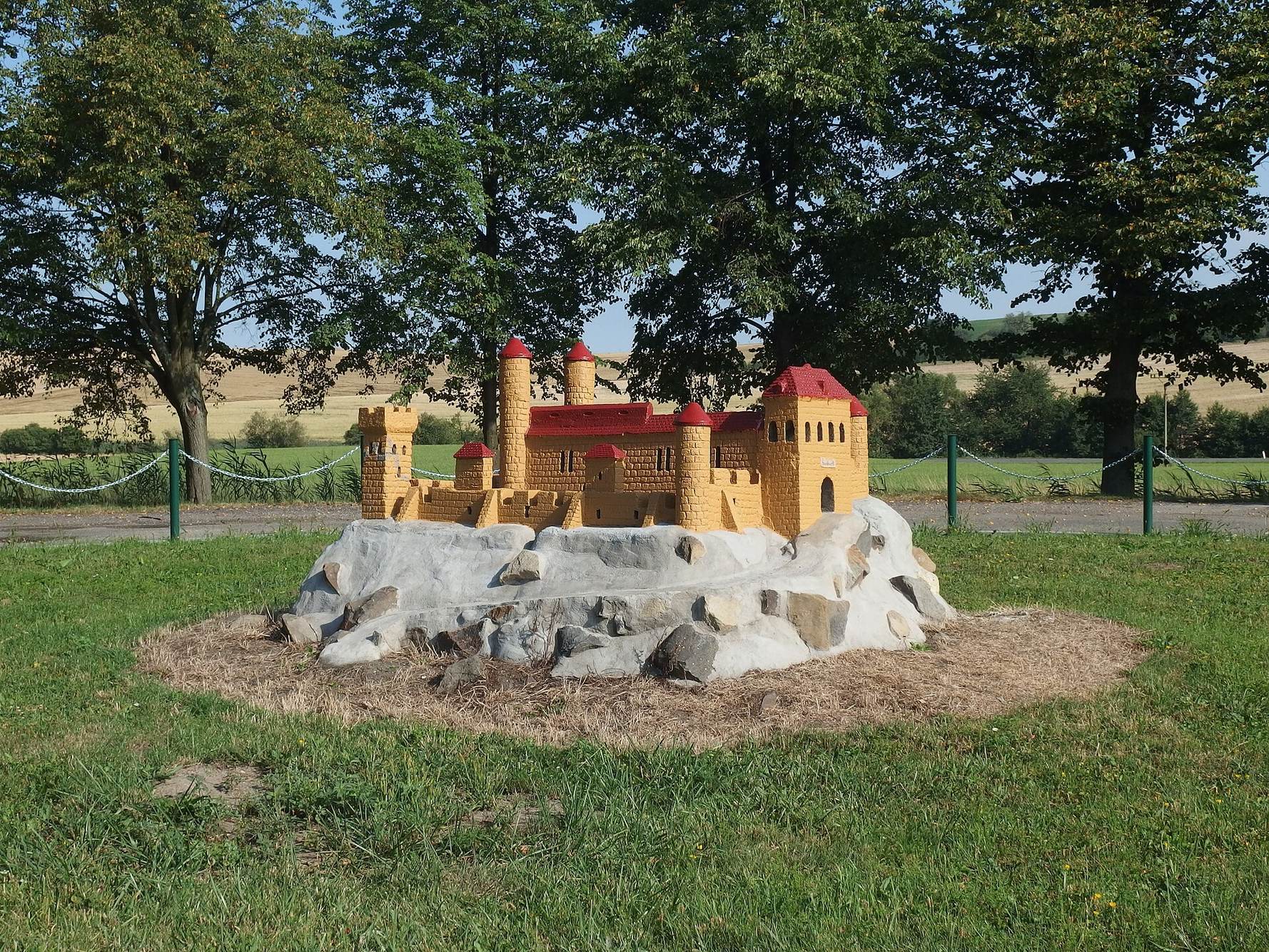
Šaumburk is a medieval hill castle in Czechia, above Rajnochovice and Podhradní Lhota in the Hostýnské vrchy. Founded in the 13th century by Bruno of Schauenburg, bishop of Olomouc, it served as a representative residence, an administrative center for the Kelč domain, and a defensive site protecting the trade route north of the Hostýnské vrchy.
Foundation and medieval use
Bruno named the castle after his ancestral seat in Lower Saxony. Šaumburk was first mentioned in 1272, and by 1275 it had advanced far enough to have a burgrave, Mikuláš of Choryně. A burgrave was the official who administered and oversaw a castle on behalf of its lord. The castle’s administrative role was connected with the Kelč domain, a territorial estate governed from Kelč.
After Bruno died in 1281, Šaumburk was damaged, but it was later repaired and functioning again by 1307. The office of burgrave remained there between 1320 and 1325, confirming its continuing administrative use during the early 14th century.
Decline and later interpretation
Šaumburk eventually declined and was abandoned because its large size made it costly to maintain. In the second half of the 14th century, it was replaced by New Šaumburk, built about 0.5 kilometres to the north at an elevation of 530 metres. The ruins of New Šaumburk are incorrectly identified today as Zubříč.
Šaumburk has been protected as a Czech cultural monument since 1973. Archaeological investigations carried out between 1977 and 1991 under the direction of Jiří Kohoutek established that the castle was larger than previously believed.
Remains
Castle enclosure and setting
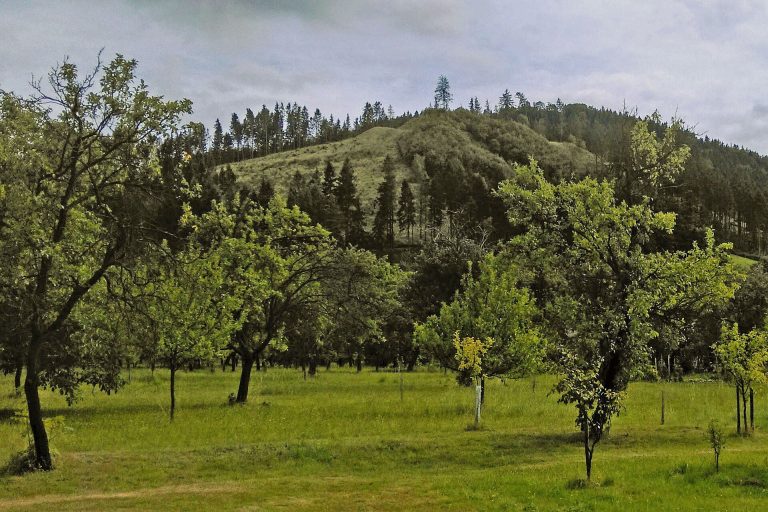
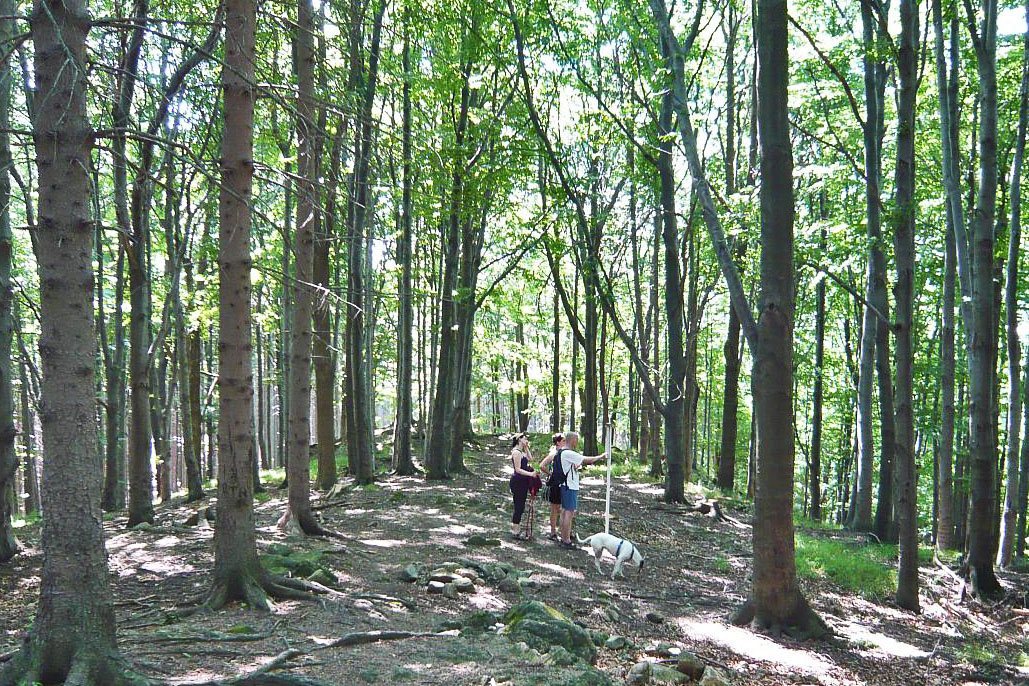
Šaumburk occupies elevated ground at approximately 608 metres above Rajnochovice and Podhradní Lhota. As a hill castle, it used the height of the Hostýnské vrchy as part of its defensive system. The site formed a large rectangular enclosure measuring about 120 by 50 to 55 metres.
Ditch and surviving defenses
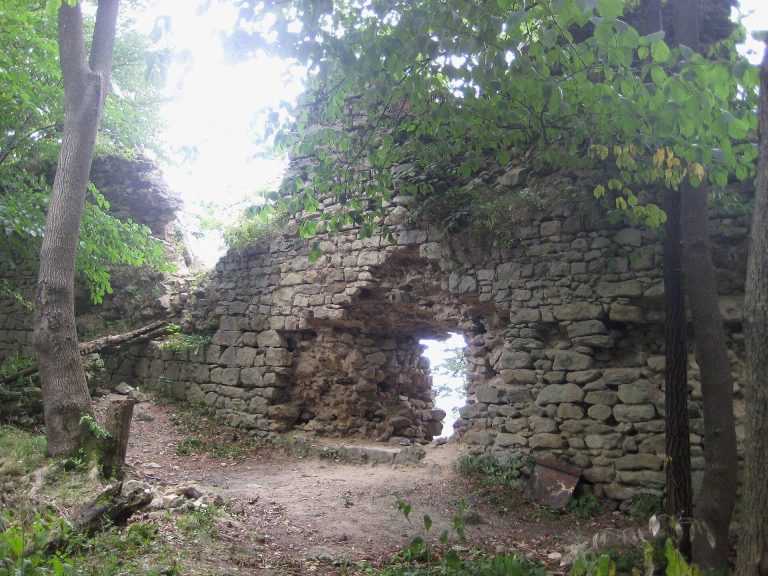
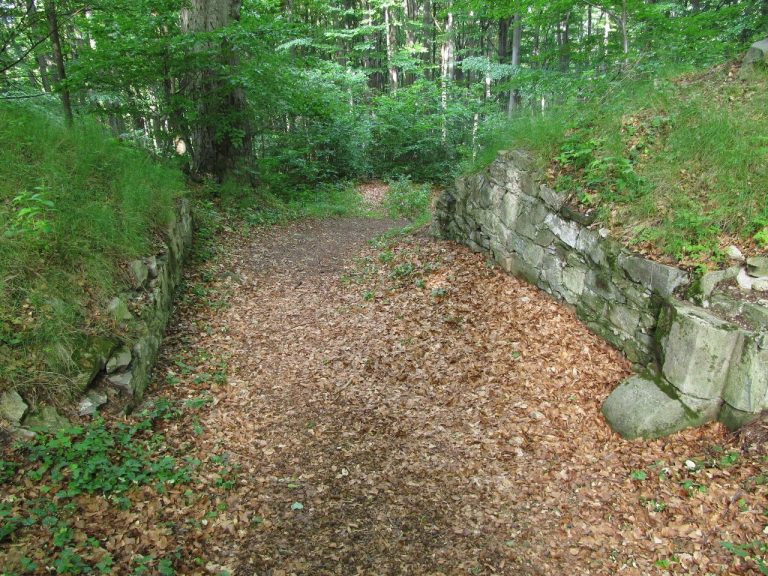
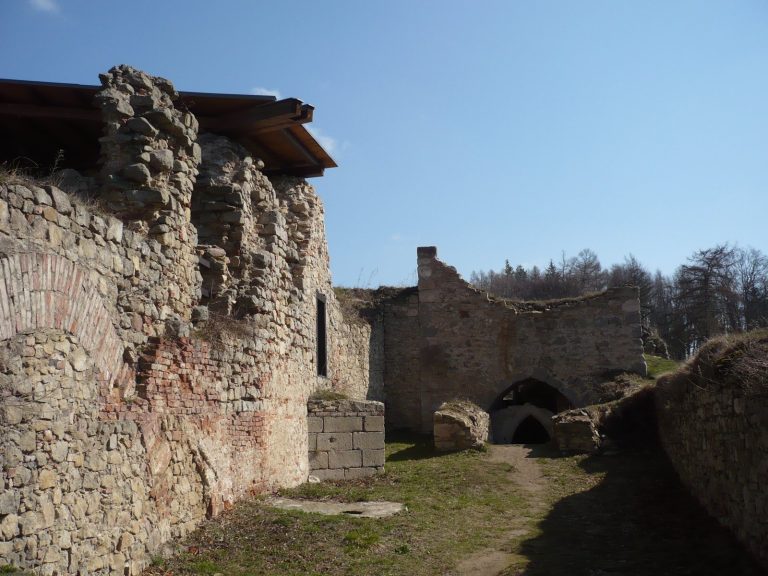
A ditch approximately 10 metres wide protected the southern side of the enclosure. A drawbridge provided the approach across it. The site survives as a castle ruin, or castle site, with sections of ramparts and ditches still visible, preserving parts of the castle’s defensive layout.