Greystoke Castle: A Fortified Medieval Residence in Cumbria
Site at a Glance
- Rating
- 4.5
- Popularity
- Very Low
- Country
- United Kingdom
- Primary era
- Modern
- External website
- Open
- Eras represented
- Medieval, Early Modern, Modern
- Civilizations
- British, English, Norman
- Site type
- Domestic
- Remains
- Castle
On this page7 sections
History
Origins and medieval fortification
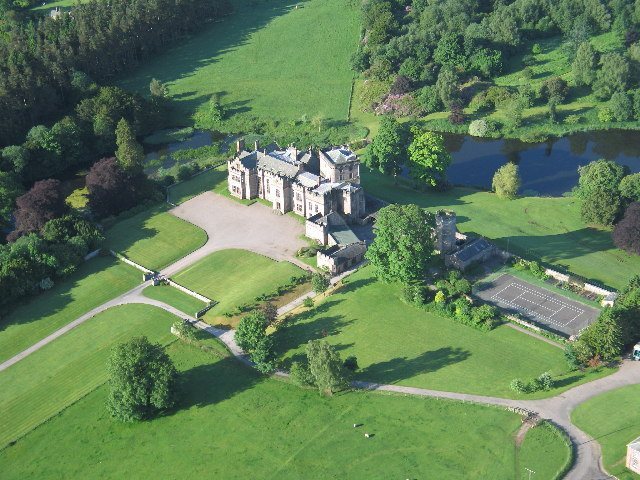
Greystoke Castle is a fortified historic residence in the United Kingdom, in the village of Greystoke near Penrith, Cumbria. Its history began in 1069, after the Norman Conquest, when the English landowner Ligulf de Greystoke was re-granted his lands and built a wooden tower enclosed by a pale, a fortified boundary. The site therefore belongs to the medieval period of changing landholding and castle building that followed the Norman takeover of England.
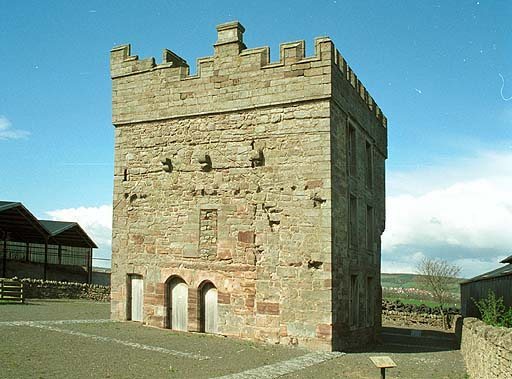
In 1129, Ligulf’s grandson Ivo built the first stone structure on the site. This building later developed into a large pele tower, a fortified tower or enclosed defensive residence associated especially with northern England’s border regions. During the fourteenth century, William de Greystoke obtained a royal licence to fortify the tower as a castle, and the complex was enlarged thereafter.
Ownership and destruction
By 1571, Greystoke Castle belonged to Thomas Howard, 4th Duke of Norfolk and Earl Marshal of England, through his marriage into the Dacre family, its previous owners. The Howards were Catholics and Royalists. During the English Civil War, the conflict between supporters of King Charles I and Parliament, Parliamentarian forces under General Lambert laid waste to the castle in 1648.
Rebuilding and later use
The castle was enlarged and altered in 1789. Between 1838 and 1848, it was rebuilt to designs by Anthony Salvin, a nineteenth-century English architect associated with medieval-style castles, while older structures, including the pele tower, were incorporated into the work. Charles Howard also developed the estate as a modern farm.
A fire in 1868 destroyed many treasures and works of art. Henry Howard then had the castle rebuilt under Salvin’s direction. During the Second World War, the army requisitioned the castle and estate for a tank-drivers’ training area, and the castle itself served as a prisoner-of-war camp. This period caused extensive damage to both the building and the estate.
In 1950, Stafford Howard, the son of Sir Edward Stafford Howard, inherited the estate and began another phase of restoration. His son, Neville, now manages the estate, and Greystoke Castle remains a private residence owned by the Howard family.
Remains
Setting and early fabric
Greystoke Castle stands at an elevation of about 221 metres in the village of Greystoke, approximately 8 kilometres west of Penrith in northern England. The terrain is relatively flat to the northeast and hilly to the southwest, with grassland predominating around the site. The highest nearby ground reaches about 320 metres roughly 1.1 kilometres northwest of the castle.
The earliest defensive arrangement consisted of a wooden tower enclosed by a pale or pele. Ivo’s stone structure of 1129 formed the beginning of the later masonry complex, which grew into a large pele tower before William de Greystoke’s fourteenth-century fortification licence allowed its development as a castle.
Later castle fabric
The surviving complex contains older structures incorporated into the nineteenth-century rebuilding, including the pele tower. The fabric also reflects the enlargement and alteration of 1789, the rebuilding carried out between 1838 and 1848 under Anthony Salvin, and the reconstruction that followed the fire of 1868. The castle and its family estate continue to function as a private residence.