Barden Tower: A Ruined Fortified House in North Yorkshire


Site at a Glance
- Rating
- 4.5
- Popularity
- Low
- Country
- United Kingdom
- Primary era
- Medieval
- External website
- Open
- Eras represented
- Medieval, Early Modern
- Civilizations
- English
- Site type
- Domestic
- Remains
- Castle
On this page9 sections
History
Barden Tower is a ruined fortified house in the United Kingdom, in Barden, North Yorkshire. Henry Clifford rebuilt the earlier lodge in stone around 1485 to 1490, during the late medieval period. A fortified house was a residence with defensive features, though generally smaller and less heavily defended than a major castle. Clifford made Barden his principal residence rather than Skipton Castle, giving the site an important place in the history of the Clifford family, a major landowning family in northern England.
The Clifford Forest Lodges
An earlier lodge stood in the Forest of Barden from the early Plantagenet period. The Plantagenets were a medieval English royal dynasty that ruled from the twelfth into the fifteenth century. Barden was one of six forest lodges held by the Clifford family between the fourteenth and seventeenth centuries. Other identified lodges stood at Drebley, Gamsworth, Howgill, and Laund, while the sixth was at a site called Ungaine whose location has not been identified.
Barden Tower became a focal point for the surrounding hamlets and farmhouses. Because the area had no nucleated village, the tower and its associated buildings served as a de facto village centre. The opening of Barden Bridge in 1659 improved access for the surrounding population, and the buildings continued to serve as a local focus.
Seventeenth-Century Restoration
The tower was de-roofed during the English Civil Wars of the 1640s, conflicts between supporters of Parliament and supporters of King Charles I. During the 1650s, Lady Anne Clifford renovated and rebuilt Barden Tower, its adjacent chapel, and Skipton Castle. Lady Anne was an English aristocrat and landowner who restored substantial Clifford properties during the seventeenth century.
After Lady Anne Clifford died in 1676, the estate and Barden Tower passed to the Earls of Cork, an Irish earldom held by the Boyle family. The tower deteriorated during the eighteenth century and has remained ruinous for more than 200 years. During the Jacobite rising of 1745, an attempt to restore the Stuart dynasty to the British throne, 150 militia members were stationed at Barden with pikes, staffs, halberts, and drums. The Jacobite army passed through Yorkshire, but no skirmish involving Barden Tower is recorded.
Later Use and Protection
A second roof, made of lead, was removed around 1800. The school and chapel at the site remained in use into the twentieth century. Anglican worship continued in the chapel until the 1960s, and marriages were held there, although baptisms and burials were not permitted. In 2016, the Priesthouse was converted into a restaurant and wedding venue, and a house on the site is also used as a cafe. Barden Tower is now part of the Bolton Abbey Estate.
The three historic buildings were designated Grade I listed buildings in 1954. Grade I is the highest category of statutory protection for buildings of exceptional architectural or historic interest in England. The tower, the buildings, and the land beneath them are collectively protected as an ancient monument, meaning a protected archaeological or historic structure or site.
Remains
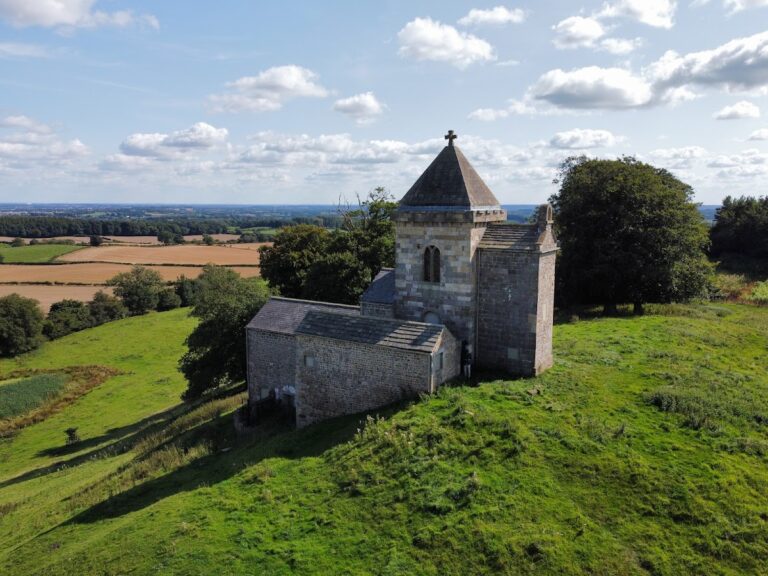
Barden Tower survives as a ruined tower within a group of three historic buildings comprising the tower, an adjacent chapel, and associated farmhouse and priesthouse buildings. The farmhouse and chapel outbuildings were constructed beside the tower during the sixteenth and seventeenth centuries. Together, these structures preserve the physical arrangement of a fortified residence and the buildings that supported its household and religious life. The site stands at an elevation of approximately 492 feet (150 metres).
The Tower
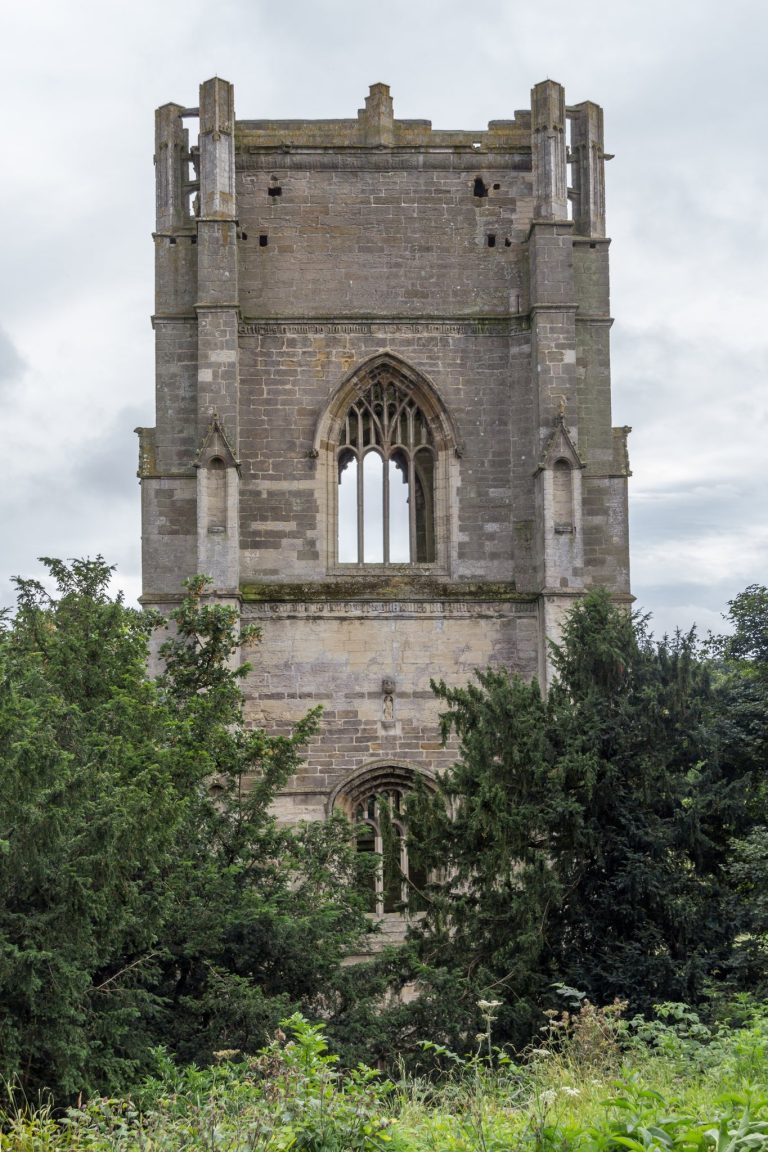
The tower is now derelict and ruinous. Its original roof is believed to have been thatched. A fifteenth-century request for “soddes for the towre toppe” may refer to turf or sod used in the roofing. A later lead roof was removed around 1800, leaving the tower in its present open and roofless condition. Its rebuilding by Henry Clifford around 1485 to 1490 forms the principal surviving medieval phase of the site.
Chapel and Associated Buildings
Chapel
The chapel stands beside the tower as part of the historic building group. It was renovated and rebuilt during Lady Anne Clifford’s work at Barden in the 1650s, and it continued in religious use into the twentieth century. The chapel was last used for Anglican worship in the 1960s. Its long association with the tower reflects the religious provision maintained for the household and local community.
Priesthouse and Farmhouse
The Priesthouse is a residence or service building associated with a priest serving a chapel or religious foundation. It occupies part of the associated historic buildings and has been tentatively dated to 1513. It was reputedly built by Henry Clifford for his private chaplain when the Clifford household lived at the tower. The building now contains a restaurant and wedding venue. The associated farmhouse forms another part of the site’s surviving group, while a house is used as a cafe.
Barden Tower is also a waymarker on Lady Anne’s Way, a 100-mile (160-kilometre) long-distance path named after the seventeenth-century restorer of the Clifford properties.