Fort de la Fraternité: A Coastal Defense Fort at Roscanvel


Site at a Glance
- Rating
- 4.5
- Popularity
- Low
- Country
- France
- Primary era
- Early Modern
- Eras represented
- Early Modern, Modern
- Civilizations
- French, German
- Site type
- Military
- Remains
- Fort
On this page7 sections
History
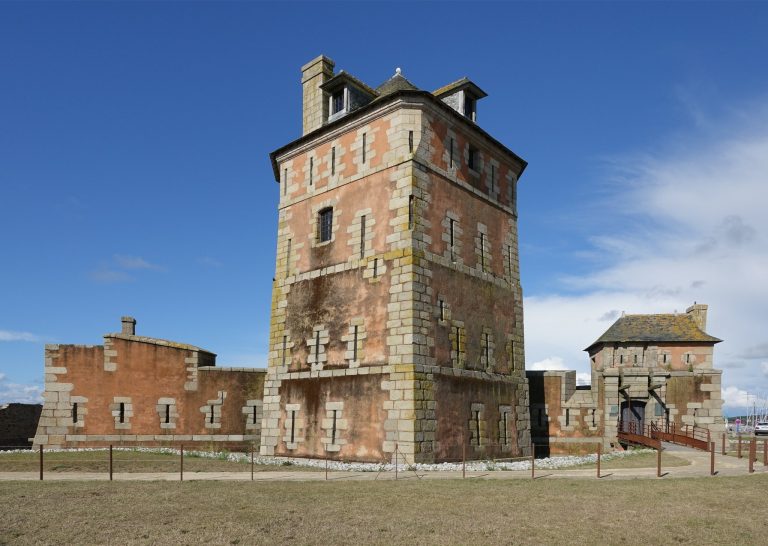
Fort de la Fraternité is a ruined coastal fort at Roscanvel in France, built as part of the defenses of the Brest narrows and the Roscanvel Peninsula. A gun battery was established here in 1695, followed by construction of the fort in 1791. The fort is attributed to Vauban, the French military engineer and marshal whose designs influenced European fortification. Its purpose was to protect Camaret Cove from attack and defend the creek below the position.
Defenses of the Roscanvel Peninsula
The fort belonged to a wider defensive system whose landward side was closed by the Quélern defensive line, a fortified line across the Roscanvel Peninsula. Its defenses were altered during the second half of the nineteenth century as military requirements changed. The fort ceased to serve military purposes in 1870 and was later used to store wood and lime. Limestone extraction at the site continued until 1875.
Twentieth-Century Military Use
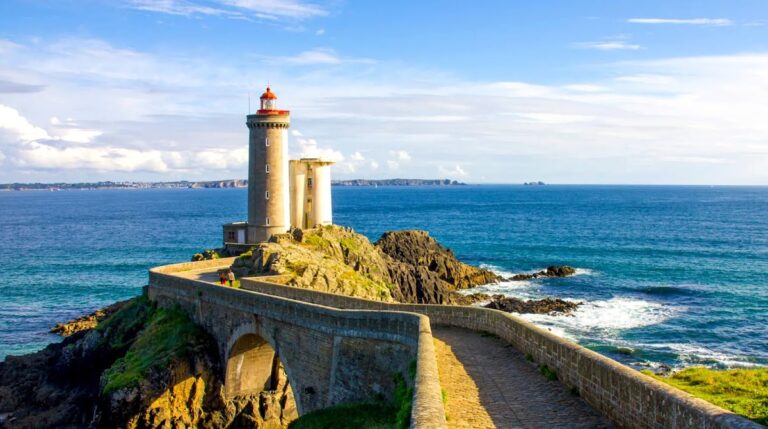
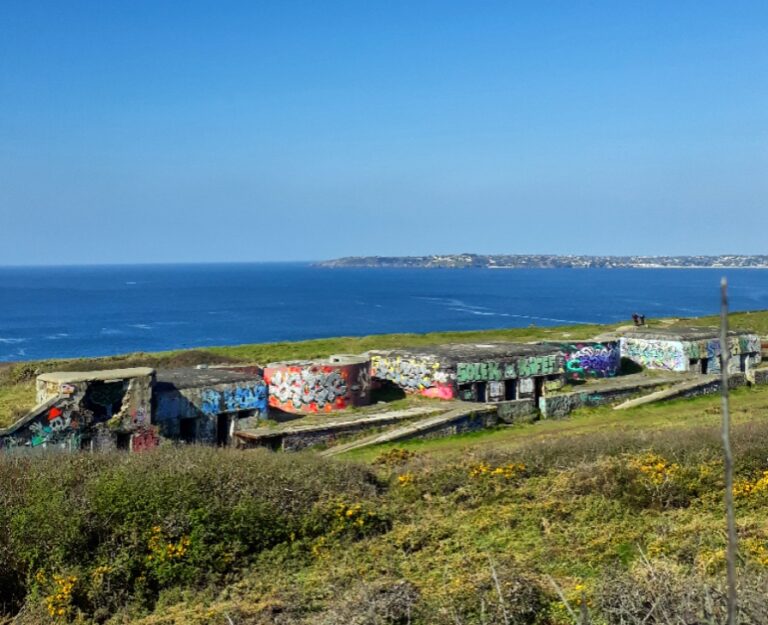
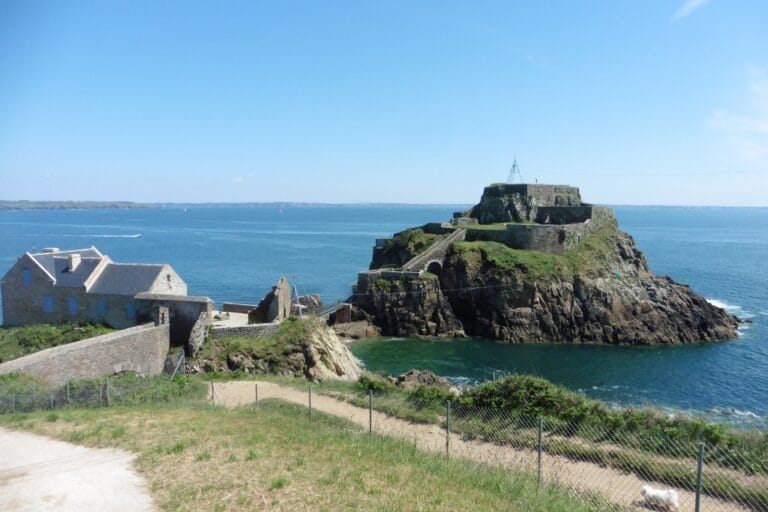
A searchlight position was installed on the Îlot du Diable in 1912 and 1913. The installation was intended to illuminate Camaret Cove during a possible night attack. German forces added a casemate, a protected chamber for weapons, equipment, or personnel, in 1942. The fort complex is now in ruins, while its surviving powder magazine continues to identify the site’s principal military storage function.
Remains
Fort and Powder Magazine
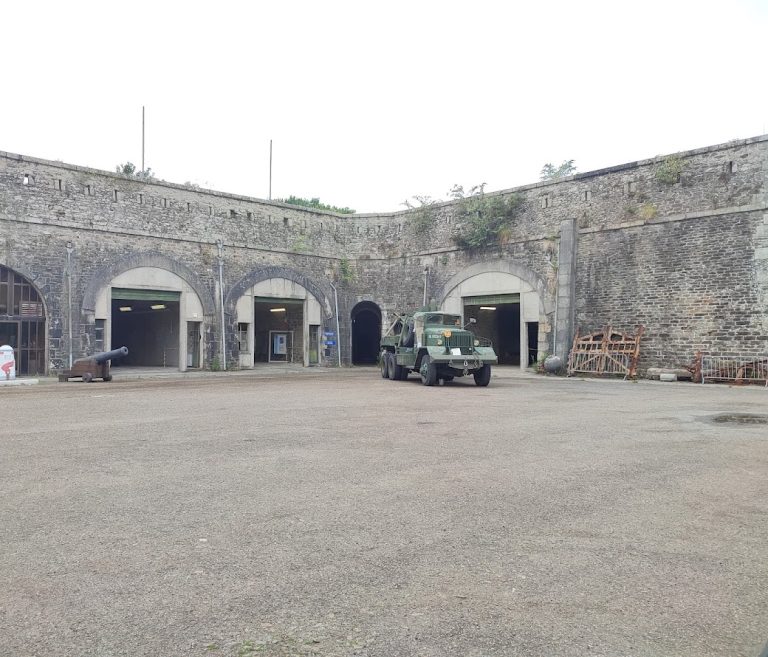
The complex brings together the remains of the 1695 battery, the 1791 fort, and the early-twentieth-century searchlight installation on the Îlot du Diable. The standing powder magazine, a fortified storehouse for gunpowder and other explosive supplies, has a roof formed from large rectangular slabs and an elaborate gutter. Its survival provides the clearest substantial element of the ruined fort.
Lime Kiln
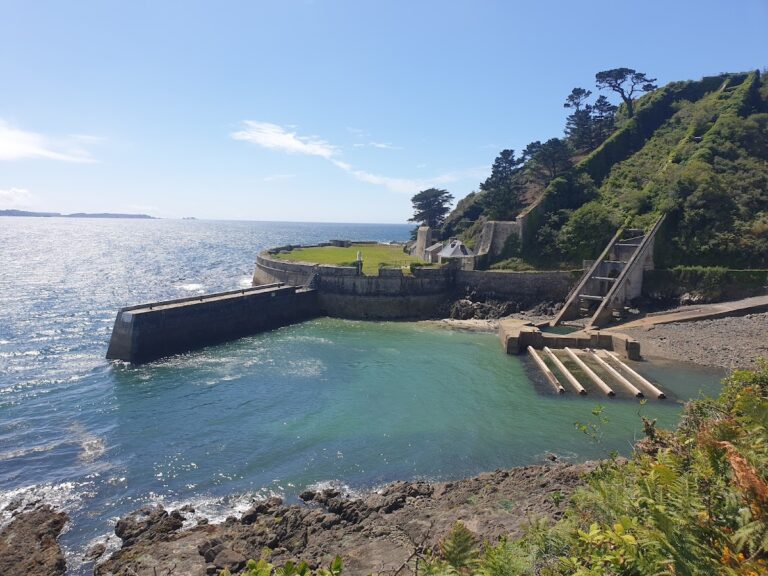
The associated lime kiln dates from 1800 and is built against the southern slope of the hill carrying the fort. It used a nearby Devonian limestone seam, a geological formation dating from roughly 419 to 359 million years ago. The resulting lime served local and military construction. From the front, the kiln has a trapezoidal outline. A basket-handle-arched entrance leads toward a partly obstructed unloading opening at the base of its roughly ovoid chamber, while the upper opening is partly overgrown with brambles.
The kiln’s outer masonry consists mainly of locally quarried limestone rubble marked by veins of white calcite, mixed with microgranite rubble. Some of the microgranite is deeply eroded and contrasts in a yellowish tone with the darker limestone. The structure survives in a ruined and unstable condition, with falling stones and structural collapse creating a danger around the remains.
Îlot du Diable Installations
The Îlot du Diable retains the remains of the searchlight casemate and a former electrical generating plant. The casemate sheltered the powerful light used to illuminate Camaret Cove at night, while the generating plant formed part of the installation’s supporting infrastructure.