Fort du Petit Minou: A French Coastal Fortification at Brest


Site at a Glance
- Rating
- 4.7
- Popularity
- Low
- Country
- France
- Primary era
- Early Modern
- External website
- Open
- Eras represented
- Early Modern, Modern
- Civilizations
- French, German
- Site type
- Military
- Remains
- Fort
On this page10 sections
History
Fort du Petit Minou is a French coastal fort in Plouzané, France, built between 1694 and 1697 as part of the late seventeenth-century defenses of the Goulet de Brest. This narrow maritime passage links the Brest roadstead with the open sea, making its control important to the protection of the naval harbor. The fort guarded against maritime threats and possible English landings.
Vauban’s defensive system
Sébastien Le Prestre de Vauban, the French military engineer and marshal whose designs shaped France’s defenses under Louis XIV, completed the defensive system of the Goulet de Brest at Petit Minou. The fort received 240-mm cannons, a command post, positions for directing artillery fire, and magazines for storing ammunition.
Eighteenth- and nineteenth-century reinforcement
The fort was strengthened during the eighteenth and nineteenth centuries. Between 1845 and 1856, work improved its landward side, known as the gorge, and added parapets with openings for newer guns firing over the top of the wall from open positions.
Between 1887 and 1889, a battery was created beneath the dry moat by cutting away rock. The fort also retained five original batteries equipped for 32-mm and 100-mm guns, while further batteries were placed around it. The Petit Minou lighthouse was built at the end of the adjacent headland in 1848.
Twentieth-century changes
After the First World War, the fort was demilitarized and converted into a hotel and restaurant. Initial scenes for Remorques, directed by Jean Grémillon and starring Jean Gabin and Michèle Morgan, were filmed there in 1939. The film was released in 1941.
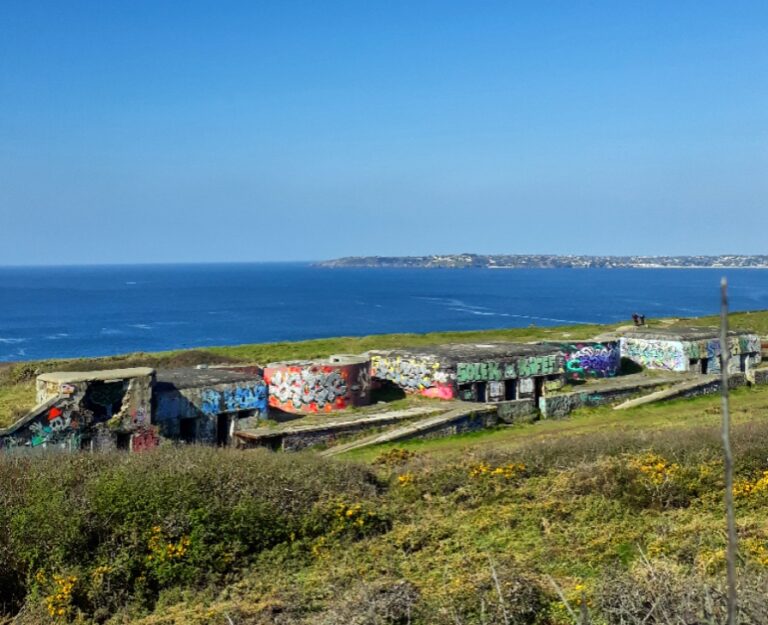
German forces occupied the fort from 1940 and built a substantial blockhouse, a strongly fortified structure for protected weapons and troops. American forces took possession after the liberation of the Minou area at the beginning of September 1944. The remains of the former hotel were demolished after liberation. The commune of Plouzané later acquired the fort, which opened to the public in October 2007 and remains under communal ownership.
Remains
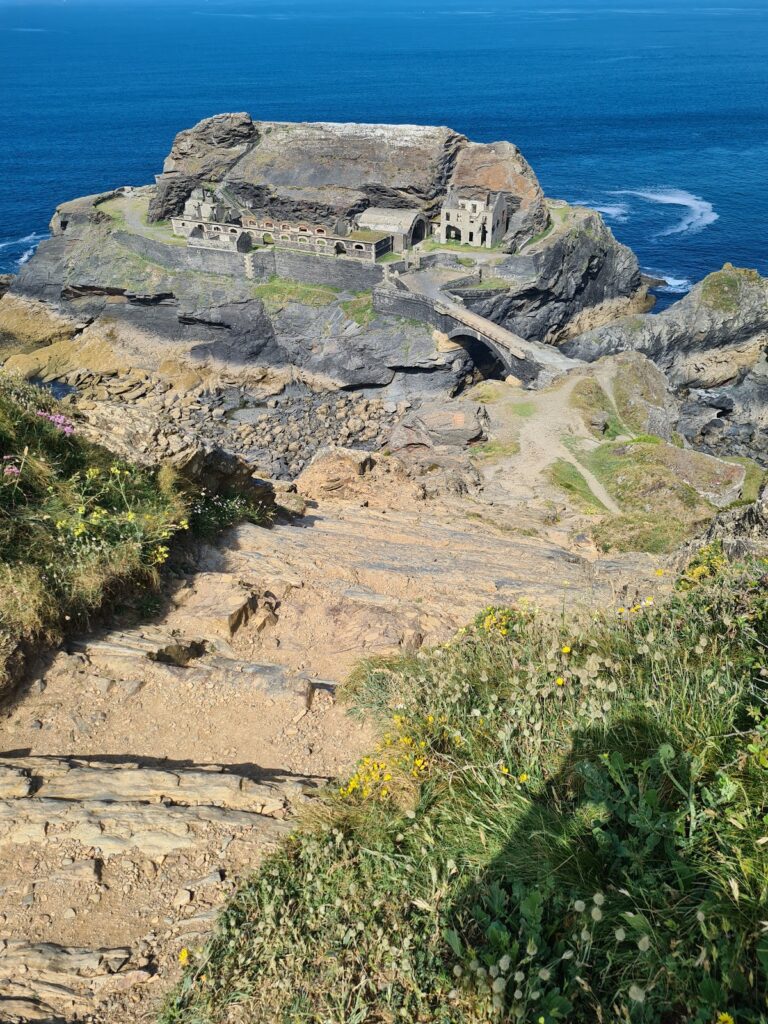
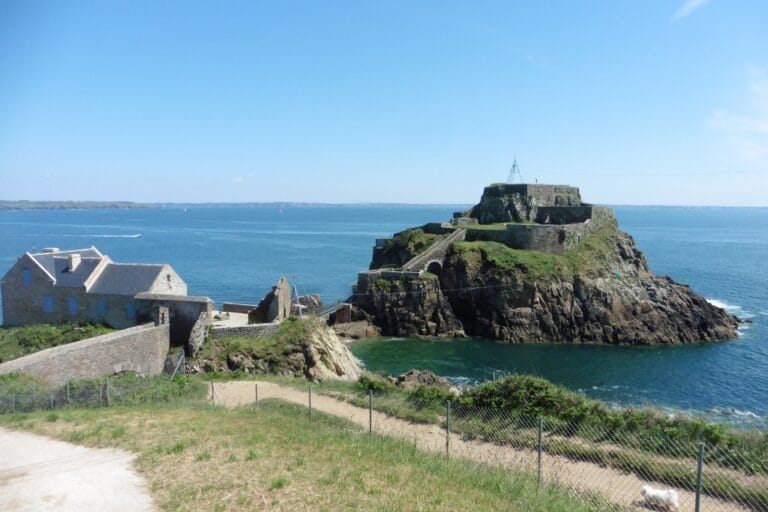
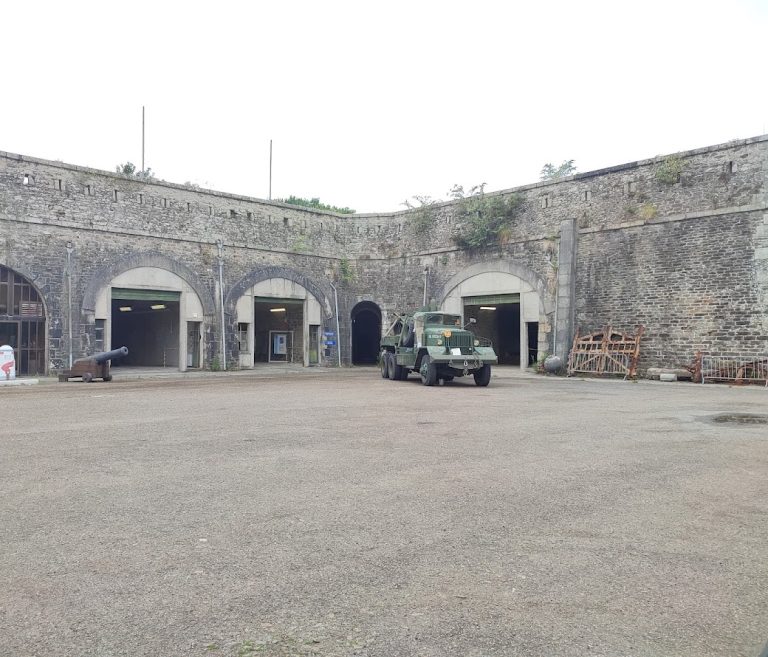
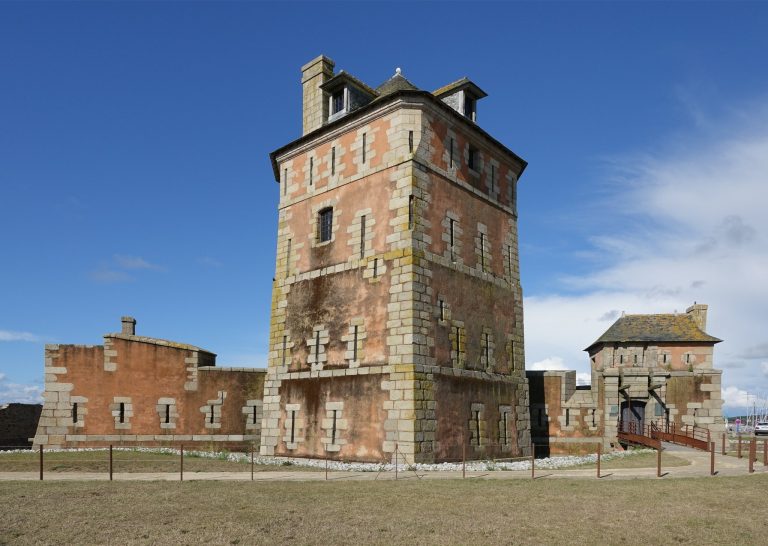
Fort du Petit Minou is an enclosed rubble-masonry fortification with walls averaging six metres in height. A dry moat surrounds the enceinte, or enclosed defensive wall, measuring about three metres deep and 9.5 metres wide. The fort stands beside the Petit Minou lighthouse on the end of the nearby headland.
Defensive enclosure and artillery positions
Moat and walls
The surviving enclosure forms the main defensive boundary of the fort. Its rubble-masonry walls rise to an average height of six metres, while the dry moat provides a deep and broad separation around the landward defenses.
Entrance and batteries
The entrance was remodelled with a monumental gate and drawbridge. Above the gate is a bretèche, a projecting defensive structure over an entrance, bearing the engraved letter “V,” which is probably interpreted as a sign of victory. The defensive layout included positions for 240-mm guns, a command post, magazines, fire-direction positions, and five original batteries for 32-mm and 100-mm guns. Additional original batteries stood around the fort.
Interior tunnel
A small tunnel survives inside the fort and is accessible to the public with caution.
Petit Minou lighthouse
The Petit Minou lighthouse stands beside the fort at the end of the adjacent headland. Built in 1848, it forms a separate landmark within the same coastal defensive setting.