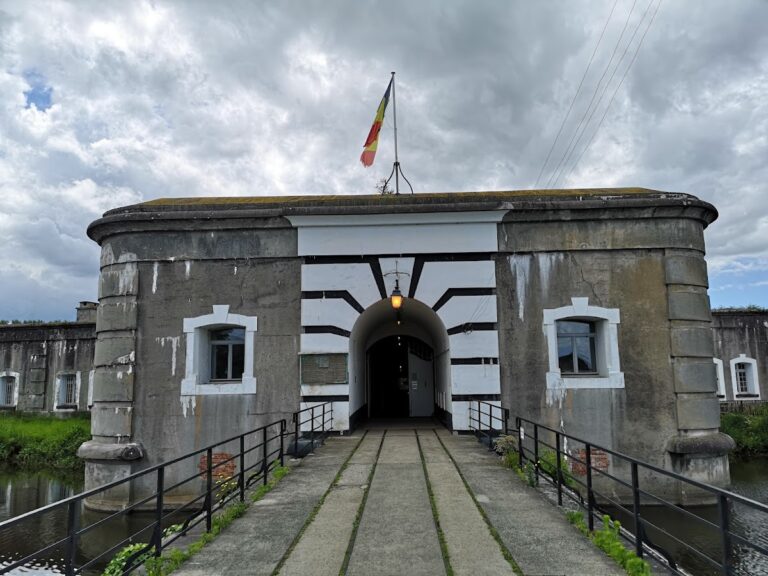
Fort van Steendorp: A Brick Bridgehead Fort in Belgium


Site at a Glance
- Rating
- 4.4
- Popularity
- Low
- Country
- Belgium
- Primary era
- Modern
- External website
- Open
- Eras represented
- Modern
- Civilizations
- Belgian
- Site type
- Military
- Remains
- Fort
On this page6 sections
History
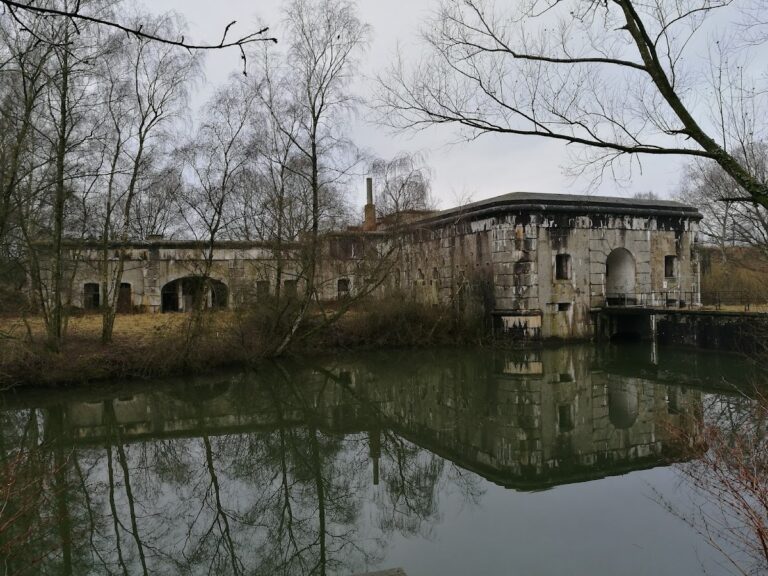
Fort van Steendorp is a former bridgehead fort in Belgium, built at Steendorp near Temse between 1882 and 1892 as part of the defensive ring around Antwerp. A bridgehead fort secured and defended a forward position, often near an important crossing or approach. Constructed in brick under the name Fort Rupelmonde, it formed part of the Antwerp fortress, Belgium’s fortified defensive system. The fort was renamed Fort Steendorp in 1909.
Antwerp’s defensive system
Antwerp became the center of Belgian national defense in 1859. The fortress was intended to resist an invasion by a neighboring power for long enough to allow the great powers that guaranteed Belgian independence to come to Belgium’s aid. At the time, the young state’s principal fear was invasion and annexation by France.
Fort van Steendorp was the last fort built in Belgium in brick and was described as the culmination of eight centuries of brick fortification construction. It was also the most expensive fort built in Belgium up to that time. Although it played no major role in military history, both World Wars left deep traces at the site.
Changing functions and protection
The fort passed through four successive functions. It began as a military fortification, later became a military factory where war gases, toxic chemical agents used as weapons, were manufactured, and then served as an army training ground. Its final role developed as a nature reserve.
Protection and repurposing took place in stages. The surrounding landscape received protection on 29 May 1995, followed by monument protection for the fort on 15 September 1997. The Flemish Agency for Nature and Forest purchased the site on 14 December 2001, after which it was valued both as a monument and as a nature reserve. Since 2001, the fort has formed part of a nature area. The Le Blon family has guarded it for more than 35 years and remains the only family living within the protected area.
Remains
Fortification and setting
Fort van Steendorp is a large brick bridgehead fort on the southern flank of the Waasland cuesta, a raised and gently sloping landform in the Waasland region. It stands approximately 600 metres north of the Scheldt and covers 3.585 square kilometres. Its position formed part of the wider defensive landscape around Antwerp.
Dry moats surround the fort. This was unusual in the region and unique within the Antwerp fortress, producing fortification elements rarely found elsewhere. The surviving brick construction expresses the building tradition that made the fort the final Belgian example of its kind.
Wildlife and natural features
The quiet, humid, and frost-free interior provides suitable overwintering conditions for bats. Following management works, more than 1,200 bats representing nine species spend the winter there, making Fort van Steendorp the principal bat-wintering site in Flanders after Fort van Oelegem. About 70 percent are Daubenton’s bats. Other species include pond bats, Geoffroy’s bats, whiskered bats, Brandt’s bats, brown long-eared bats, Natterer’s bats, and common pipistrelles. A serotine has also been found at the fort on an exceptional occasion.
The surrounding area supports the regionally rare crosswort, along with numerous ferns, sedges, and fungi. It also provides habitat for 109 bird species, including 43 that breed locally. Nightingales, golden orioles, stock doves, kingfishers, and lesser spotted woodpeckers are among the birds found there. Migrating birds use the area for resting and feeding, while the sun-warmed southern slope of the cuesta creates favorable rising winds.
Nearby sites