Fort de Pierre-Levée: A Nineteenth-Century Fortification on Île d’Yeu


Site at a Glance
- Rating
- 4.2
- Popularity
- Low
- Country
- France
- Primary era
- Modern
- External website
- Open
- Eras represented
- Modern
- Civilizations
- French
- Site type
- Military
- Remains
- Fort
On this page6 sections
History
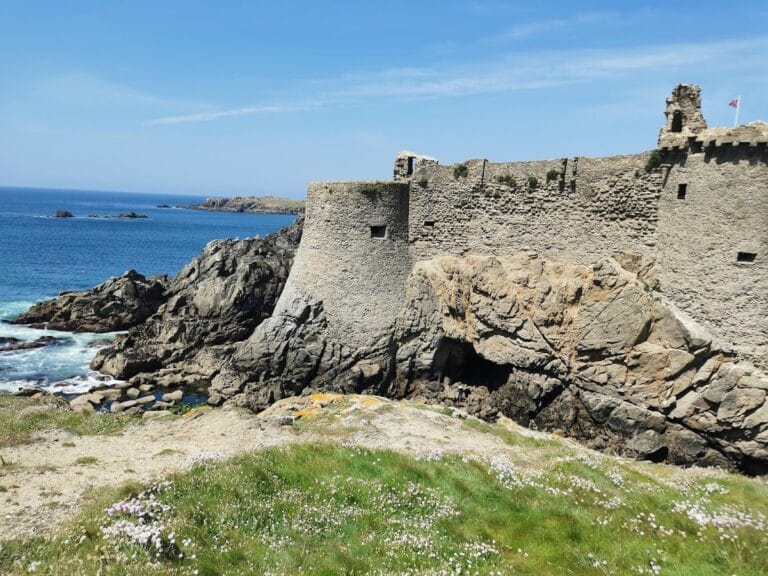
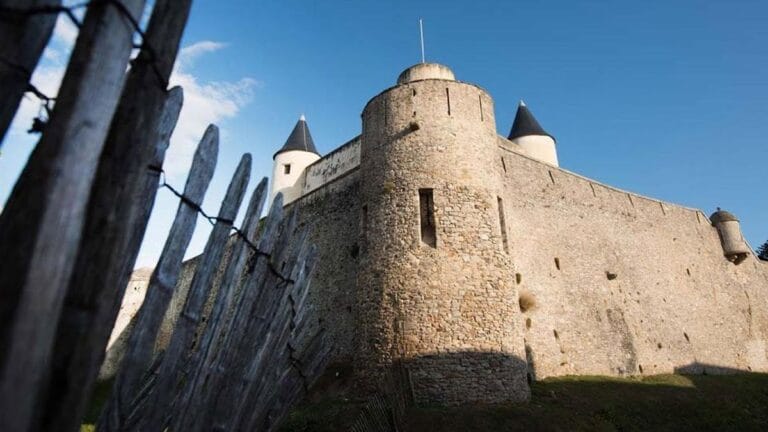
Fort de Pierre-Levée is a nineteenth-century military fort in France, near Port-Joinville on Île d’Yeu in Vendée. Built between 1858 and 1866 as a conventional nineteenth-century fortification, it was planned to accommodate 400 soldiers and their officers. The fort replaced earlier defenses on the same hill and later became a barracks, state prison, holiday camp, and community venue.
Earlier defenses and nineteenth-century construction
The fort took its name from a large menhir that once stood on Pierre-Levée hill. The hill was leveled for construction, and the stone was moved to the harbor before local inhabitants broke it into pieces for use in house building. Earlier Pierre-Levée defenses appear on the Napoleonic cadastre, a land survey and property-register map created under the French Napoleonic administration. They covered the Bois de Pierre-Levée in a quadrilateral arrangement with four bastions, projecting fortifications designed to provide flanking fire, together with an arrow-shaped outer work and a detached lunette, a separate defensive position.
The present fort was constructed between 1858 and 1866. From 1871, it served successively as a military barracks and a state prison, giving the complex a role that extended beyond its original defensive purpose.
Postwar imprisonment and later uses
After the Second World War, the fort held Philippe Pétain, the French marshal who had headed the authoritarian French State based at Vichy during the conflict. Pétain had first been detained at Fort du Portalet in the Pyrenees. Sentenced to death in August 1945, he had his sentence commuted to life imprisonment by General Charles de Gaulle, the French leader of Free France and a central figure in the postwar government. Pétain was transferred to Fort de Pierre-Levée in November 1945 and remained there until June 1951. For health reasons, he was then permitted to live in a house near Port-Joinville, where he died several weeks later.
During the 1960s, the former military site was converted into a holiday camp. The fort has been listed in the inventory of Historic Monuments since 28 December 1984, and the state remains its owner. It now accommodates island associations and facilities connected with music, pétanque, choral singing, bodybuilding, hunting, fishing, and photography. The local community radio station Neptune FM has operated there since 1992.
Remains
Fort de Pierre-Levée is a nineteenth-century military complex built on the leveled Pierre-Levée hill. Its surviving fabric includes the fort itself, the courtyard and its later buildings, and structures associated with its conversion to community use. The earlier defenses and the menhir belong to the site’s physical history but are represented through their recorded locations and reuse rather than as part of the present complex.
Earlier fortifications and the menhir
The earlier defensive layout occupied the Bois de Pierre-Levée as a quadrilateral with four bastions, an outward-pointing arrow-shaped work, and a detached lunette. These works preceded the present fort and are shown on the Napoleonic cadastre. The menhir associated with the hill was removed to the harbor and later divided into building material, linking the name Pierre-Levée with a stone that was subsequently reused in local houses.
Courtyard buildings and event space
A building at the rear of the courtyard was constructed in 1964 to serve as the refectory of the holiday camp. In 2005, a large tent was erected in the courtyard as a temporary replacement for the island’s municipal function hall, the Casino, while that building underwent renovation. The tent’s canvas was replaced in September 2015, and the structure was retained afterward as a second municipal function hall for performances, weddings, and other events.
Nearby sites