Château du Colombier: An Eighteenth-Century Malouinière in France


Site at a Glance
- Rating
- 4.7
- Popularity
- Low
- Country
- France
- Primary era
- Early Modern
- External website
- Open
- Eras represented
- Early Modern
- Civilizations
- French
- Site type
- Domestic
- Remains
- Manor House
On this page7 sections
History
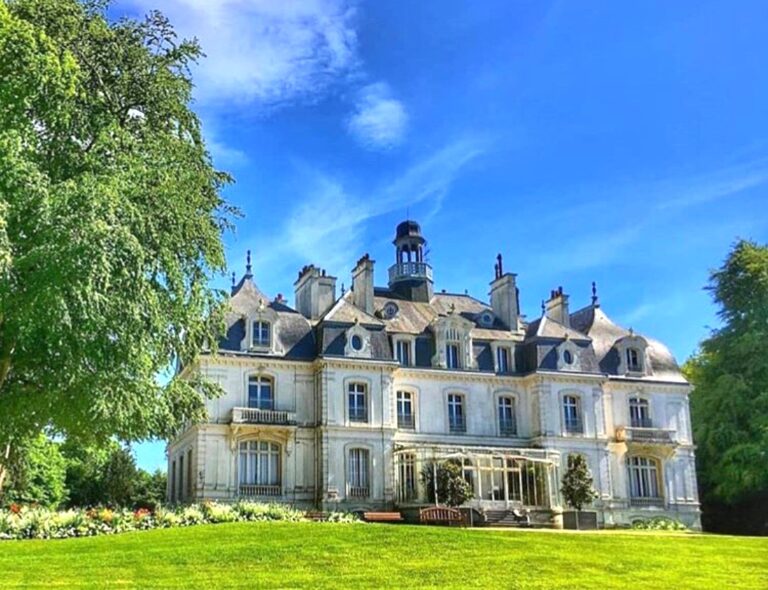
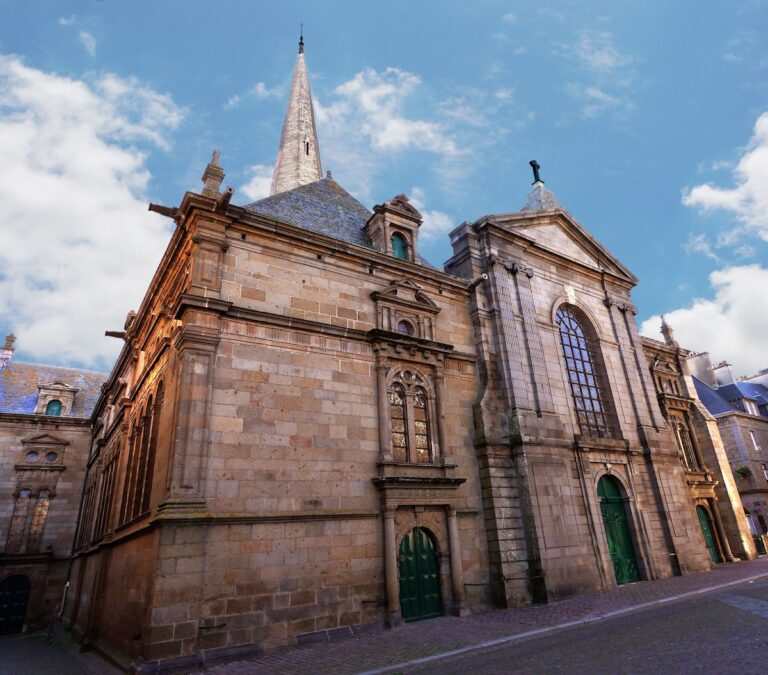
Château du Colombier is an eighteenth-century country residence in France, located in Paramé, now part of Saint-Malo, Brittany. Built around 1715 as a malouinière, a substantial rural house created by affluent residents of Saint-Malo, it formed part of a private estate outside the port city. The architect is unknown, while the property is associated by attribution with the Cargouët family. Its chronology is also linked with the third quarter of the eighteenth century and the second half of the nineteenth century.
Pierre Gris and the early estate
Pierre Gris, a shipowner, maritime outfitter, and merchant, commissioned the residence and held the property from 1711 to 1747. After his death, the estate passed through his granddaughter Marie-Jeanne Le Breton de La Plussinais and her descendants. Among the later families connected with its ownership were the Eon de Carman and Du Pouget families, before the property entered the Cargouët family.
Ownership from the nineteenth century
The estate was divided in 1881, when the countess du Cargouët assigned the Colombier to her son, Georges de Cargouët de Ranléon. He sold it in October 1886 to Madame Quemper de Lanascol. Ownership then passed to Monsieur Quemper de Lanascol and later to Madame Quantin. Around 1900, Viscount Alphonse de Saint-Meleuc acquired the property.
Modern use
The Lemarié family purchased the estate in 1992. It was sold again in 2007 to a couple of restaurateurs and hoteliers, after which the residence became a four-star hotel with a restaurant and sixteen rooms. The property remains privately owned and has operated as a hotel-restaurant since 2007. Paramé was incorporated into Saint-Malo in 1967.
Remains
The site consists of the malouinière and its estate grounds, including gardens, wooded garden areas, an entrance court, a basin, and an octagonal dovecote. Changes to the grounds include the removal of the entrance-court divisions and their replacement by a single lawn.
The colombier
An octagonal colombier, or dovecote, remains on the estate. Designed to house pigeons, it has a domed roof and was still standing in the twenty-first century.
Gardens and sculpture
The gardens and wooded areas were decorated with numerous statues brought from Italy. Thirty-two statues were found broken or severely damaged, while four were preserved in niches created in the facade of the château. A basin in the garden formerly served as a bath.