Citadelle de Montmédy: A Fortified Stronghold in France


Site at a Glance
- Rating
- 4.4
- Popularity
- Medium
- Country
- France
- Primary era
- Early Modern
- External website
- Open
- Eras represented
- Medieval, Early Modern, Modern
- Civilizations
- Duchy of Luxembourg, French, Habsburg, Holy Roman Empire
- Site type
- Military
- Remains
- Fortified Town
On this page16 sections
History
Citadelle de Montmédy is a fortified stronghold in France, developed from a medieval castle into a major frontier fortress under Habsburg and French rule. Its present defensive complex began around 1545, when Charles V, the Habsburg emperor and ruler of the Habsburg Netherlands, ordered its construction at Montmédy-Haut.
From the County of Chiny to Luxembourg
The site’s history began in 1221, when Arnold III, Count of Chiny, ordered the construction of the first castle at Montmédy. Known as Château de Mady, the castle gave the place its name. Montmédy became the capital of the County of Chiny and retained that role until 1364, when the county was incorporated into the Duchy of Luxembourg.
Montmédy remained connected with Luxembourg under the rule of Wenceslaus I, who briefly minted silver coins called sterlings there between 1364 and 1383. The later fortress therefore occupied a site that had already served as a regional political center for more than three centuries.
The Habsburg and Spanish Netherlands fortress
A new fortress was built around 1545, when Luxembourg formed part of the Habsburg Netherlands. Between 1559 and 1579, Governor Antoine d’Allamont transformed the town into a fortified stronghold. The works enclosed not only military installations but also civilian life, making Montmédy a fortified town rather than a strictly military citadel.
After the Eighty Years’ War, the Peace of Westphalia in 1648 placed Montmédy, as part of Luxembourg, within the Spanish Netherlands. Louis XIV of France captured the fortress after a siege in 1657. The Peace of the Pyrenees transferred the territory to France on 9 November 1659, as part of the French-controlled Trois-Évêchés, the bishoprics of Metz, Toul, and Verdun and their associated territories.
French fortification and the royal escape plan
Following the French conquest, the fortress gained a barracks, church, school, and housing for soldiers’ families. It became part of the northern defensive line associated with Sébastien Le Prestre de Vauban, the French military engineer and marshal whose bastioned designs shaped Louis XIV’s frontier defenses. Vauban substantially altered the fortifications, including enlarging the bastions.
After France annexed the Duchy of Lorraine in 1766, Montmédy was incorporated into the province of Lorraine when the separate generality of the Trois-Évêchés was abolished. The fortress later acquired a further political importance during the French Revolution. In June 1791, Louis XVI chose Montmédy as the intended destination of his attempted flight from Paris because its garrison had remained loyal to him and the fortress lay near the Austrian Netherlands. The king, Marie Antoinette, and their entourage were recognized and arrested at Varennes-en-Argonne, about 50 kilometres from Montmédy. A commemorative plaque at Thonnelle marks the house where Louis XVI was expected to stay.
Nineteenth-century sieges and modernization
After the Battle of Waterloo, Allied forces besieged the fortress from 16 July to 22 September 1815. This was the first major test of Vauban’s defensive line in the period after Napoleon’s defeat. The bombardment severely damaged Montmédy. The French garrison agreed to surrender on 19 September and departed on 22 September, after which Prussian troops replaced it.
The Prussians initially prepared to destroy the citadel with mines. They abandoned that plan under the peace treaty of 20 November 1815, which kept Montmédy under occupation for three years. Prussian forces finally evacuated the town at the end of November 1818.
During the Franco-Prussian War, the Prussian Fourteenth Division under General Georg von Kameke began besieging Montmédy on 7 December 1870. About 6,000 shells were fired at approximately 3,000 defenders, and the garrison surrendered on 14 December. The town hall and sub-prefecture were destroyed during the siege. They were replaced by new buildings in the lower town rather than rebuilt in Montmédy-Haut.
After the war, Montmédy-Haut was incorporated into the Séré de Rivières system, the network of French forts and fortified positions created to strengthen the country’s borders. Modernization altered the town gate, entrance gate, well, water reservoir, ovens, administrative and public buildings, powder magazines, arsenal, barracks, and hospital.
World wars and changing functions
A garrison occupied the fortress at the beginning of the First World War in 1914. It was evacuated early in the conflict, and its 2,300-man garrison attempted to reach Verdun. Only 20 men and one officer eventually arrived there.
During the war, Montmédy became an important German logistical center. A narrow-gauge railway linking it with Verdun operated from early 1914 and supplied troops and matériel to the Verdun front. Wounded soldiers were evacuated through Montmédy, where several field kitchens also operated.
The war also affected Saint Martin’s Church. German forces confiscated the organ pipes so that the metal could be melted for wartime use. After roughly a century of deterioration, a local nonprofit organization led about ten years of campaigning and fundraising for the organ’s restoration. It was inaugurated again on 27 October 2013 with a concert by the French organist Olivier Vernet.
First World War casualties are buried in the upper-town municipal cemetery, including 69 German, 18 French, and 21 Russian dead. Other victims lie in the German military cemetery at Montmédy and in the lower-town municipal cemetery. More than 2,500 German soldiers are buried in Montmédy overall, including some in communal graves.
After the Second World War, Montmédy-Haut lost its major strategic role and became almost depopulated. The army and sub-prefecture moved to the lower town, while many houses fell into disrepair. Later conservation and reuse brought new functions to parts of the stronghold. Casemates were rented as studios for artists and craftspeople, the church was renovated and later deconsecrated, and the building was adapted for conferences, exhibitions, and concerts.
The fortress also houses a museum devoted to its history and to the naturalist painter Jules Bastien-Lepage, who was born in Damvillers, about 20 kilometres south of Montmédy. The fortress, its ramparts, and its glacis were classified as historic monuments by order of 31 October 1991, with the commune of Montmédy identified as the owner. Montmédy-Haut is also the setting of Les Enfants de la Citadelle, a two-part graphic novel written and drawn by Jean-Claude Servais for the series Tendre Violette and published in 2006 and 2007.
Remains
Fortifications and defensive infrastructure
Ramparts, bastions, and glacis
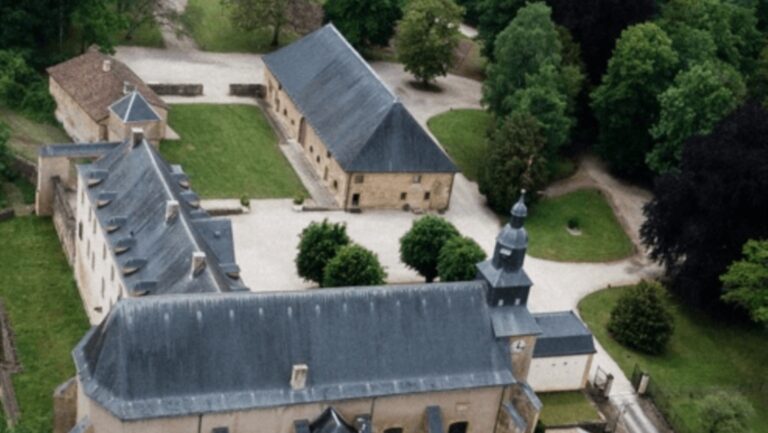
The stronghold occupies Montmédy-Haut and is organized around ramparts, ditches, bastions, gates, and a glacis. A glacis is a gently sloping open area outside a fortification, intended to expose attackers to defensive fire and limit their ability to approach under cover. The sixteenth-century transformation under Antoine d’Allamont, the seventeenth-century alterations associated with Vauban, and the nineteenth-century Séré de Rivières modernization successively reshaped these defenses.
Gates and approach
The defensive complex includes a city gate and an entrance gate, both affected by later modernization. The approach to the upper town forms part of the associated defensive landscape, which also includes the ditches and glacis. A horse trough stands on the road leading toward the upper town.
Casemates and military buildings
Casemates, fortified vaulted chambers designed to protect troops, weapons, supplies, or installations from artillery fire, form part of the surviving military infrastructure. Other elements include a well, water reservoir, ovens, powder magazines, an arsenal, barracks, hospital, and administrative and public buildings. The nineteenth-century works modified these structures and related installations. Several casemates have since been adapted as studios for artists and craftspeople, while municipal casemates also contain a concept store and a municipal building at the entrance contains a Latin bar.
Buildings within the upper town
Saint Martin’s Church
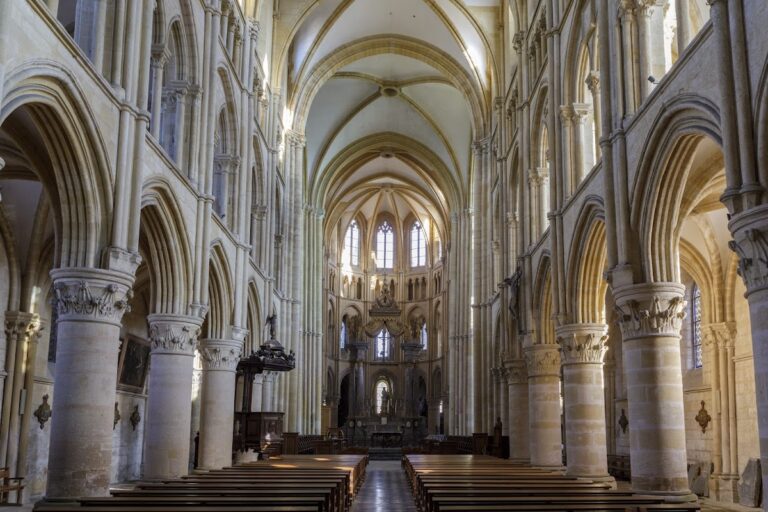
Saint Martin’s Church stands within the upper town. Its organ lost its pipes during the First World War, was restored after a long period of deterioration, and returned to use in 2013. The church was later deconsecrated and converted into a venue for conferences, exhibitions, and concerts.
Housing and civic buildings
The fortress retains buildings associated with the civilian and military community that developed inside its defenses, including housing for soldiers’ families, a school, and former administrative premises. Several buildings in Montmédy-Haut are ruinous or deteriorated, among them the refuge house of Notre-Dame d’Orval Abbey, while some houses have been renovated.
The town hall and sub-prefecture formerly stood in Montmédy-Haut but were destroyed during the 1870 siege. New buildings replaced them in the lower town rather than being constructed again within the upper stronghold.
Museum and collections
Fortress and Jules Bastien-Lepage museum
A museum within the fortress presents the history of Montmédy’s stronghold and the work of Jules Bastien-Lepage. Its presence connects the surviving military complex with the artistic history of a painter born in nearby Damvillers.
Nearby sites