Palazzo della Cavallerizza: A Medieval Feudal Residence and Horse-Breeding Estate in Italy


Site at a Glance
- Rating
- 4
- Popularity
- Very Low
- Country
- Italy
- Primary era
- Medieval
- Eras represented
- Medieval, Early Modern
- Civilizations
- Kingdom of Naples, Spanish
- Site type
- Domestic
- Remains
- Palace
On this page10 sections
History
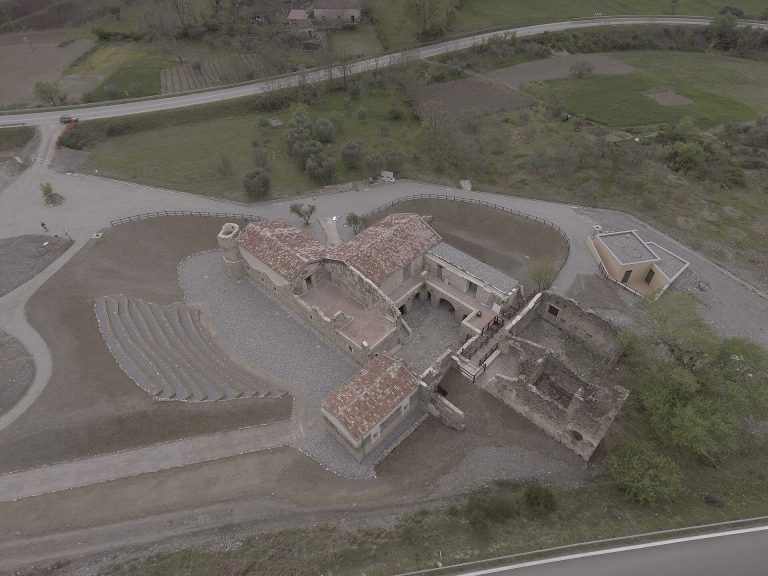
Palazzo della Cavallerizza is a medieval historical building in Italy, located in the territory of Sant’Arcangelo about three kilometres from the town centre. Its construction is dated to the fourteenth century and is attributed to the Della Marra family, one of Basilicata’s prominent feudal dynasties. The palace served both as a residence for the families who owned it and as the centre of an important horse-breeding establishment.
The Della Marra foundation
The Della Marra family came from Barletta and eventually held approximately one hundred fiefs. The earliest phase of the palace is known as the Viridarium period, a name referring to a garden or green retreat. It was probably begun by Eligio I Della Marra as a rural residence integrated into a cultivated and wooded landscape. Eligio was a wealthy and powerful feudal lord who possessed Sant’Arcangelo and numerous other fiefs in Basilicata, as well as inherited property in Naples.
The setting helped determine the family’s choice of Sant’Arcangelo. The mild climate, open and level terrain, pastures, woods, and plentiful water from the Agri provided conditions suited to raising and training horses. An old tradition claimed that the palace contained as many rooms as there are days in the year, while the equestrian establishment grew in importance under Eligio’s successors, Antonio and Luigi Carafa Della Marra.
The Palace and the horse establishment
During the sixteenth century, the complex entered a second phase known as the “Palace” period. It was enlarged by the addition of the carriera, a covered riding and training passage, and another wing. The building then functioned as a station for its own horse breed, with facilities for breeding and training. A sixteenth-century description calls it “the Palace” and presents it as a sumptuous residence built by the Princes of Stigliano to house and shelter their horses. The horse establishment was described as famous throughout the kingdom, not only within the province.
Under Antonio Carafa, Prince of Stigliano, the Cavallerizza reached its greatest splendour. His stable and horse breed were judged the greatest in the kingdom. The complex was also represented on maps from the sixteenth through the eighteenth centuries. These maps show the altered course of the Agri surrounding the palace and forming an islet of considerable size.
Later owners and the Scardaccione connection
After the Della Marra family, ownership passed to the Carafa family, then to the Colonna family, and finally to the Scardaccione family, which remains the owner. The horse establishment experienced renewed prosperity under Giuliano Colonna, who held the titles of Prince of Galatro, Prince of Aliano, and later Prince of Stigliano. He appointed Giovanni Scardaccione, Baron of Cellesse and Terlizzi, as governor of the Cavallerizza.
An equestrian portrait of Giovanni Scardaccione, together with the gift of a stallion named Saittone from the Prince of Stigliano, may help reveal characteristics of the Neapolitan Santarcangelo horse breed associated with the estate. The palace is currently not in use.
Remains
The palace and its principal spaces
Palace plan
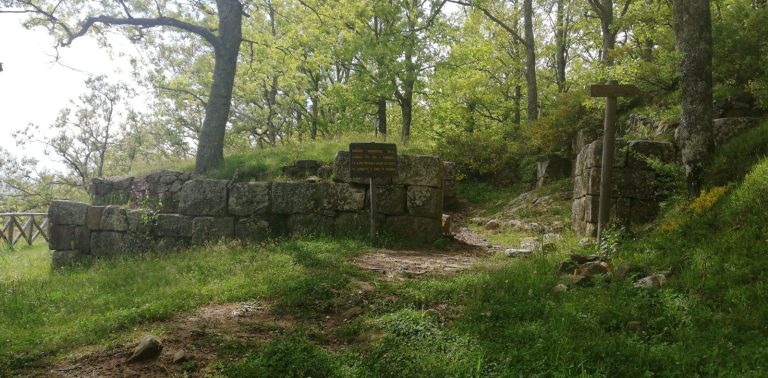
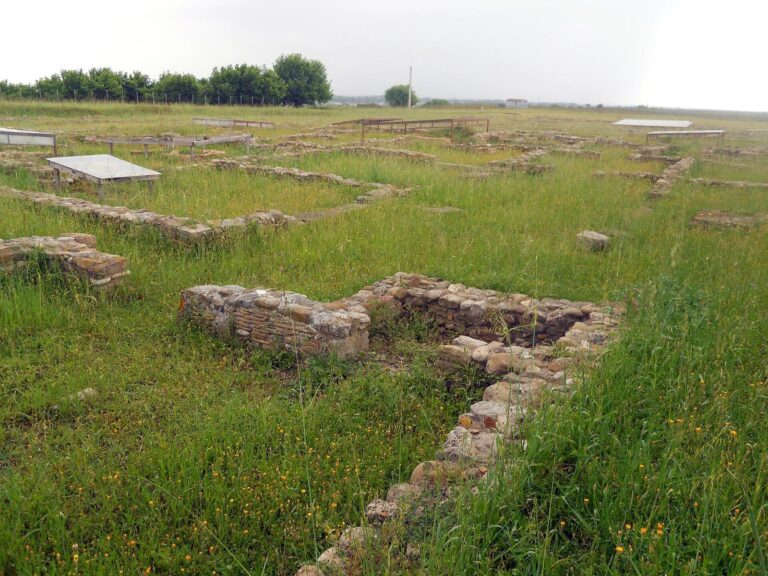
The building stands on the lower plain near the bed of the Agri, rather than on a hill. Its surviving walls are imposing, and the palace had a C-shaped plan. Within it were several frescoed halls and a throne room, reflecting its dual character as a feudal residence and the administrative centre of a large equestrian estate.
Training facilities
The stables stood beside the carriera, a covered, arched passage more than 200 metres long and 8 metres wide. It was used for military dressage, meaning disciplined riding movements and manoeuvres intended for warfare. Apartments for squires and riders occupied the level above the stables. Five large windows opened towards the gallop course, while a small side staircase provided access to the apartments and remains visible.
The river island and cultivated landscape
The altered course of the Agri formed an island around the palace, a feature represented on historical maps as an islet of some size. The complex stood within a broad landscape of former gardens, orchards, vineyards, oak woods, and reed beds. Part of the reed vegetation survives and supports a wide variety of animals and birds, preserving an element of the environment that accompanied the palace’s agricultural and equestrian functions.
Associated artistic evidence
A fresco in a ground-floor room of the nearby Monastery of Orsoleo depicts two large monochrome horses dominating a landscape with a river and several buildings. It has been tentatively connected with Eligio Della Marra’s interest in horses. The buildings may include the monastery under construction, although their identification remains uncertain. The equestrian portrait associated with Giovanni Scardaccione also bears on the interpretation of the horse breed connected with the Cavallerizza, but its physical location is not stated.