Appelhof: A Rococo Hunting and Pleasure Château in Germany


Site at a Glance
- Rating
- 4.2
- Popularity
- Very Low
- Country
- Germany
- Primary era
- Early Modern
- Eras represented
- Early Modern
- Civilizations
- Holy Roman Empire
- Site type
- Domestic
- Remains
- Castle
On this page7 sections
History
Origins and early ownership
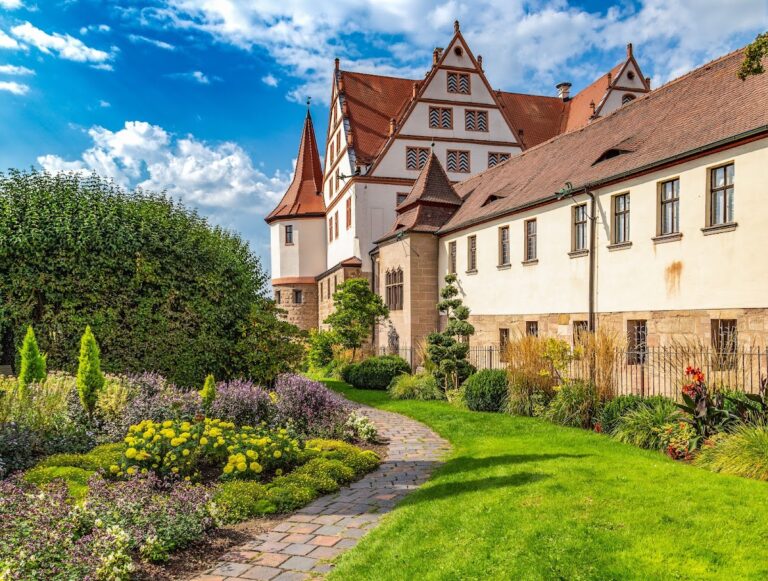
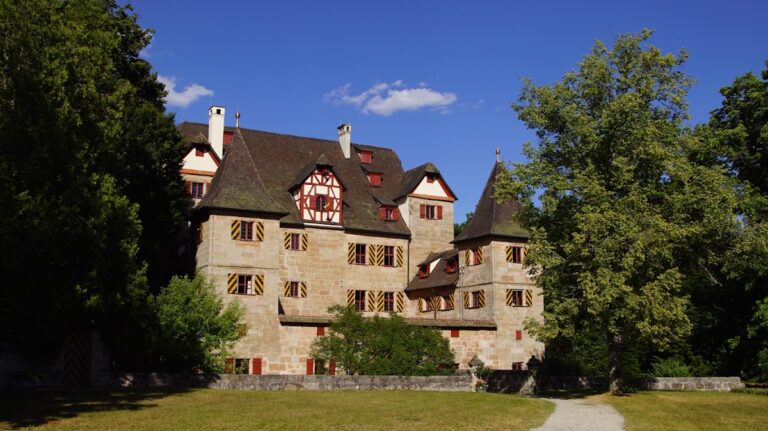
Appelhof is a historic estate near Allersberg in Germany, centered on a Rococo hunting and pleasure château built around 1760. The locality lies within the Altenfelden cadastral district, a land and property registration area, in the Roth district of Middle Franconia, Bavaria.
The place was first documented in 1457, when Veit Ellwanger, a member of a Nuremberg patrician family, sold property at Appel to Duke Ludwig IX, known as “the Rich.” The estate later passed through the hands of several Nuremberg patrician families.
The Gilardi estate
Around 1760, the Allersberg manufacturer Jacob Gilardi built the present château as a summer residence for his family. Its design bears the hand of the architect Gabriel de Gabrieli, although it is not known whether Gabrieli personally carried out the construction.
By the end of the eighteenth century, Appelhof consisted of the château and a chapel. Serious criminal jurisdiction, known as high justice, was exercised over the estate by the Palatinate-Neuburg Landrichteramt at Allersberg. This was a territorial judicial and administrative office. Jacob Gilardi held the estate’s manorial rights, which included the authority associated with the landlord of an estate.
Faber-Castell ownership and incorporation
In 1889, the pencil manufacturer Lothar von Faber acquired Appelhof. The estate has remained in the possession of the Faber-Castell family.
Under the Bavarian municipal ordinances of 1808 and 1818, Appelhof was assigned to the Guggenmühle tax district and the rural municipality of Altenfelden. A railway line projected in the late nineteenth century between Lohgarten-Roth and Allersberg would have crossed the estate. Appelhof became part of Allersberg on 1 July 1971 during Bavaria’s territorial reform.
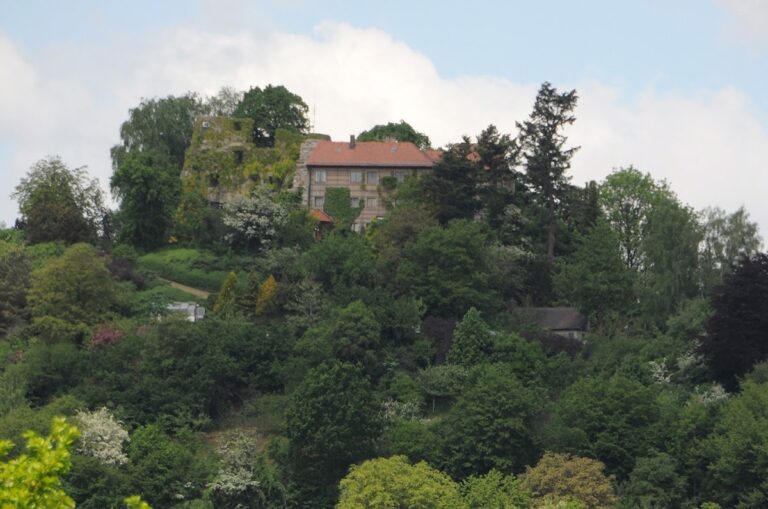
Appelhof is predominantly Roman Catholic and remains attached to the parish of the Assumption of Mary in Allersberg. Protestant residents were originally assigned to Eckersmühlen, while the Allersberg parish has been responsible for them since the 1960s. The château is a protected architectural monument. The estate has been uninhabited since 2011, and restoration is planned.
Remains
Appelhof is an estate whose surviving architectural focus is the Rococo château, a light and ornamented eighteenth-century style known for curved forms and asymmetrical design. The château stands about two kilometres southwest of Allersberg and approximately 300 metres northwest of Lake Rothsee. The Kleine Roth flows south of the estate before soon entering the lake, while the A9 motorway and the high-speed railway between Nuremberg and Ingolstadt run about 300 metres to the east.
Château and estate setting
Appelhof château
The château was built around 1760 as a hunting and pleasure residence and as a summer home for Jacob Gilardi’s family. It is the central surviving structure of the estate and is associated with Gabriel de Gabrieli’s architectural work. By the end of the eighteenth century, the estate also included a chapel, forming the recorded religious counterpart to the residential château.
Nearby sites