Jędrzejowicz Palace in Rzeszów: A Nineteenth-Century Art Nouveau Residence


Site at a Glance
- Rating
- 3.9
- Popularity
- Very Low
- Country
- Poland
- Primary era
- Modern
- External website
- Open
- Eras represented
- Early Modern, Modern
- Civilizations
- Habsburg
- Site type
- Domestic
- Remains
- Elite Residence
On this page11 sections
History
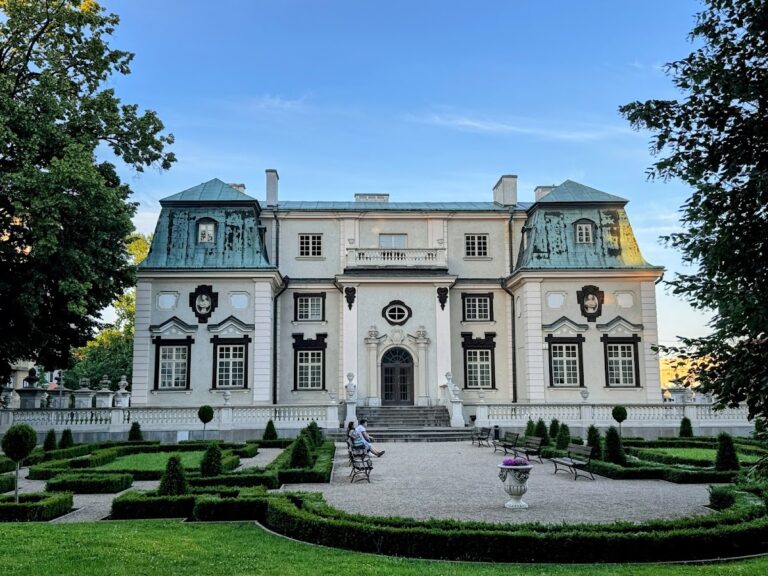
Jędrzejowicz Palace is a nineteenth-century Art Nouveau residence in Rzeszów, Poland, rebuilt by the Jędrzejowicz family between 1879 and 1883. Designed by the Polish architect Tadeusz Stryjeński, the three-storey palace replaced an earlier manor in the Staromieście district, north of the city center, and became the principal residence associated with the estate.
From the Rzeszowski estate to Staromieście
In the sixteenth century, a manor and its surrounding estate served as the residence of the Rzeszowski family, who then owned Rzeszów. Between 1584 and 1603, their successor, Mikołaj Spytek Ligęza, transferred the main residence to a manor in Staroniwa. A farm administrator remained at Staromieście.
During the rule of the Lubomirski family, the farmstead was surrounded by ponds and used to quarter rebel, mercenary, Swedish, and Crown troops. In 1737, the estate included a wooden manor. The Lubomirskis later leased the property to the Zaręba-Skrzyński family, who purchased it at auction in 1791. The Bobrownicki family acquired Staromieście in the mid-nineteenth century.
The Jędrzejowicz rebuilding
Adam Jędrzejowicz initially planned to build a palace in Zaczernie, but changed course after Tadeusz Stryjeński urged him to acquire Staromieście. Jędrzejowicz bought the estate and commissioned the rebuilding of its eighteenth-century manor and park. The work took place from 1879 to 1883, when the old manor was reportedly surviving only in a fragmentary state. The project cost 500,000 gulden.
During the 1909-1910 school year, Adolf Wiktor Weiss prepared a further reconstruction design for the palace. Adam’s son, Jan Jędrzejowicz, managed the property from 1914 and became its owner in 1922.
Wartime occupation and resistance
During the Second World War, German occupiers were billeted with the manor’s residents. They cut down part of the trees and erected barracks on the lawn, altering the estate’s grounds.
Jan’s son, Jan Grzegorz Jędrzejowicz, was sworn into the Union of Armed Struggle in mid-1940 on the orders of Captain Łukasz Ciepliński, the newly appointed commander of its Rzeszów District. The Union of Armed Struggle was a Polish underground military organization that was later incorporated into the Home Army, the principal Polish resistance force operating under the authority of the wartime government-in-exile. Jędrzejowicz later served as a counterintelligence officer of the Rzeszów Inspectorate of the Home Army until 1944.
During the occupation, Ciepliński lived in Staromieście. Jędrzejowicz supplied him with documents certifying fictitious employment in the palace garden. In summer 1944, Jan Grzegorz Jędrzejowicz fled to Jarosław ahead of the Red Army and later traveled through the territory of the Third Reich to the 2nd Corps in Italy.
State takeover and later use
After the war, the palace and estate were taken over by the state through agricultural reform, which involved the takeover and redistribution of large estates, and were assigned to a local production cooperative. After the cooperative was dissolved, the building successively housed an anti-tuberculosis hospital, a pulmonary-disease ward of the Specialist Tuberculosis and Lung Disease Complex in Rzeszów, and the Tuberculosis and Lung Disease Clinic of the Podkarpackie Center for Lung Diseases, belonging to Provincial Clinical Hospital No. 1 administered by the marshal’s office.
From 1965, blocks of the Millennium Estate were built on former manor lands. Sports fields were also created in the park, at the expense of part of its tree cover. The palace itself remained unrenovated, while its ownership stayed legally unresolved.
Ownership proceedings and recent medical use
In 2002, Jan Grzegorz Jędrzejowicz sought the return of the Staromieście estate from the Podkarpackie voivode, but did not identify the relevant plots. After his death in 2008, voivode Mirosław Karapyta suspended the proceedings until the lawful heir could be established. Reprivatization is the legal process through which property taken by the state may be sought for return.
In 2018, hospital patients complained to Marshal Władysław Ortyl about sanitary conditions at the unrenovated facility. Renovation was affected by the pending reprivatization proceedings. In 2019, the Jędrzejowicz family obtained the suspension of plans by Rzeszów mayor Tadeusz Ferenc to revitalize the park and build brine pools at the neighboring City Hospital. In 2020, one of Jan Jędrzejowicz’s sons submitted claims that included the hospital grounds.
The Tuberculosis and Lung Disease Clinic moved from the palace to the completed Podkarpackie Center for Lung Diseases in 2022. In 2023, while that center was further expanded, the palace temporarily accommodated outpatient clinics for chest surgery, tuberculosis and lung disease, allergology, and immunology. The palace is identified as belonging to the Podkarpackie Voivodeship, although the legal ownership question remains unresolved.
Remains
Palace and earlier manor
Nineteenth-century palace
The surviving building is a three-storey nineteenth-century palace in the Art Nouveau style, standing in the Staromieście district within the Millennium Estate. Its present form resulted from the rebuilding carried out between 1879 and 1883 for the Jędrzejowicz family according to Tadeusz Stryjeński’s design. The building later accommodated tuberculosis and pulmonary-disease clinics and remains unrenovated.
Eighteenth-century manor
The earlier manor recorded in 1737 was a wooden building with a porch, two chambers at the corners, and an attic dormer. It had a brick chimney and windows set in lead frames. A fortification with a two-winged gate preceded the manor, forming an earlier defensive element of the estate.
Park, ponds, and wartime alterations
The former estate included a park and ponds surrounding the farmstead. During the Second World War, German occupiers removed part of the tree cover and built barracks on the lawn. Later, the creation of sports fields caused further loss of trees from the park. These changes form part of the surviving site’s physical history alongside the palace and its earlier manor fabric.
Nearby sites