Palazzo Spalletti-Trivelli: Historic Palace in Reggio Emilia
Site at a Glance
- Rating
- 4.4
- Popularity
- Very Low
- Country
- Italy
- Primary era
- Early Modern
- External website
- Open
- Eras represented
- Classical, Early Modern, Modern
- Civilizations
- Roman
- Site type
- Domestic
- Remains
- Elite Residence
On this page8 sections
History
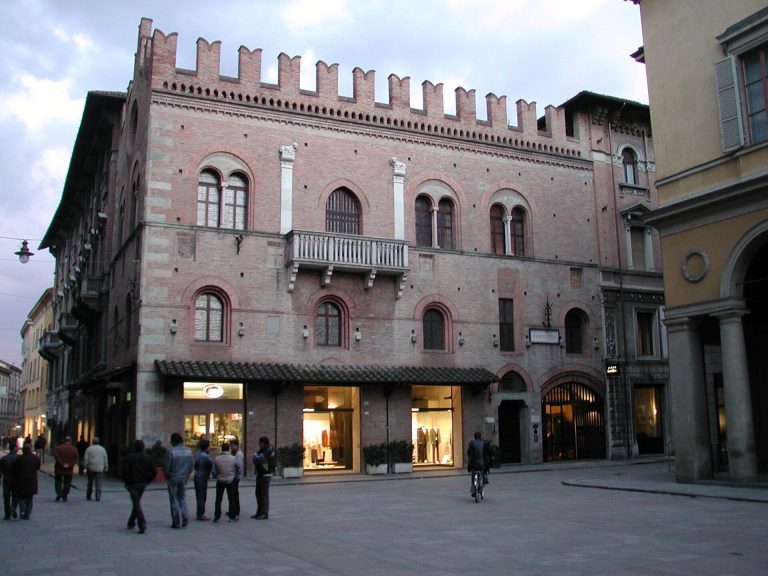
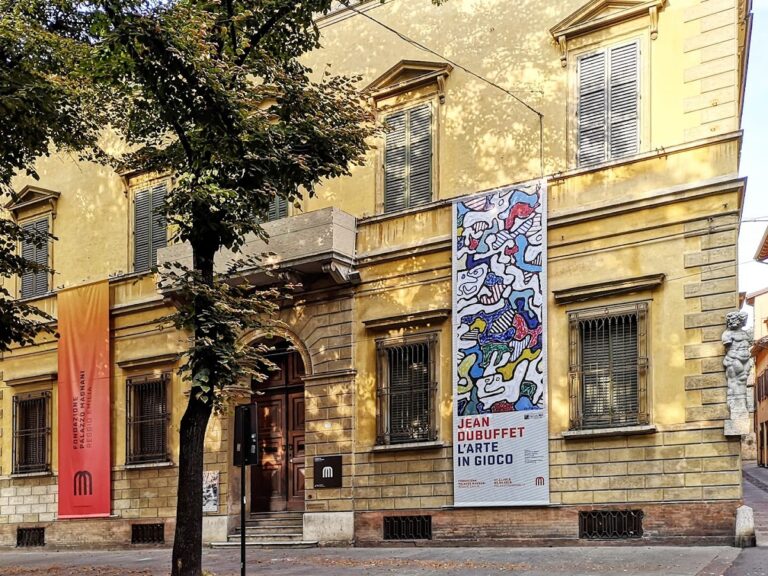
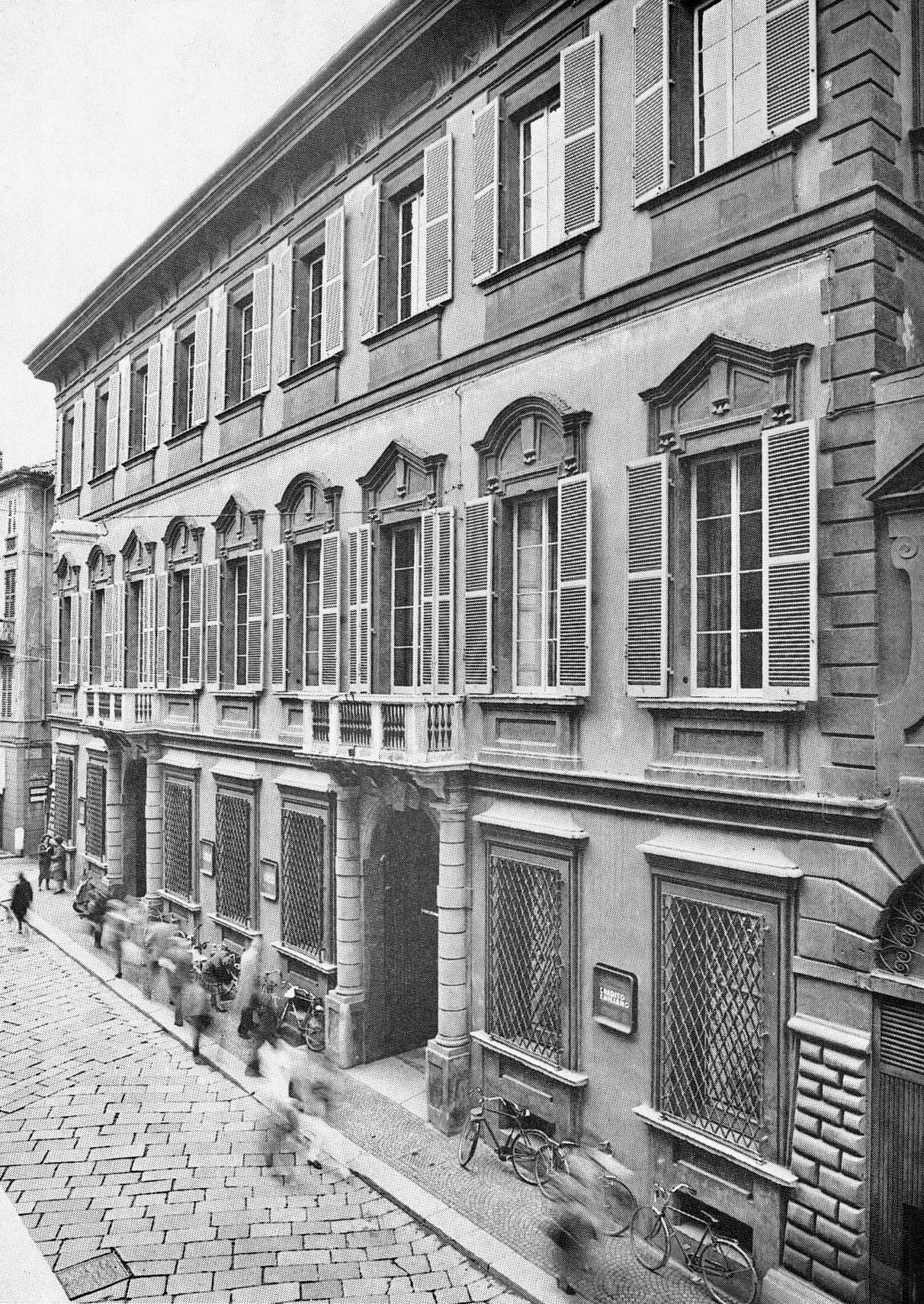
Palazzo Spalletti-Trivelli is a historic palace in Reggio Emilia, Italy, rebuilt in the eighteenth century and later refurbished in the Neoclassical style, an artistic movement that revived forms associated with ancient Greece and Rome. It stands at the corner of Via Emilia San Pietro and Via San Nicolò, over ancient Roman ruins that remain visible in the basement.
From the Bosi residence to the Guicciardi palace
A large house or palace occupied the site and belonged to the Bosi family until 1685. During the eighteenth century, Count Guicciardi acquired the property and commissioned its rebuilding from the architect Giovanni Maria Ferraroni. The work transformed the earlier residence into the palace associated with the Guicciardi name.
The Spalletti-Trivelli period
After the property was acquired by the Spalletti-Trivelli family, the palace was refurbished in the early nineteenth century under the direction of Pietro Marchelli. The family also owned the adjacent building, extending its presence within this part of Reggio Emilia.
Palazzo Spalletti-Trivelli is now owned by Credito Emiliano, known as Credem, which also owns the art collection housed inside the palace.
Remains
Palace interiors
Piano nobile salon
The piano nobile, the principal floor of an Italian palace and the traditional setting for reception rooms, contains a salon with a ceiling painting by Prospero Minghetti. Its subject is Apollo and the Court of the Hours. Apollo, a major Greek and Roman deity associated with music, poetry, prophecy, and the arts, gives the ceiling decoration a mythological and artistic theme.
Ballroom
The ballroom is decorated with painted colonnades and curtains made through trompe-l’œil, an illusionistic technique that makes painted architectural elements appear three-dimensional. The decoration was painted by Vincenzo Carnevali.
Paintings and collections
The palace houses a collection of Emilian paintings and Oriental art. The recorded works include Madonna and Child by Francesco Raibolini, known as Il Francia, and another Madonna and Child by Lorenzo Costa. Lorenzo Sabbatini is represented by Burial of St Stephen, while Dionisio Calvart painted Adoration of the Magi and Annunciation.
Works by Scarsellino include Visitation, Marriage of the Virgin, Christ’s Farewell to His Mother, Adoration of the Magi, and St Joseph and the Angel. Camillo Procaccini is represented by Peter Denying Jesus, Death of the Virgin, and Death of St Paul. The collection also includes Coronation of the Virgin by a follower of Annibale Carracci, together with Guido Reni’s Moses and the Tables of the Law and Ecce Homo and a Magdalen by a follower of Reni.
Other religious and biblical subjects include Leonello Spada’s Salome and the Head of John the Baptist, Alessandro Tiarini’s Deposition and Salvator Mundi, Francesco Albani’s Expulsion of Adam and Eve, and Isidoro Bianchi’s Madonna della Ghiara di Reggio. Luca Ferrari, known as Luca da Reggio, painted David with the Head of Goliath and another Salome and the Head of John the Baptist. The collection further contains Carlo Francesco Nuvolone’s Miracle of St Antony of Padua, Simone Cantarini’s Angelica and Medoro, and Antonio Triva’s Bathsheba at the Bath.
Lorenzo Pasinelli is represented by Mary Magdalen and Judith with the Head of Holofernes. Giovanni Domenico Valentino painted Interior of a Kitchen and Interior of a Used-Goods Warehouse, while Francesco Stringa contributed St Catherine before Emperor Maximian and Miracle of the Wheel. Marcantonio Franceschini painted Lot Accompanied by Angels and Lot and Daughters.
Several works focus on hunting, pastoral life, and classical mythology. Felice Boselli painted Hunted Game and Rooster, Hunted Game and Owl, Fish and Seafood, and Trophy of Hunt and a Dog. Giovanni Gioseffo Dal Sole is represented by Diana and Several Cupids and Ecstasy of the Magdalen, Giovanni Antonio Burrini by Mercury, Giuseppe Maria Crespi by Pastoral Scene, and Cristoforo Munari by Still Life. The collection also includes Crowning with Thorns, attributed to Domenico Maria Viani, Donato Creti’s Allegory of Experience, Marcantonio Ghislina’s St Sebastian, and Federico Bencovich’s Satyr and Musical Putti.
Girolamo Donnini is represented by the series Allegories of the Seasons, as well as Eurydice Bitten by a Serpent and Death of Adonis. Francesco Monti’s Martyrdom of St Paul is dated 1719. The collection also contains Francesco Simonini’s After the Battle and Horsemen Resting in a Landscape, Ercole Graziani the Younger’s Diana and Endymion, Erminia and the Shepherds, and Rinaldo Prevents Armida’s Suicide.
Giovanni Crivelli, known as Il Crivellino, painted the series Hunts with Dogs of Boar, Lynx, Bear, and Bull. Further works include Joseph and the Wife of Potiphar by a seventeenth-century Bolognese painter, St Sebastian by an unknown Baroque Venetian painter, and Giovanni Giacomo Sementi’s Allegory of Arts and Virtue. Guercino is represented by Cimmerian Sibyl, while Giovanni Francesco Ferri painted another Lot and Daughters.
Domenico Pedrini’s works are St Sebastian, Blessing of Jacob, and Exile of Hagar. Filippo Pedrini contributed Joseph and the Wife of Potiphar, and a follower of Marcantonio Franceschini painted Christ and the Samaritan at the Well. The collection is completed by Birth of Adonis and Abduction of Proserpine by unknown painters.