Palazzo Tiepolo: A Renaissance Palace on Venice’s Grand Canal

Site at a Glance
- Rating
- 4.5
- Popularity
- Very Low
- Country
- Italy
- Primary era
- Early Modern
- Eras represented
- Early Modern
- Civilizations
- Venetian
- Site type
- Domestic
- Remains
- Palace
On this page4 sections
History
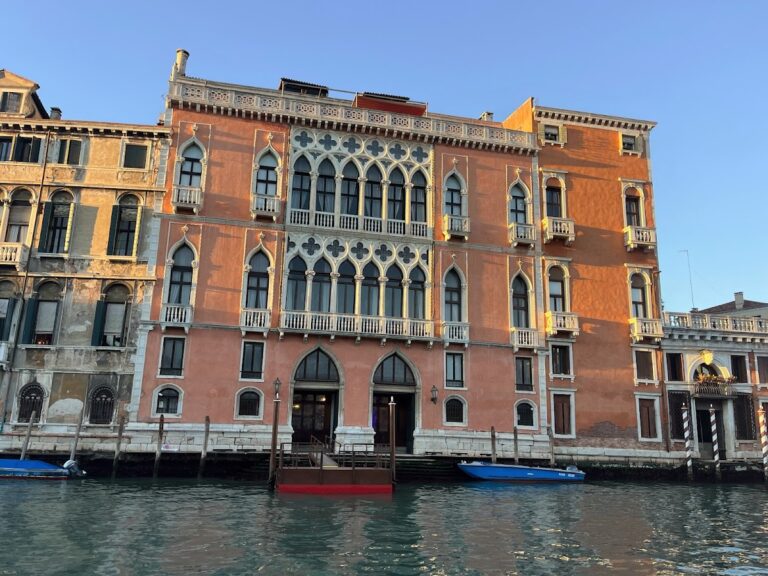
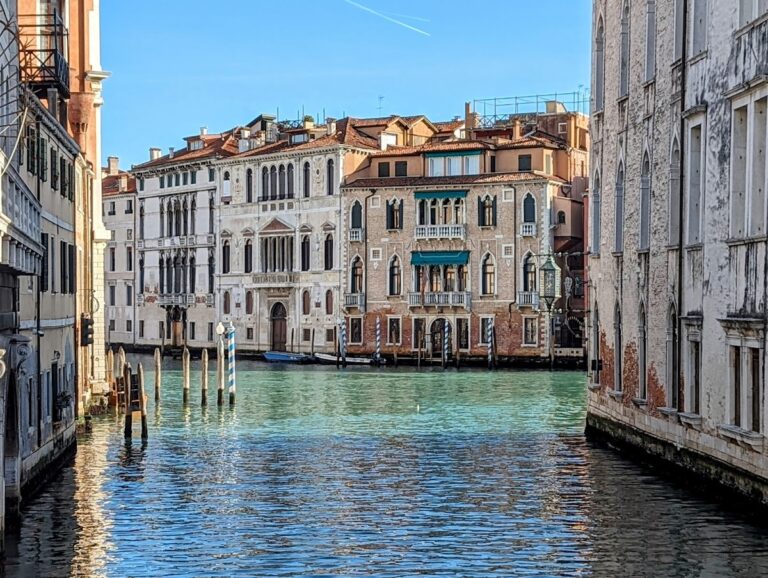
Palazzo Tiepolo is a Renaissance palace in Venice, Italy, built in the middle of the sixteenth century in the city’s San Polo district. Facing the Grand Canal between Palazzo Tiepolo Passi and Palazzo Pisani-Moretta, it occupies the site of an earlier palace, probably of ancient Veneto-Byzantine origin, a medieval architectural tradition of the Veneto influenced by Byzantine design. The architect of the present building is unknown.
The four-level palace was commissioned by the Querini family, one of Venice’s historic patrician families. Ownership subsequently passed among the Querini, Loredan, and Tiepolo families before the building came into the possession of the historic Passi noble family. Palazzo Tiepolo remains privately owned and is used for luxury apartments and banquets.
Remains
Grand Canal façade
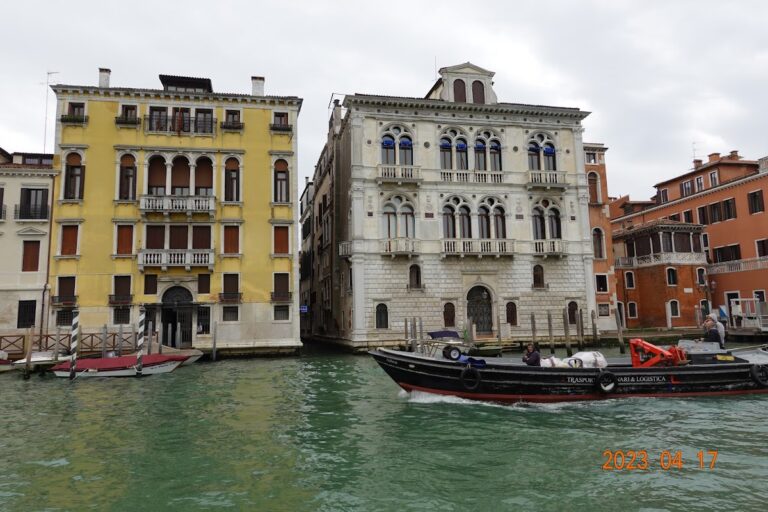
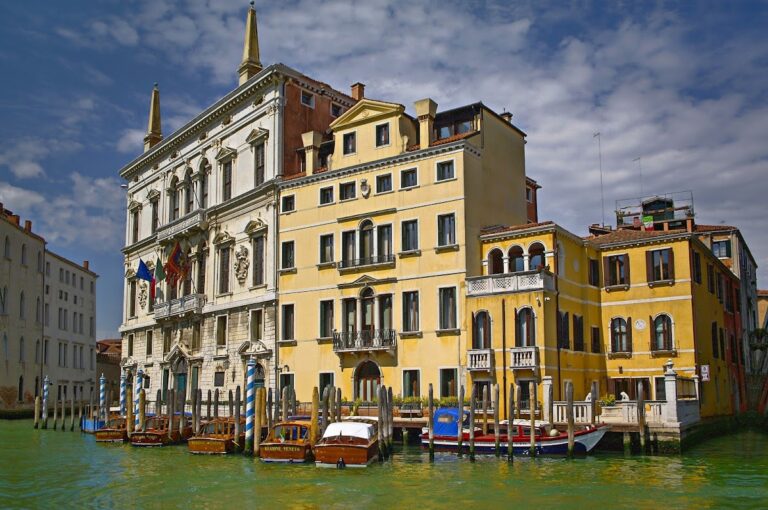
The principal façade follows the early Renaissance style and is arranged across four levels, separated horizontally by three string courses. At ground level, two central round-arched water entrances are accompanied by two small arched windows. Each of the two piano nobile floors, the principal residential levels of a palace, has a central quadrifora, or window divided into four openings, with a balcony. Two pairs of single-light windows flank each central group. These windows have one opening each and are framed by pilasters, but they do not have balconies.
The upper mezzanine contains small rectangular windows. A dormer of the same form rises above the roofline, while rectangular corbels support the projecting eaves. Frescoes by Andrea Meldola, also known as Il Schiavone, decorate the façade with hunting scenes and views of rural life. Fragments remain visible, though they are in poor condition and require restoration.
Interior decoration
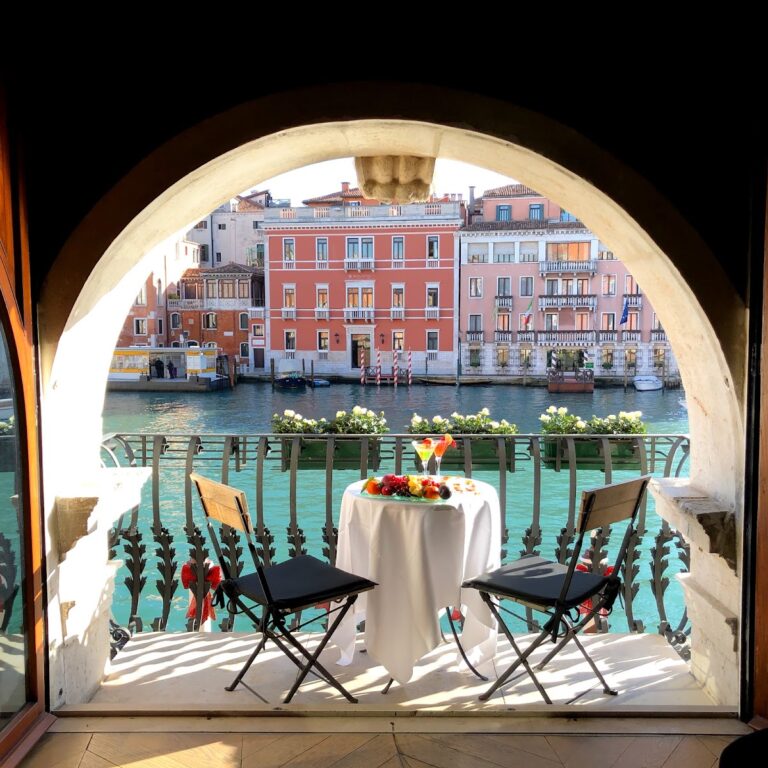
Inside, the palace retains wooden-beam ceilings, antique parquet flooring, pastel-colored polychrome stucco, wall paintings, and antique furniture. The portego, the principal hall or passage of a Venetian palace, contains notable frescoes by Jacopo Guarana, an eighteenth-century Venetian painter and fresco artist.
Nearby sites