Nový Berštejn Castle: A Renaissance Residence and Baroque Chateau in Czechia
Site at a Glance
- Rating
- 4.5
- Popularity
- Very Low
- Country
- Czechia
- Primary era
- Early Modern
- External website
- Open
- Eras represented
- Early Modern
- Civilizations
- Holy Roman Empire, Kingdom of Bohemia
- Site type
- Domestic
- Remains
- Castle
On this page13 sections
History
Nový Berštejn Castle is a sixteenth-century castle and chateau in Czechia, located north of Dubá. Its original Renaissance residence became the central wing of a later Baroque complex, whose history reflects the changing fortunes of several Bohemian noble families.
Renaissance foundation
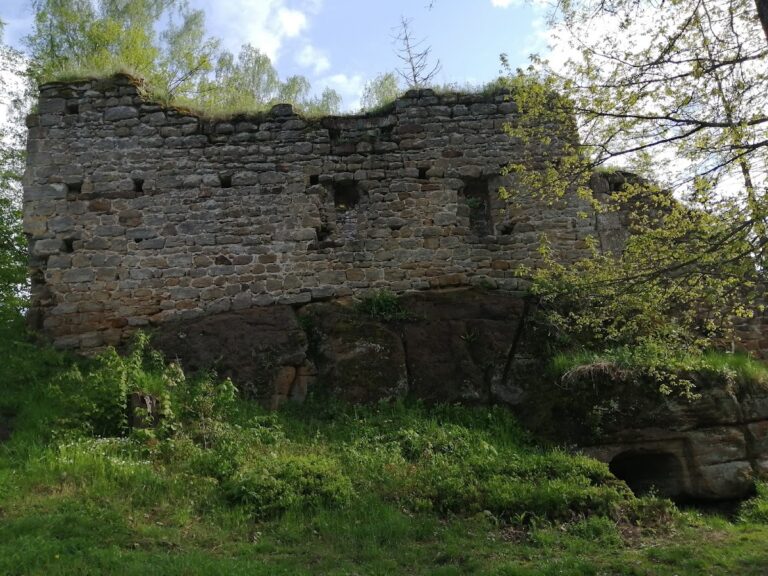
The new residence was built in the mid-sixteenth century by Adam Berka of Dubá. He chose to invest in Nový Berštejn rather than undertake the expensive renovation of the older Gothic family seat, which had been abandoned and plundered during the Hussite campaigns. The Hussites, followers of the religious reformer Jan Hus, conducted military campaigns in fifteenth-century Bohemia that damaged many aristocratic and ecclesiastical properties.
The original building was a single-storey, single-wing Renaissance residence with wooden floors. Its construction is attributed to the architect Václav Špaček. The settlement around it consisted largely of houses serving the castle, including a farm complex. A manor known as Neuhof was probably established on castle-related land north of the Krčma River, though only slight traces remain.
Confiscation and noble ownership
After 1618, during the brief reign of Frederick V of the Palatinate, the castle belonged to the region’s highest judge, a prominent participant in the anti-Habsburg resistance. Frederick V was the Protestant elector who accepted the Bohemian crown in 1619 and became known as the “Winter King” before the defeat of the Bohemian estates in 1620. The judge fled the country after that defeat, and his property was confiscated and acquired by the Valdštejn family.
Following the assassination of Albrecht von Wallenstein, an imperial commander and owner of the castle during the Thirty Years’ War, Emperor Ferdinand II granted the entire estate to Colonel Walter Butler, who had taken part in the killing. Butler’s descendants retained Nový Berštejn until 1723. Ferdinand II was the Habsburg ruler whose government confiscated estates after the Bohemian revolt.
Baroque rebuilding and later changes
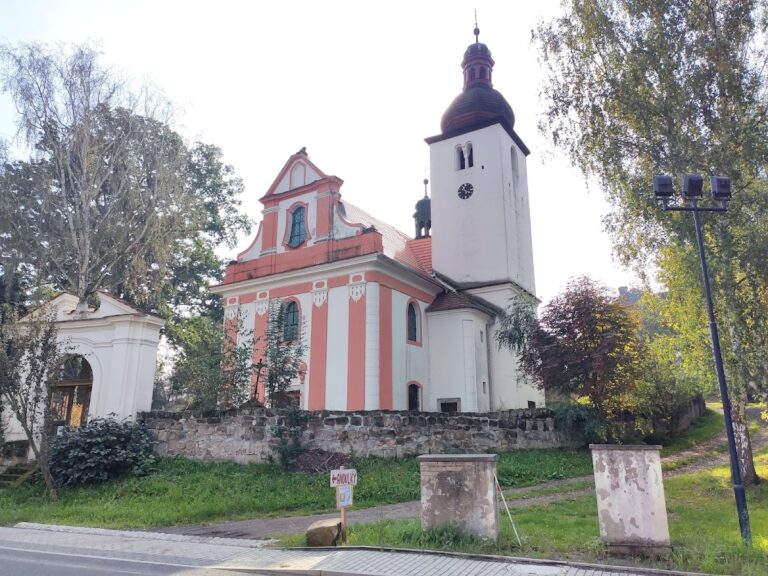
Franz Karl Rudolf, Count Sweerts-Sporck, acquired the castle in 1723. He rebuilt it in the Baroque style, added the lateral wings, and commissioned the Baroque Church of the Finding of the Holy Cross in Dubá. The Sweerts-Sporck family was a noble house associated with Baroque patronage in the region.
The Valdštejn family regained the castle in 1810 and restored it, creating the appearance that has largely survived. Their ownership ended during the land reform of the First Czechoslovak Republic. In 1920 the property passed to Tomáš Maglič, general director of the Škoda works, and in 1935 Růžena Jiratová-Kabátová acquired it and improved the castle and its park.
During the Second World War, the castle was expropriated for the German Baron Ludolf von Wedel-Parlow. In 1945 it was confiscated as German property, converted into a district health centre, and later used as a boarding school. The neglected building faced demolition in 1983. In the 1990s, the former ice-hockey player Miroslav Karel Slezák acquired it, restored the property, and converted it into a hotel complex. It has remained privately owned and used for accommodation since that decade.
Since 1978, the castle complex has been protected as a national cultural monument of the Czech Republic, a high-level legal heritage designation for sites considered of exceptional cultural importance.
Remains
Castle and estate
Central wing and courtyard
The complex is organized around a broad courtyard, with a large central wing flanked by two lateral wings. Smaller service buildings and operational structures complete the arrangement. The central section preserves the core of the original Renaissance residence, while the wings belong to the later Baroque composition. The first residence was single-storey and single-wing, with wooden floors.
Farmyard and park
The estate included a large farmyard containing valuable Baroque buildings, together with an aqueduct, a pond, a brewery, and a park planted mainly with deciduous trees. The original settlement grew around the castle and consisted chiefly of houses connected with its operation, including a farm complex.
Brewery cellars
Sandstone cellars beneath the brewery were used to mature local beer cheeses. They form the largest sandstone underground spaces in the Kokořín and Dubá areas that belong to a private property.
Religious features near the castle
Holy Trinity column
An eighteenth-century column dedicated to the Holy Trinity stands opposite the southern corner of the park’s enclosing wall. It was severely damaged in 1996 and later restored.
Statue of the Virgin Mary
A restored statue of the Virgin Mary stands opposite the castle on the access avenue. Count Sweerts-Sporck commissioned it in 1763.
Chapel of Saint Barbara
The round Chapel of Saint Barbara stands near Nový Berštejn on a ridge formerly called Květný. Countess Anna Kateřina Sweerts-Sporcková built it in 1744 and 1745. The chapel was suppressed in 1792 under the ecclesiastical reforms of Emperor Joseph II. After a long period of deterioration, it was used as a recreational facility from the final decades of the twentieth century.
Nearby sites