Château de Bois-Préau: A National Museum Annex in Rueil-Malmaison


Site at a Glance
- Rating
- 4.5
- Popularity
- Low
- Country
- France
- Primary era
- Modern
- External website
- Open
- Eras represented
- Early Modern, Modern
- Civilizations
- French
- Site type
- Domestic
- Remains
- Castle
On this page10 sections
History
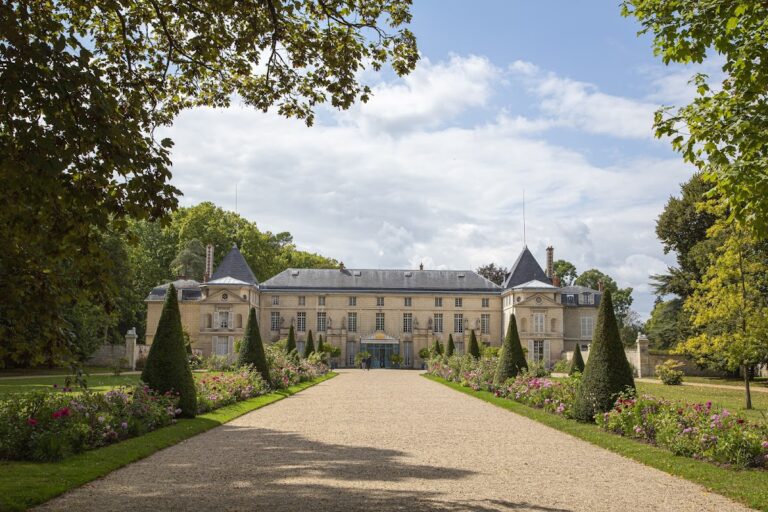
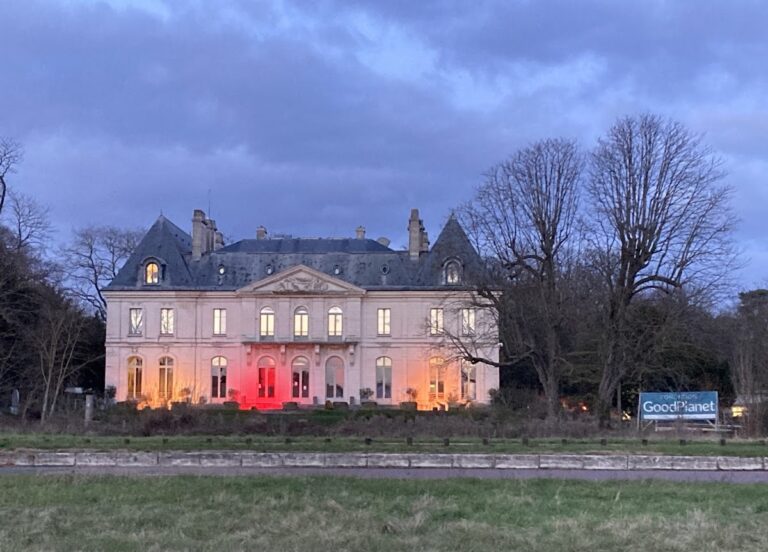
Château de Bois-Préau is a nineteenth-century French château in Rueil-Malmaison, France, associated with the neo-Regency style and now serving as a national museum annex of the Musée de Malmaison. Its present central body was largely rebuilt in 1854 and 1855, while the estate’s earlier residence had been constructed between 1697 and 1700.
Medieval Estate and Seventeenth-Century Residence
During the Middle Ages, the land at Bois-Préau depended on the Abbey of Saint-Denis, a major royal abbey and burial institution in France. In 1696, Frédéric Léonard and his son, Frédéric-Pierre Léonard, jointly purchased the estate. Both men were printers and booksellers serving the king. Between 1697 and 1700, they built a substantial residence on the property.
Eighteenth-Century Owners
In 1747, Bois-Préau passed to Jean Garnier, a former cook who had risen to become the senior household officer responsible for domestic service and meals for Queen Marie Leszczynska. Garnier embellished the estate with a bathhouse and statues in the park. The marquis de Prie acquired the château in 1765 and commissioned its transformation by the architect Claude Bacarit.
The marquis sold the property in 1774 to Louis Julien, a banker who died there in 1796. Ownership then passed to his unmarried daughter, Anne-Marie Julien.
Joséphine and the Malmaison Estate
Joséphine de Beauharnais acquired neighboring Malmaison in 1799. Malmaison was the country residence associated with Joséphine, Napoleon Bonaparte’s wife, and its proximity shaped the later history of Bois-Préau. Joséphine attempted to enlarge her estate by purchasing the property, but Anne-Marie Julien refused to sell.
Julien died accidentally by drowning in a water feature in the park on 9 March 1808. Joséphine subsequently purchased Bois-Préau from Julien’s heirs on 29 January 1810. She removed the walls separating the two properties, creating movement between Bois-Préau, Malmaison, and the village of Rueil within the enlarged estate. Members of her household, including her doctor and steward, were accommodated at Bois-Préau, which also received 7,500 surplus volumes from Malmaison’s library, part of its natural-history collection, and the estate archives.
Joséphine commissioned Louis-Martin Berthault, her regular landscape designer, to reshape the gardens. The work was interrupted by her death in 1814. Her son, Prince Eugène de Beauharnais, Napoleon’s stepson, inherited Malmaison and Bois-Préau and continued to maintain the property.
Nineteenth-Century Reconstruction
After Eugène died in 1824, his widow, Augusta-Amélie of Bavaria, and their five children sold the estate in 1828 to Madame Arsonneau, widow of Maurez. She resold it in 1833 to the Parisian merchant Étienne Bénard and his wife, Éléonore Pochonnet.
In 1853, Bénard and Pochonnet sold Bois-Préau for 180,000 francs to Baron Édouard Rodrigues-Henriques, a banker, company administrator, and music enthusiast. The château was then in poor condition. Rodrigues-Henriques demolished its wings and had most of the central body rebuilt in 1854 and 1855, probably with the assistance of his architect Alfred-Louis Feydeau.
From 1853, Rodrigues-Henriques transferred part of the estate to his son-in-law Gustave d’Eichthal, a scholar of ancient Greek language, literature, and culture and an ethnologist. D’Eichthal built the Château des Fossés on that portion of the former domain.
Rodrigues-Henriques and Later Ownership
Rodrigues-Henriques hosted the composer Jacques Fromental Halévy and Georges Bizet, who was Halévy’s son-in-law. He also corresponded extensively with George Sand, who had been introduced to him by Alexandre Dumas. Together, Rodrigues-Henriques and Sand selected books for a library he established for the poor of Rueil. His wife, Sophie Lopes-Henriques de Saa, financed a nursery with twenty places.
Rodrigues-Henriques’s four daughters sold Bois-Préau in 1879 to the journalist Benoît Jouvin, the son-in-law and business associate of Hippolyte de Villemessant, director of Le Figaro. After further changes of ownership, Edward Tuck and his wife, Julia Stell, acquired the estate subject to usufruct in 1920. Under usufruct, one person retains the right to use and benefit from property while another holds ownership.
Edward and Julia Tuck donated Bois-Préau to the French state in 1926 so that it could become an annex of the Musée de Malmaison. The state remains the owner. The museum opened in 1958, with a program focused on Napoleon’s captivity and death on Saint Helena, the return of his ashes, and the development of the Napoleonic legend. Its current program consists of temporary exhibitions.
Restoration and reconstruction have also shaped the museum’s intended interpretation. The ground-floor grand salon is being restored, while a first-floor salon is being reconstructed to reproduce a salon from Longwood House, Napoleon’s residence on Saint Helena, the remote island to which he was exiled after his final defeat. These spaces are intended to present original furnishings from the house. The château library is also intended to accommodate several thousand boxes bearing Napoleon’s image, donated in 1958 by Princess Marie Bonaparte after the death of her husband, Prince George of Greece.
Remains
The Park
Château de Bois-Préau stands within an English-style park covering 16.1 hectares, the area of the original estate that still corresponds to the park. This landscape design uses an informal, naturalistic arrangement of lawns, plantings, water features, and curving routes. The park was formerly connected to the grounds of Malmaison and is described as an annex of the Malmaison forest.
An ornamental basin and an artificial river form part of the park’s water features. Some trees are approximately two centuries old, including Byzantine hazels. The grounds also contain a statue of Empress Joséphine by Gabriel Vital Dubray, dated 1865. It entered the museum collections in 1932. Because deterioration required its replacement in 2021, a copy now occupies its place while the original has been moved into storage. Three other sculptures are installed in the park: The Eagle, The Reader, and Thought.
The Château
The château’s architectural history combines the original late seventeenth-century residence with the rebuilding carried out in 1854 and 1855. Most of the present central body belongs to that nineteenth-century reconstruction, which followed the demolition of the wings. The building is associated with the neo-Regency style, a later revival of forms and decoration linked to the French Regency period.
Interior Spaces and Collections
The restored ground-floor grand salon has a neo-Louis XV interior, reviving forms and decoration associated with the reign of Louis XV. On the first floor, a salon is being reconstructed as a reproduction of a room at Longwood House. Its intended furnishings come from Napoleon’s residence on Saint Helena, linking the interior to the museum’s subject of his exile and death.
The château library is intended to hold several thousand boxes bearing Napoleon’s effigy. The collection was donated in 1958 by Princess Marie Bonaparte after the death of Prince George of Greece. Together with the planned interiors, the library forms part of Bois-Préau’s continuing role as an annex devoted to Napoleon’s final years and their later memory.
Nearby sites