Las Covachas: A Gothic Merchants’ Exchange in Sanlúcar de Barrameda


Site at a Glance
- Rating
- 4.3
- Popularity
- Low
- Country
- Spain
- Primary era
- Medieval
- External website
- Open
- Eras represented
- Medieval
- Civilizations
- Crown of Castile, Spanish
- Site type
- Economic
- Remains
- Market
On this page5 sections
History
Foundation and commercial use
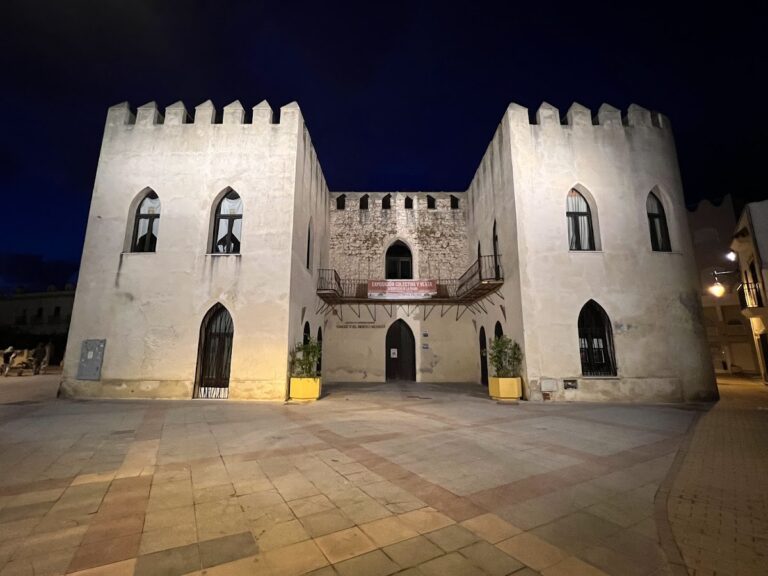
Las Covachas is a late-fifteenth-century Gothic merchants’ exchange in Sanlúcar de Barrameda, Spain, built by Enrique Pérez de Guzmán y Meneses, the second Duke of Medina Sidonia. It stood beside the alcaicería, a specialized market for valuable goods, and Bretons’ Street near the Sea Gate, in the Ribera suburb. This area served as Sanlúcar de Barrameda’s principal commercial district. The building was also known as Las Tiendas de las Sierpes.
In 1539, a tower with a staircase was added above Las Covachas. The tower remained until 1867, when it was demolished. Las Covachas had later been ceded to the city council by Friar Felipe de Guzmán, the second son of the sixth Duke of Medina Sidonia. In 1744, the council exchanged the building with the Hieronymite monks, a Catholic order associated with the spiritual tradition of Saint Jerome, receiving a butcher’s shop on Siete Revueltas Street in return.
Later changes and protection
A new market was built beside Las Covachas during the eighteenth century. Restoration in the early 1980s removed part of the fill covering the large public esplanade on which the building stands, making its complete façade visible. Las Covachas formed part of the Historic-Artistic Ensemble of Sanlúcar de Barrameda, designated in 1973. In 1978, it was declared a Historic-Artistic Monument together with the adjoining Palace of the Dukes of Medina Sidonia. In 2007, it received designation as an Asset of Cultural Interest in the category of monument, and it is also recorded as part of the Ducal Palace of Medina Sidonia.
Remains
Gothic gallery
Las Covachas survives as a Gothic arcaded gallery, or loggia, an open-sided covered arcade attached to the Ducal Palace of Medina Sidonia on the Cuesta de Belén. Its façade is formed by thirteen pointed arches, a characteristic feature of Gothic architecture, carried on pillars. Each pillar is topped by a representation of a serpent or basilisk, a legendary serpent-like creature traditionally said to kill with its gaze. These fantastic animal figures give the arcade its distinctive decorative character.
Nearby sites