Bellinglise Castle: A Historic Manor in France


Site at a Glance
- Rating
- 4.7
- Popularity
- Low
- Country
- France
- Primary era
- Early Modern
- External website
- Open
- Eras represented
- Medieval, Early Modern, Modern
- Civilizations
- French
- Site type
- Domestic
- Remains
- Castle
On this page6 sections
History
Bellinglise Castle, or château de Bellinglise, is a historic manor in Élincourt-Sainte-Marguerite, France. Its origins lie in the twelfth century, and the medieval building was enlarged in 1348 before being remodeled during the Renaissance and altered again in the seventeenth and nineteenth centuries.
The Hamel-Bellinglise estate
In 1250, the fief of Marfontaine belonged to Marie de Coudun, lady of Élincourt. Her marriage to Wathier Hamel, lord of Bellinglise, brought the fief into the family’s ancestral lands. The Hamel-Bellinglise family remained established in Élincourt for several centuries, and the castle was reshaped during the Renaissance as the family’s social position grew beyond the scale of the earlier medieval manor.
Lordship and judicial authority
In 1444, Jean de Barbaçon and his wife, Marie de Canny, transferred the castellany of Beauvoir to Louis de Hamel. A castellany was a territorial lordship organized around a castle and its jurisdiction. The acquisition gave Louis high-justice rights over part of Élincourt. After the family also acquired the castellany of Flamenc, the lords of Bellinglise exercised high, middle, and low justice, covering serious criminal cases, lesser offenses, and civil disputes. Their authority included the administration of civil and criminal justice at Bellinglise, where a tower served as a prison.
Seventeenth-century ownership and political events
On 16 July 1631, a member of the Bellinglise family helped Marie de Médicis escape from Compiègne through the Chapelle gate. Marie de Médicis, mother of Louis XIII, had been regent of France during her son’s minority. The journey passed through Orrouy, Tracy-le-Val, and Chauny, where she found the carriage of the Baron of Crèvecœur.
In 1661, Claire-Eugénie, lady of Élincourt, sold the land and lordship of Élincourt and retired to the Dames de Saint-Chaumont in Paris. She died there without issue on 14 November 1712, aged 83. The château received further, less extensive improvements during the seventeenth century and was modified once more in the nineteenth century.
Name and later use
Bellinglise is a medieval place-name and a locality within Élincourt-Sainte-Marguerite. Its first element probably comes from a Germanic personal name, although its precise root is uncertain. The second element represents “church,” with the initial vowel omitted. This formation reflects Frankish or Saxon linguistic influence on place-names in Picardy. Since 2005, the château has been used exclusively for corporate seminars and managed by the Châteauform’ group.
Remains
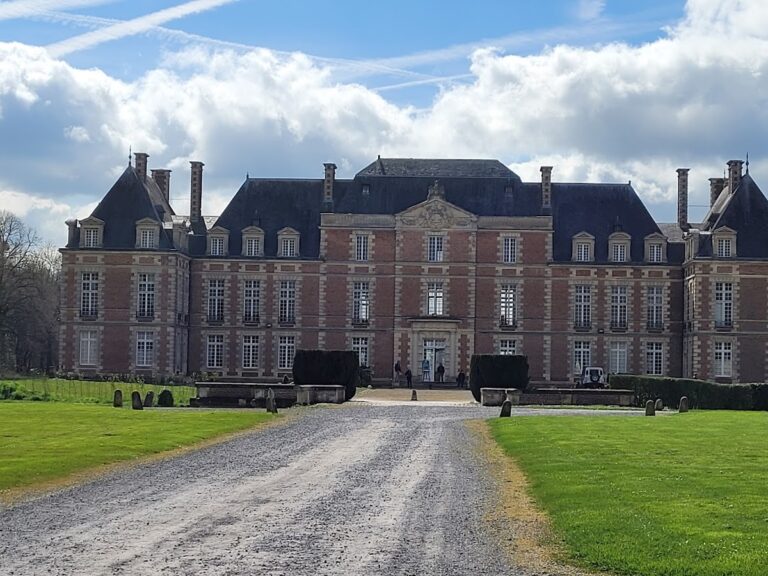
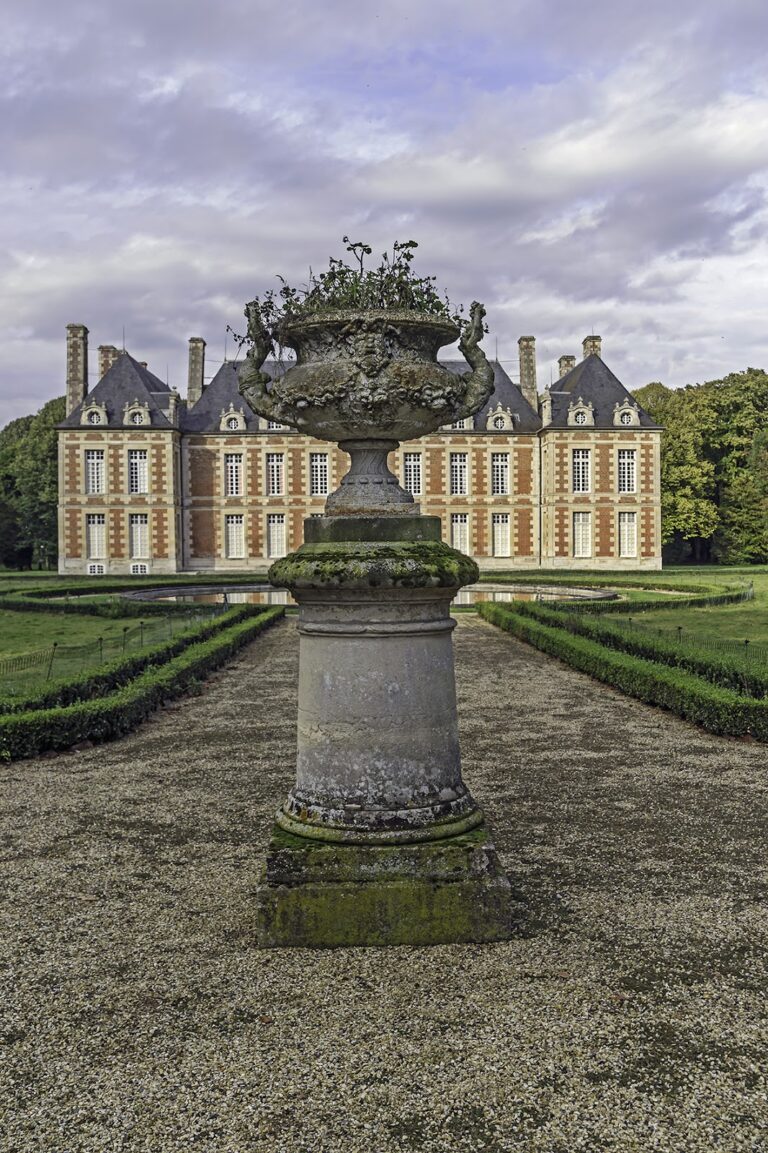
Bellinglise Castle stands north of the commune in a wooded park covering approximately 160 hectares. The present complex grew from a small medieval manor. The section on the left, set back against the surrounding enclosure wall, represents the first enlargement made in 1348.
The Renaissance remodeling gave the château a distinctive façade of red and black brick with white stone chainwork, forming a contrasting pattern across the exterior. The former entrance was framed by two square turrets. The turret to the left of the entrance gate became a prison when the lords exercised judicial authority and is now known as the clock tower. Further changes made during the seventeenth century and again in the nineteenth century shaped the building that survives today.
Nearby sites