House of George Sand: A Literary Château in Nohant, France


Site at a Glance
- Rating
- 4.7
- Popularity
- Medium
- Country
- France
- Primary era
- Early Modern
- External website
- Open
- Eras represented
- Medieval, Early Modern, Modern
- Civilizations
- French
- Site type
- Domestic
- Remains
- Elite Residence
On this page13 sections
History
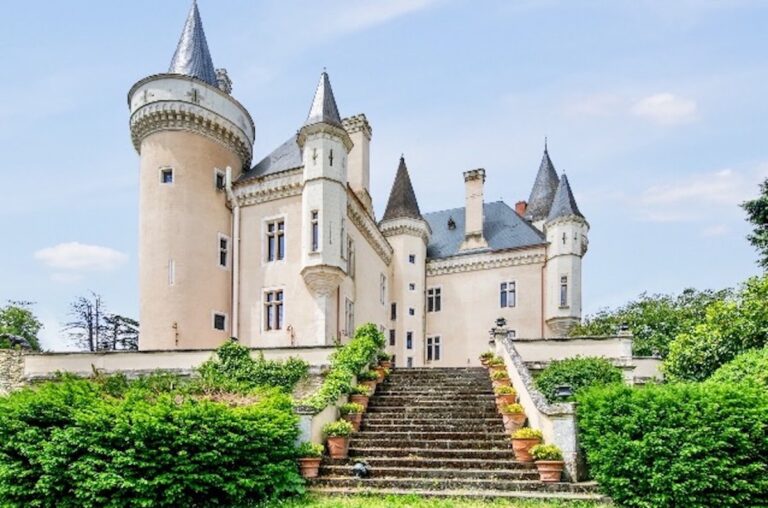
The House of George Sand is an eighteenth-century château in Nohant, France, built in the regional Classical style on the site of a medieval fortified manor. The residence became the lifelong home of Aurore Dupin, known by her pen name George Sand, and later preserved her literary, musical, artistic, and family history.
Medieval Manor and Classical Residence
Nohant is mentioned in French chronicles from 1228. A fortified manor belonging to the Hugues family stood on the site, and by 1320 it depended on the lordship of Saint-Chartier. Jeanne de Nohant brought the estate into the Villelume family when she married Josselin II de Villelume in 1393.
Charles de Villelume, lord of Nohant and La Roche-Othon, reconstructed the castle between 1450 and 1452. The medieval complex was surrounded by moats and fortifications. On 10 November 1767, Pierre Philippe Pearron, Count of Serennes and governor of Vierzon, purchased the estate from Claude-Guillaume Testu, Marquis of Balincourt. Serennes demolished the medieval defenses and built the present residence on the fortress site. Construction was completed around 1775.
Marie-Aurore Dupin de Francueil
During the French Revolution, Marie-Aurore Dupin de Francueil purchased the residence on 23 August 1793. She was the illegitimate daughter of Marshal Maurice de Saxe and the granddaughter of Augustus II the Strong, King of Poland. She expanded the estate with additional land and farms, bringing it to approximately 240 hectares, and created an extensive park.
After her release from imprisonment during the Terror, the period of revolutionary repression, in September 1794, Marie-Aurore settled permanently at Nohant. She altered the interior in 1802 and replaced the earlier staircase with a stone one. In 1808, the moats were filled and the remaining enclosing walls were demolished.
Aurore Dupin and George Sand
Aurore Dupin first came to Nohant in late July 1808. Her younger brother died on 8 September, followed by her father, Maurice Dupin de Francueil, on 16 September. Her grandmother then became her guardian, and Aurore spent her childhood at the estate. She inherited Nohant after her grandmother died there on 26 December 1821.
Aurore Dupin adopted the name George Sand as a nineteenth-century French novelist and memoirist. She visited Berry frequently throughout her life and settled permanently at Nohant in 1853, although she continued to spend periods in Paris and lived at Palaiseau with Alexandre Manceau from 1864. The rural setting of Nohant and its surroundings shaped much of her writing. She also developed a strong interest in gardening and botany.
George Sand died at the château on 8 June 1876. Her son Maurice Dudevant-Sand became the sole owner under her will. After his death in 1889, ownership passed to his widow, Lina Calamatta, and then to their daughter Gabrielle Dudevant-Sand. In 1909, Gabrielle’s sister Aurore Dudevant-Sand, later known as Aurore Lauth-Sand, inherited the estate.
Artistic and Musical Life at Nohant
Nohant became a meeting place for writers, musicians, and artists. Its guests included Franz Liszt, Marie d’Agoult, Honoré de Balzac, Alexandre Dumas fils, Frédéric Chopin, Gustave Flaubert, and Eugène Delacroix. Delacroix, a leading French Romantic painter, stayed at Nohant from 1842 and used an artist’s studio there. He made views of the park and painted The Education of the Virgin in this setting.
Chopin, the Polish-born composer and pianist, stayed at Nohant during seven summers between 1839 and 1846 while he was in a relationship with George Sand. He composed a substantial portion of his works there, including the Heroic Polonaise, the Fourth Ballade, Berceuse, Piano Sonata No. 3, Barcarolle, two of the final waltzes of Opus 64, and the Cello Sonata.
George Sand also established a puppet theatre at Nohant in 1847 and a second theatre in 1849. More than 200 performances took place at the estate between 1850 and 1875. Maurice Sand wrote and staged many of the productions, made the puppet heads and scenery, and created sound effects. George Sand made the costumes, later assisted by Lina Sand.
Donation and Preservation
Aurore Lauth-Sand sought to secure the estate through the Académie française and the department of Indre before donating it to the French state. The donation agreement was signed on 6 October 1952, while she retained the right to live at Nohant until her death there on 15 September 1961.
The château, garden, cemetery, outbuildings, and the two meadows known as Pré Pile and Pré des Clous received historic-monument protection through an order of 22 December 1952. The preserved residence opened as the House of George Sand in 1961 and is managed by the Centre des monuments nationaux, the French state institution responsible for many major historic monuments. The house is also designated a Maison des Illustres, and the six-hectare park has received the Remarkable Garden designation.
The former estate buildings have acquired cultural uses. The sheepfold was converted into the Chopin Auditorium between 2009 and 2010. The former carriage building was adapted for a permanent puppet display, a literary space, and reception facilities. The Nohant Festival developed from the Romantic Festivals founded in 1967 and the international Chopin meetings begun in 1996.
Remains
Château and Grounds
The château is arranged around a courtyard of honour and retains the form of an eighteenth-century regional Classical residence. Only two towers from the earlier fortified complex survive, incorporated into the farm buildings. The six-hectare grounds contain a formal French garden, flower beds, a wooded park, a pond, a garden area, an orchard, a kitchen garden, and a rose garden.
Two large cedars stand near the pond in front of the south façade. One was planted for the birth of Maurice Sand and the other for the birth of Solange Sand. Both trees are recognized as notable trees of France.
Entrance and Ground-Floor Rooms
The ground-floor entrance is on the north side, through a vestibule whose black-and-white paving may derive from the medieval building. Maurice Sand later decorated the space in pastel pink and blue. It contains a full-length portrait of Aurore Lauth-Sand by Vicente Santaolaria. The stone staircase leading from the vestibule to the first floor was installed by Marie-Aurore Dupin de Francueil in 1802 and is lit by a bull’s-eye window and a large window.
On the left side of the vestibule are a wardrobe and two theatres. The adult theatre occupies the former bedroom of Casimir Dudevant, who lived there from 1822 to 1836. Converted into a theatre in 1850, it could hold about 50 spectators. A small puppet theatre, or castelet, was installed in the same room in 1854. This structure concealed the puppeteers while displaying the puppets.
The puppet theatre preserves the material setting of Maurice Sand’s productions. He made the puppets, wrote children’s plays, and staged the performances, while George Sand made the costumes. The puppets represented social groups, countries, and historical periods, including the Middle East and ancient Rome.
On the right side of the vestibule are the bathroom, kitchen, pantry, and washhouse. The kitchen contains rustic furnishings, Berry copperware and pottery, and a potager, a kitchen cabinet used to keep prepared dishes warm. George Sand installed an economical stove and a heating apparatus there in 1851.
Salon, Dining Room, and Family Bedrooms
The south side of the ground floor contains the large salon, dining room, bedroom of Aurore de Saxe, boudoir, and toilet room. The salon retains blue floral wallpaper, a fireplace, family portraits, an oval table, Louis XVI armchairs, and a Pleyel piano purchased in 1849. The piano was not used by Chopin.
The dining room occupies the centre of the ground floor and opens outside through a flight of steps. Its grey-painted wood panelling, blue-dominant Murano glass chandelier, faience wall fountain, Creil-Montereau porcelain, and yellow and blue crystal glasses preserve furnishings associated with the household. Six of Maurice Sand’s twelve engravings illustrating George Sand’s Rustic Legends are displayed there; the other six are in his studio.
The pink-decorated bedroom of Aurore de Saxe is the only bedroom on the ground floor. Marie-Aurore Dupin de Francueil occupied it until her death. George Sand used it from 1822 to 1837, and it later accommodated her children Maurice and Solange. The room subsequently served as a guest room for Franz Liszt, Marie d’Agoult, Eugène Delacroix, and Pauline Viardot.
The adjoining boudoir served George Sand as a night office and, after Solange’s birth in 1828, as a room from which she could supervise her children. It contained her books, herbariums, butterflies, stones, and a hammock in place of a bed. From 1867, she used a larger bedroom and office on the first floor.
First-Floor Rooms and Collections
The north side of the first floor contains a toilet room, the bedrooms of Lina Dudevant-Sand and Edmond Planchut, and two small rooms known as the Butterflies Room and the North Tower Room. The south side includes Gabrielle Sand’s toilet room, a former wardrobe, and the room known as Aurore’s Room.
Aurore’s Room was used by George Sand before her marriage and during the period when she slept separately from her husband. Gabrielle Sand occupied it from 1892 until her death in 1909, followed by Aurore Lauth-Sand from 1909 until 1961. Gabrielle added its Japanese-themed decoration, including wading-bird wallpaper and bamboo furniture. The decoration was restored in 1998, and its furnishings are in the Art Deco style.
George Sand’s office and an archive room occupy the former bedroom in which Chopin stayed from 1839 to 1846. The room was divided after their separation. Padded doors installed by George Sand at Chopin’s request to reduce household noise remain visible from the corridor.
The office has a wooden strip floor, a large natural-history collection containing skeletons, stuffed animals, fossils, insects, and minerals, and a substantial library. The archive room contains labelled cupboards, a small table, sofa, and chairs. A portrait of Chopin recalls the room’s earlier use.
The Blue Room is furnished in the Louis XVI style. George Sand occupied it from 1867 until her death in 1876. Alexandre Manceau had previously used it from 1852 to 1864, and Aurore Lauth-Sand later lived there until 1909. The first floor also contains George Sand’s toilet room and an antechamber.
Attic Studio and Estate Buildings
The attic contains Maurice Dudevant-Sand’s studio, established by George Sand in 1852. It houses scenery from the adult theatre. Roof openings and dormers were added to provide the natural light required for the studio, changing the appearance of the roof.
The former sheepfold retains its original exterior appearance and restored wooden doors despite its conversion into the Chopin Auditorium. The former carriage building contains a permanent exhibition of Maurice Sand’s puppets, a ground-floor reception and bookshop, and the second-floor literary space known as the Literary Attic. The carriages were moved to a lean-to in the farmyard.
Family Cemetery
The family cemetery adjoins the communal cemetery between the garden and the village church. Enclosed by a low wall and a simple wire fence, it forms a dependency of the estate. George Sand arranged a land exchange with the commune in 1855 to make the cemetery a perpetual private concession and protect the family graves from disturbance.
George Sand, her father, grandmother, mother, children, grandchildren, daughter-in-law, and other family members were buried within the enclosure. Edmond Plauchut, a writer and friend of George Sand, was the only non-family member admitted there. George Sand lies beneath a century-old yew, while Plauchut’s grave is set apart from the family graves and bears the epitaph, “They think me dead; I live here.”
The house has undergone successive interior alterations and modernization. Later work adapted fire safety, electrical systems, heating distribution, and public use, while careful restoration has preserved furnishings and objects associated with George Sand.
Nearby sites