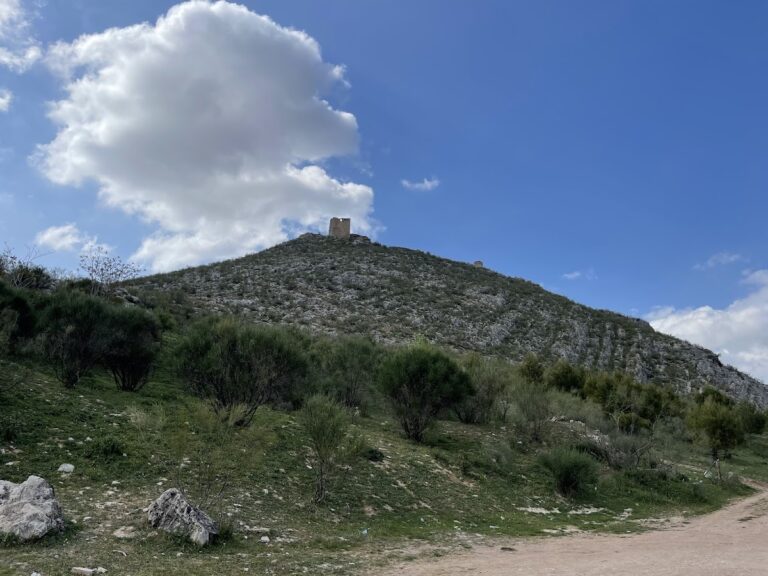
Ciudad de La Mota: The Fortress-City of Alcalá la Real


Site at a Glance
- Rating
- 4.7
- Popularity
- Medium
- Country
- Spain
- Primary era
- Medieval
- External website
- Open
- Eras represented
- Medieval, Modern
- Civilizations
- Almoravid, Crown of Castile, French, Nasrid, Taifa Kingdoms
- Site type
- Military
- Remains
- Castle
On this page14 sections
History
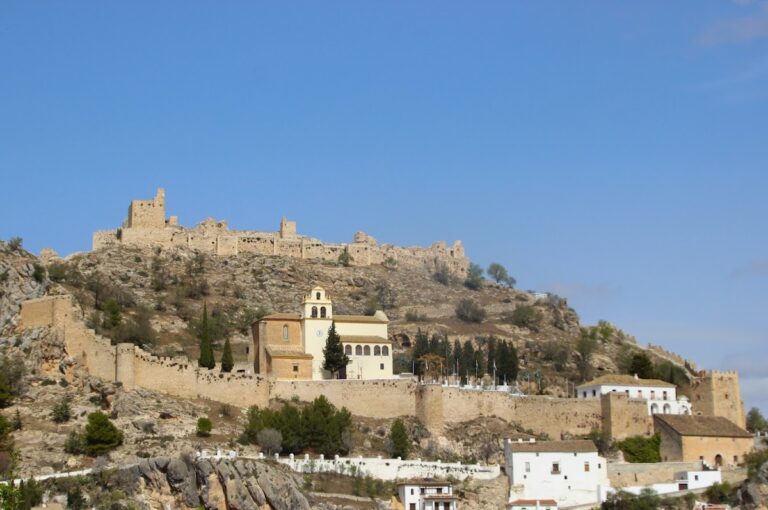
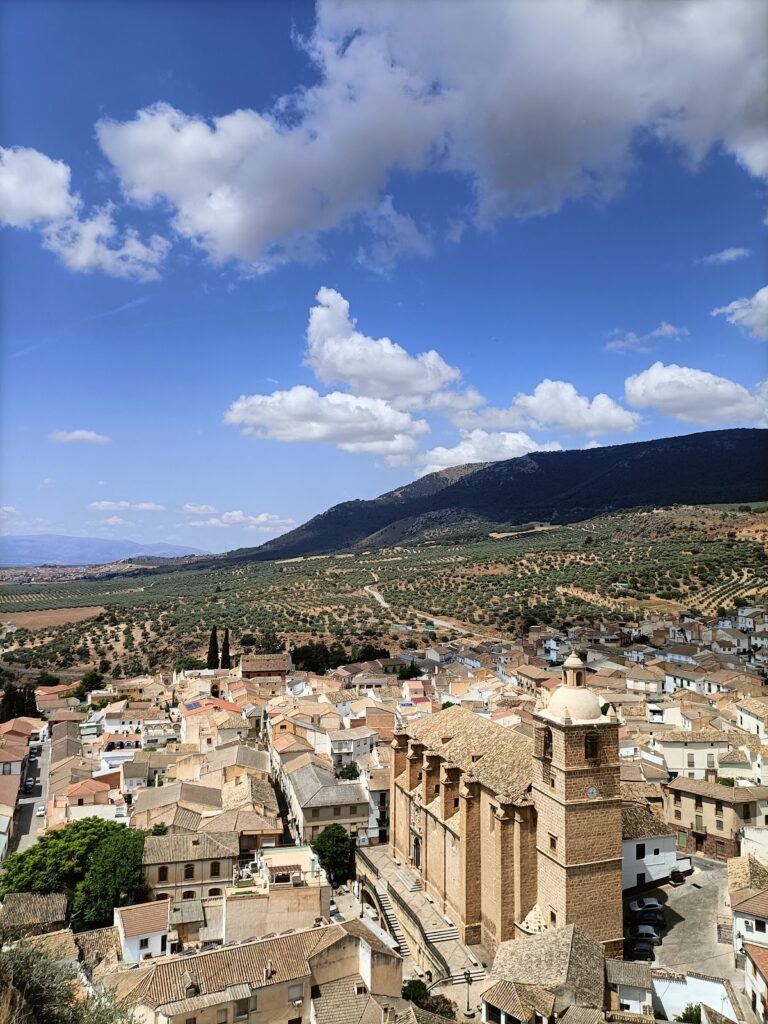
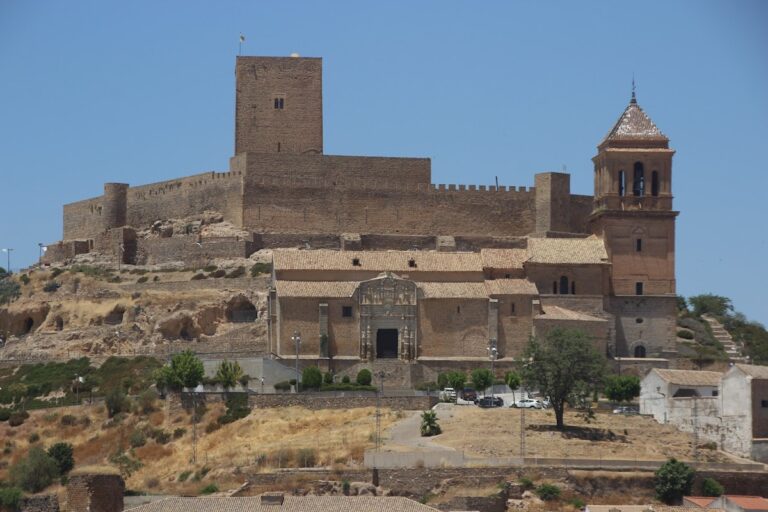
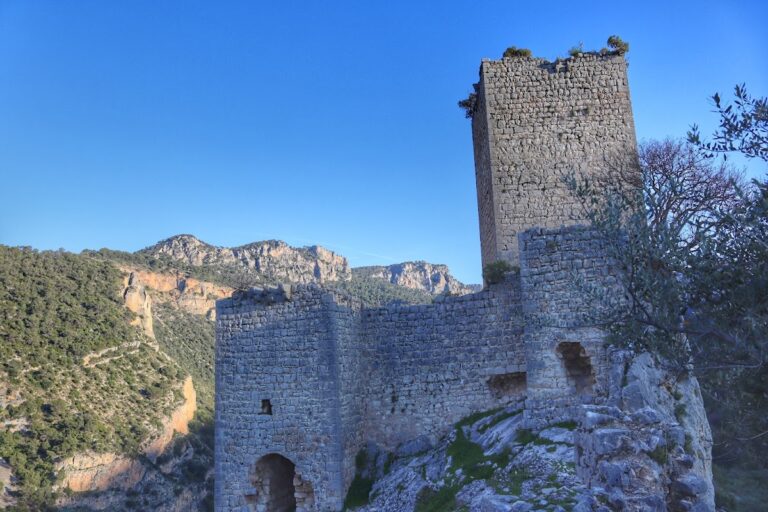
Ciudad de La Mota, also known as the Fortress of La Mota or Castle of Alcalá la Real, is a fortified site in Spain, at Alcalá la Real in Jaén, Andalusia. Built and developed by successive Muslim and Christian powers on the hill of La Mota, 1,029 metres above sea level, its principal surviving form belongs to the Nasrid period of the thirteenth and fourteenth centuries, although parts of the complex are earlier.
Islamic Origins and Early Fortifications
After the Muslim conquest in 713, the settlement was called Qal’at Astalir. In the ninth century it was known as Qal’at Yahsub, and by the middle of the twelfth century it was called Qal’at Bani Sa’id, meaning the fortress of the Bani Sa’id or Sa’id family. The shorter name Al-Qal’a, meaning “the fortress,” contributed to the present name.
In 889, the site became a centre of one of the Muladi rebellions against the Caliphate of Cordoba. Muladis were Iberian Christians or their descendants who had converted to Islam under Muslim rule. The settlement later became involved in conflicts between the Almoravids and the taifa kingdoms. The Almoravids were a North African Muslim dynasty that ruled parts of Iberia and North Africa, while the taifa kingdoms were smaller Muslim states formed after the Caliphate of Cordoba fragmented. During these conflicts, the defences were strengthened, the inhabited area was enclosed by a new wall, a mosque was built, and a demanding route to the summit was established.
During the Almohad period, the settlement rebelled and formed an independent lordship before being attacked by North African Berbers. Abd al-Malik ben Sa’id, its governor and head of the Sa’id clan, was briefly imprisoned in Morocco and then returned to Alcalá in submission. An early watchtower or castle is traditionally attributed to Badis Aben Habuz, the Zirid ruler of Granada, although its construction has also been placed in the eleventh century, during the era of the taifa kingdoms.
Frontier Between Granada and Castile
After the Battle of Las Navas de Tolosa in 1212, the castle endured repeated attacks and changed hands between Christian and Muslim forces. In 1265, while it was under Granadan control, it hosted the Pact of Alcalá between Alfonso X of Castile and Alhamar, also known as Muhammad I of Granada and founder of the Nasrid dynasty. From the middle of the thirteenth century into the fourteenth, a network of watchtowers was organized to control the frontier established by the Pact of Jaén.
Alfonso XI besieged the city in 1340. The defenders capitulated after hunger defeated them in 1341, and the fortress then became one of the principal frontier strongholds of the Kingdom of Castile against the Nasrid Kingdom of Granada. Until Granada fell, Castile supplied La Mota with substantial resources and undertook building works, including the Torre Nueva.
Abandonment, Military Reuse, and Conservation
After the conquest of Granada in 1492, the fortress gradually lost its military purpose. By the eighteenth century, the citadel had been depopulated as inhabitants moved to suburbs on the plain, and its defensive system had fallen into serious neglect.
French forces adapted and restored the fortress for military occupation during the nineteenth century. They built a wall between the alcázar, the highest fortified precinct, and the Prison Tower, enclosing an area that included the Main Abbey Church. At the end of the Peninsular War in 1812, the church, then being used as a storehouse, was set on fire. Part of its vault collapsed, while the explosion of a powder magazine in the Prison Tower destroyed much of that tower’s masonry. Artillery impacts during the Spanish Civil War caused further damage. More recent restoration work, including interventions by the Junta of Andalusia, has addressed the surviving complex. The fortress was declared a Spanish Bien de Interés Cultural, a formal legal designation for recognized cultural heritage, on 22 June 1993, under registration RI-51-0007856.
Remains
The complex follows the arrangement of an Andalusian fortress-city in three principal precincts. An outer enclosure surrounded the medina, or main urban settlement; an inner citadel occupied the summit plateau; and the alcázar formed the highest defensive precinct. The surviving structures are built in masonry, using stones or other units set in mortar. Although some interpretations propose an original construction in rammed earth, restoration work has found no evidence confirming that theory.
Precincts and Enclosures
Outer Precinct
The outer precinct contained the medina and its defences. A broad wall enclosed several suburbs, including the better-preserved Old Suburb. Its original arrangement dates from the eleventh and twelfth centuries, while later work in the thirteenth and fourteenth centuries appears to have added masonry facing to walls initially made from rammed earth and mortar. Some interpretations propose that a still farther enclosure may have existed as an albacar, an outer holding area made of earth and timber.
Alcazaba
The alcazaba, a fortified citadel within an Andalusian city, occupies the entire summit plateau of La Mota and represents the location of the original city. It was enclosed by a wall with several entrances. The Santiago Gate stood at the northwestern extremity and connected directly with the exterior of the medina. At the southwestern extremity, the San Bartolome Gate also opened toward the exterior.
Alcázar
The alcázar occupied the highest part of the alcazaba. Its plan was triangular or trapezoidal, with one notably shortened side. The principal elements were the keep, the Bell Tower, and the Mocha Tower. Access was through a gate beneath the keep, whose construction was described as very similar to the Monaita Gate in the former capital of the Kingdom of Granada.
Approach Gates and Passages
Cuesta de la Mota and the Lower Gates
The principal approach climbed the Cuesta de la Mota and passed through seven gates. Three remain standing. The route began at an unnamed gate that has disappeared, followed by the Gate of the Lances. An albarrana tower, a projecting defensive tower linked to a main wall, protected the latter gate.
Gate of the Image
The monumental Gate of the Image has a bent entrance and a double mixed arcade. Its first arch is semicircular, while the second is horseshoe-shaped. Its form is described as very similar to the Gate of Justice at the Alhambra.
Gate of the Flour Weighing
After the vanished gates of the Banner and Aguilera, the route reached the Gate of the Flour Weighing. This entrance connected the alcazaba with the upper square and served as the place where entrance duties were paid.
Cañuto or Gaván
A final access route passed through the Cañuto, or Gaván, a covered passage leading into the walled precinct. An earthquake destroyed this passage in the sixteenth century.