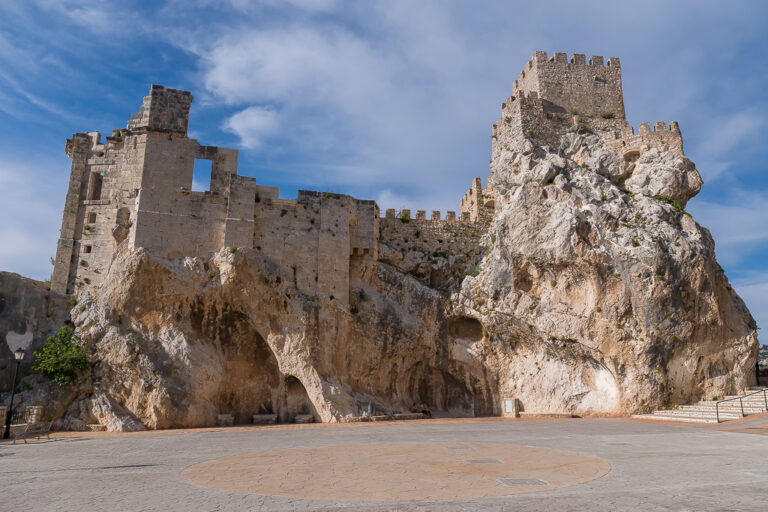
Castillo de Alcaudete: A Hispano-Muslim Frontier Fortress in Spain

Site at a Glance
- Rating
- 4.6
- Popularity
- Medium
- Country
- Spain
- Primary era
- Medieval
- External website
- Open
- Eras represented
- Classical, Medieval, Early Modern
- Civilizations
- Crown of Castile, Order of Calatrava, Roman
- Site type
- Military
- Remains
- Castle
On this page8 sections
History
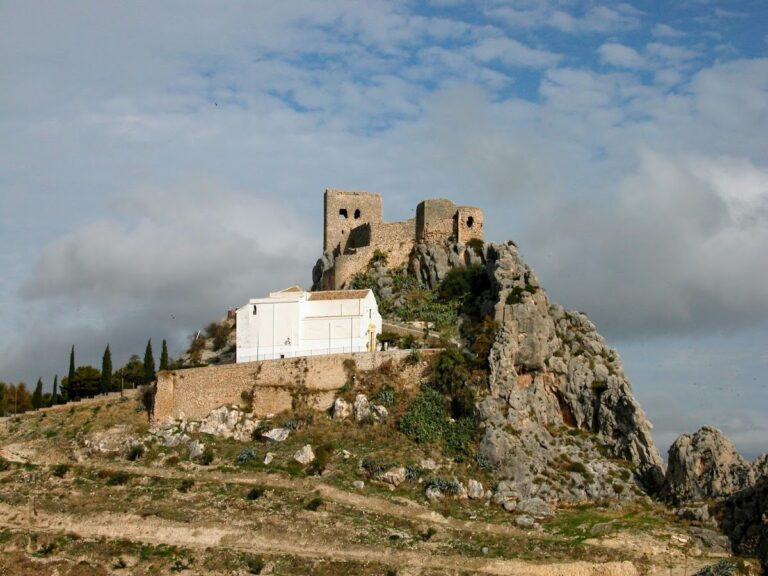
Castillo de Alcaudete is a Hispano-Muslim fortress in Alcaudete, Spain, built by the Arabs over the remains of a Roman fortification during the medieval period. Its position made it part of the long military contest between Christian and Muslim powers in Iberia.
Muslim and Christian rule
Christians first captured the castle in 1085, during the reign of Alfonso VI, king of León and Castile from 1065 to 1109. Control then changed hands repeatedly before the definitive Christian takeover in 1340.
After this conquest, the castle was ceded to the Order of Calatrava, a Catholic military order whose members combined monastic vows with military service. The order held Alcaudete as an important frontier stronghold between the Christian Kingdom of Castile and the Nasrid Kingdom of Granada, the last Muslim-ruled kingdom in medieval Iberia, which lasted until 1492. The fortress continued to be enlarged in successive phases until the eighteenth century.
Protection and later use
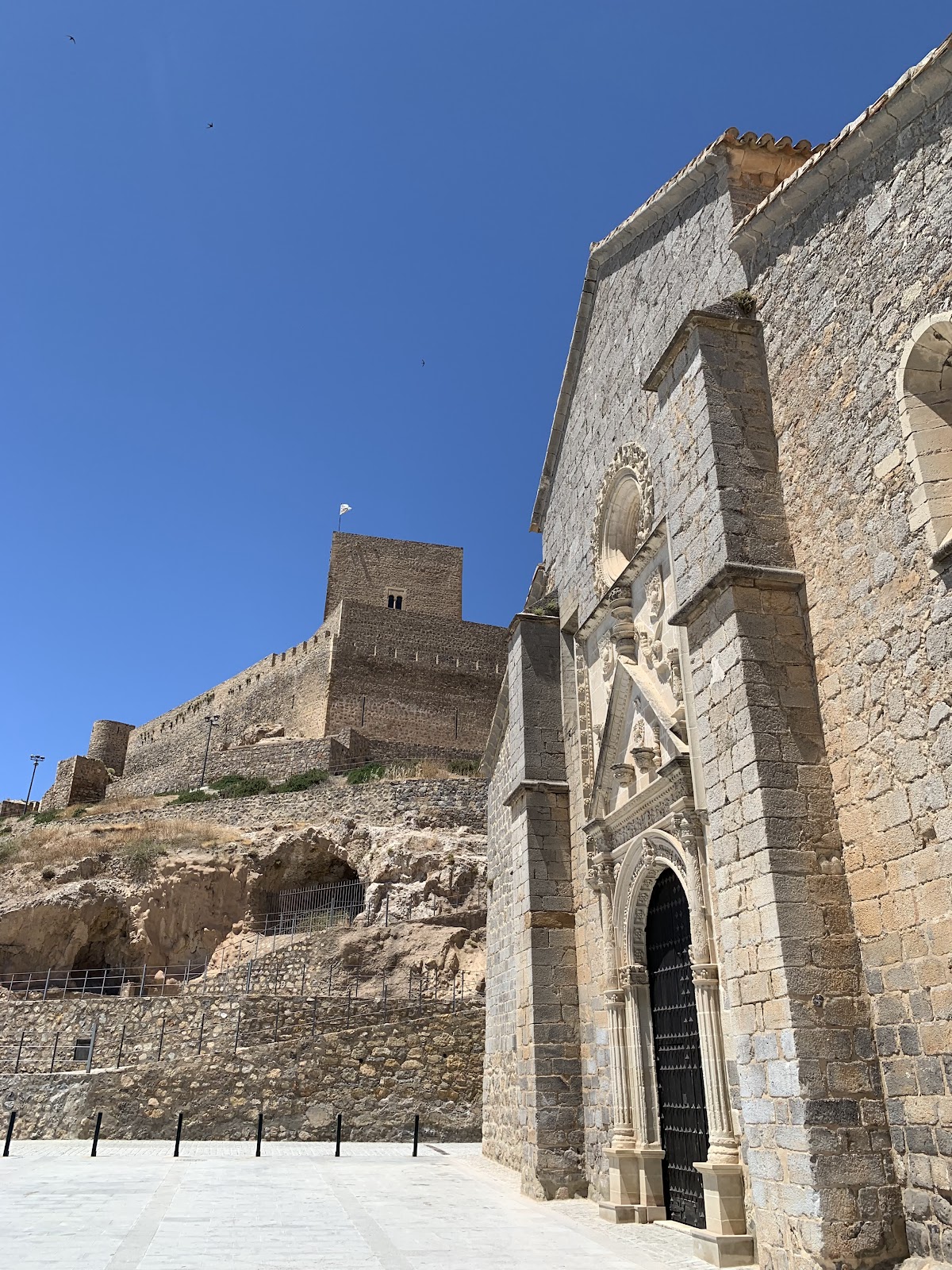
Spain placed the castle under its general protection for historic castles in 1949. Under the country’s 1985 Historic Heritage legislation, it was also recognized as a Cultural Heritage Site in the category of Monument. The municipality acquired the houses surrounding the castle and kept them vacant to improve the monument’s visibility. Following restoration, the castle became a cultural space with an interpretation center devoted to the life of the Order of Calatrava. Its displays explain the fortress’s construction on the frontier with Granada, the order’s organization and way of life, and the military devices used to attack and defend the stronghold.
Remains
Fortified layout
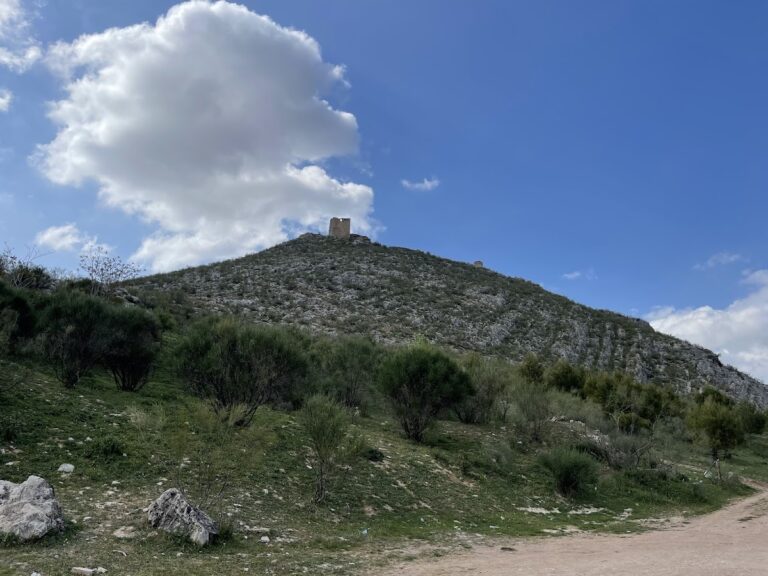
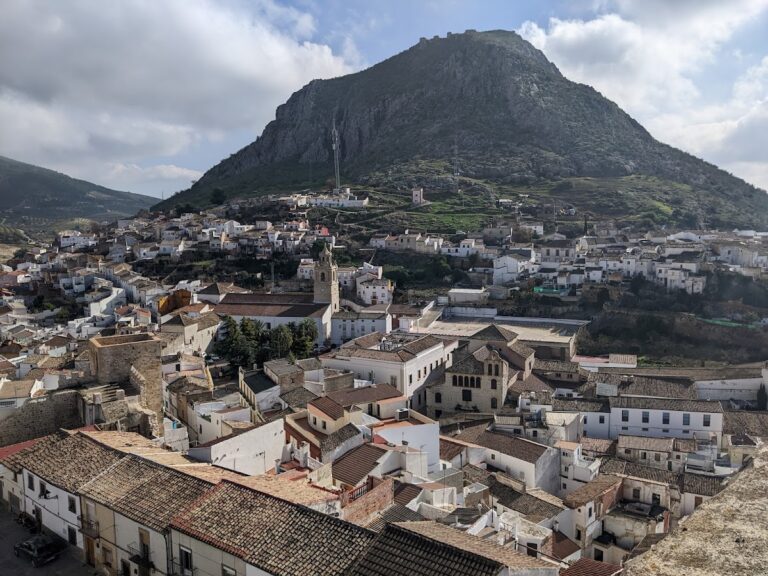
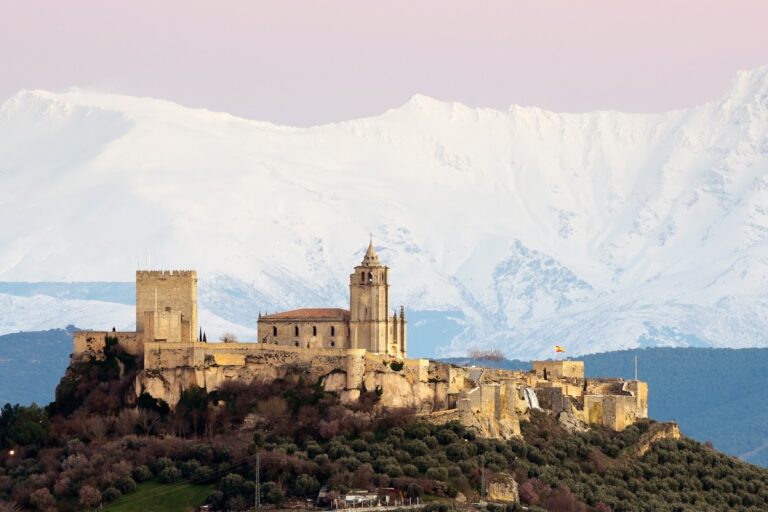
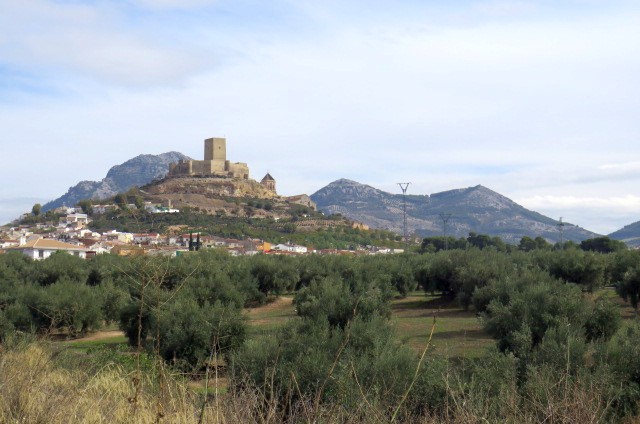
The castle stands on a 713-meter-high hill overlooking Alcaudete. Its polygonal plan follows the rocky escarpments and irregularities of the hill. The fortified complex comprises the main castle, a barbican, which is an outer defensive work protecting an entrance or enclosure, and a lower enclosure. Six towers crown the complex, while a northern entrance is protected by two towers.
Chapter house and water system
The Sala Capitular, or chapter house used by the religious order for meetings and administrative business, is one of the principal rooms. It opens from the upper or central terrace through a large doorway and forms a rectangular interior covered by a wooden structure known as an artesonado. Its horizontal roof helped collect rainwater and direct it from the terrace into the main cistern, or aljibe. A smaller doorway links the room directly to the battlement walk along the southern wall.
Walls and defensive towers
Passages along the tops or inner sides of the defensive walls led into the towers protecting each wall section. Every tower had three levels: a solid lower storey, an intermediate level reached through small doorways with segmental arches, and an upper terrace accessed through an opening in the vaults. The intermediate rooms contained small chambers covered by sail or barrel vaults, together with narrow arrow openings for launching missiles while limiting exposure and for supplying light and ventilation. Square upper terraces were enclosed by parapets topped with merlons and crenellations.
Torre de Homenaje
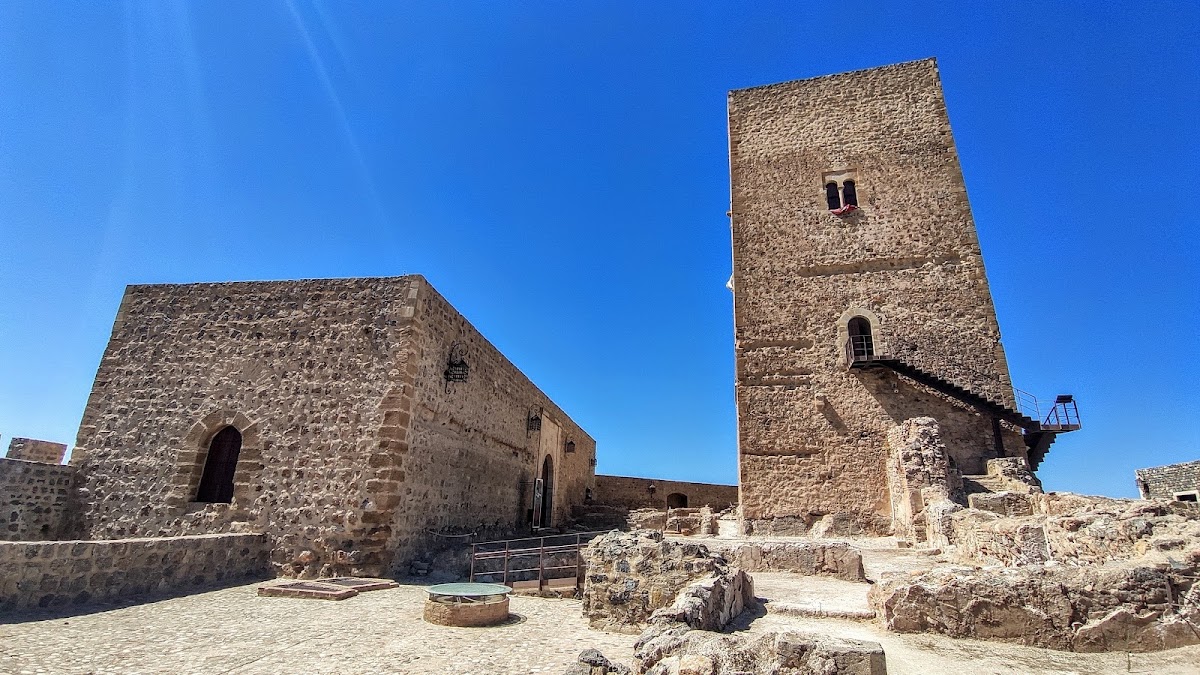
The Torre de Homenaje occupies the center of the fortress at the hill’s highest point, on a small terrace isolated by steep rocky drops. It has a truncated-conical profile, a rectangular plan, three levels, and walls up to 3 meters thick. The tower measures 12.70 meters wide, 14.90 meters long, and 20 meters high. Its isolated position provided a degree of functional autonomy and made it the strongest and most defensible point of the fortress, as well as its final place of resistance. The restored interior is adapted as a museum, and the castle is in good condition.