Burgstall Engelsberg: A Medieval Spur Castle Site in Germany


Site at a Glance
- Rating
- 4.2
- Popularity
- Very Low
- Country
- Germany
- Primary era
- Medieval
- Eras represented
- Medieval
- Civilizations
- Holy Roman Empire
- Site type
- Military
- Remains
- Castle
On this page8 sections
History
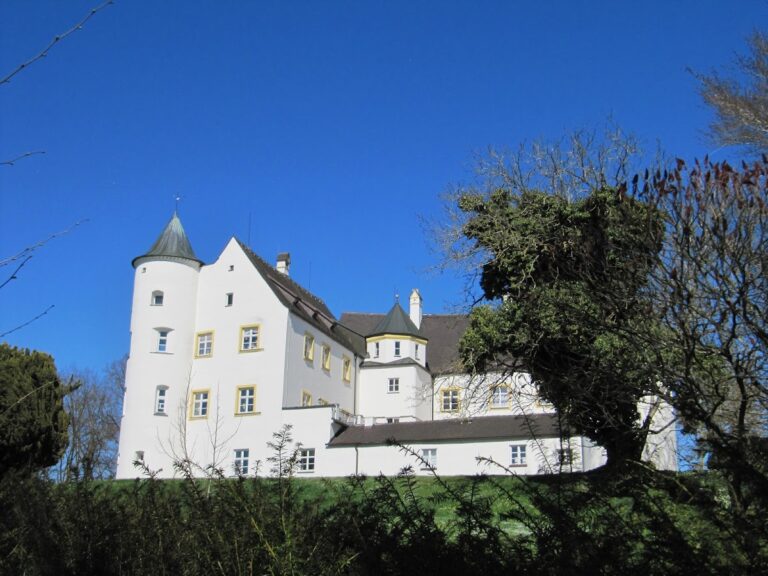
Burgstall Engelsberg is the site of a former high-medieval spur castle in Germany, immediately south of and above Fürstenfeld Monastery near Fürstenfeldbruck. A Burgstall is the location or surviving remains of a former castle rather than an intact fortress. The origins of Engelsberg are traditionally placed in the tenth century, while the castle is securely attested from the twelfth century.
Origins and the medieval route
The castle is also known as Eberhardsburg. Local tradition associates it with the nobleman Eberhard, who supposedly died fighting the Hungarians in 955. This attribution belongs to legend rather than established history.
During the twelfth century, Engelsberg stood beside a secondary route between Salzburg and Augsburg. The road branched from the former Roman road at Gilching, passed through Germannsberg and Pfaffing, continued past the castle to the old Amper bridge, and then ran through Puch toward Augsburg. Bruck and the monastery had not yet been founded, since both originated only in the mid-thirteenth century. The castle therefore probably helped protect travelers and trade while also collecting bridge tolls.
Its occupants were probably ministerials, members of the medieval service nobility who performed military and administrative duties for more powerful lords. Their feudal superior is unknown. The Welfs and the Wittelsbachs are both possible overlords. These major German dynasties competed for influence in the area, with the Wittelsbachs later becoming the dukes and kings of Bavaria.
Decline and monastic possession
The route, and probably the castle, lost importance during the middle of the twelfth century. Between 1132 and 1144, Magnus of Hadorf donated a castle described as burcstal iuxta pontem sancti Stephani, meaning a castle site beside the bridge of Saint Stephen, to Admont Benedictine Abbey in Styria. The reference may concern nearby Pfaffing and its Church of Saint Stephen, but its connection with Engelsberg remains uncertain.
If Engelsberg was a Welf castle, its decline may have followed the fall of the Welf position after Henry the Lion was deposed in 1180. Henry was a leading Welf duke and one of the most powerful German princes of the twelfth century. The castle lords may instead have moved to nearby Gegenpoint Castle, first mentioned around 1150 and abandoned around 1340. Several ministerial families apparently used the place-name Prukk, but their genealogical relationships remain difficult to reconstruct.
By the thirteenth century, the Eberhard Garden below the slope, and probably the castle itself, appear to have belonged to the Wittelsbach dukes. In 1263, Duke Louis the Strict transferred land at the garden to the Cistercians for the foundation of Fürstenfeld Monastery. The Cistercians developed from the Benedictine tradition and emphasized stricter observance and relatively secluded monastic settings. They probably acquired Engelsberg at the same time or soon afterward.
Engelsberg was last mentioned as a castle in 1285, when it was called a munitio, or fortification. The monastery probably dismantled it to prevent reuse. The main-castle plateau stood about 200 meters from the monastery complex and offered a clear view over it. As a Wittelsbach house monastery, Fürstenfeld could dispense with military protection by ministerials and castle fortifications, while the Bavarian dukes also sought to prevent powerful rivals from developing within their territory. The castle later disappeared from Philipp Apian’s sixteenth-century map.
Later uses and traditions
A shooting range appears to have been established on the plateau around 1700. In 1779, the site was laid out as a pleasure garden, and a statue of the Virgin Mary was installed there. The statue was later moved to the rampart of the outer bailey. The former castle area is now incorporated into Fürstenfeldbruck’s municipal recreation landscape, while the Bavarian State Office for Monument Protection lists it as the medieval castle site “Engelsberg,” monument number D 1-7833-0065.
One later legend says that the Cistercians first intended to build their monastery on the castle site, but that angels moved the walls constructed during the day to the foot of the hill at night. The story probably reflects the Cistercian preference for valley locations, in contrast with the elevated sites often favored by Benedictines. Another tradition holds that twelve angels surrounded the Marian statue and sang the Salve Regina on Marian feast days. This story was used to explain the change of the hill’s name from Eberhardsberg to Engelsberg.
Remains
Spur and defensive earthworks
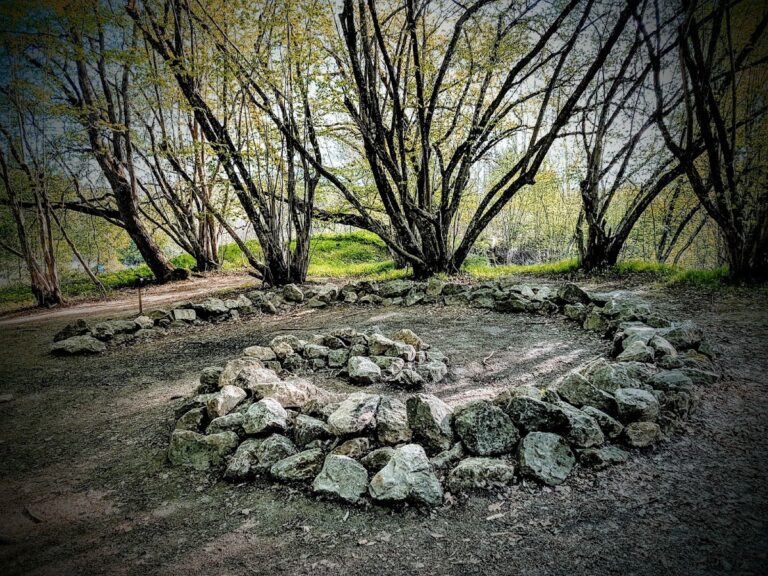
Burgstall Engelsberg occupies a natural spur on a glacial moraine ridge at about 560 meters above sea level. The spur was probably made steeper artificially. On its eastern side, a neck ditch, a defensive ditch cut across the narrow connection between a fortified spur and the ground behind it, separates the main castle from the surrounding terrain and the presumed outer bailey.
Main castle
The archaeological monument covers approximately 2,000 square meters and measures about 60 by 45 meters. An earthen bridge leads to the oval main-castle area, whose surviving hill forms an irregular triangle. The neck ditch remains approximately three to four meters deep. Several substantial beds of Nagelfluh conglomerate, a naturally cemented glacial material made of rounded stones, project from the northern slope.
A plan drawn by F. S. Hartmann around 1870 represents the castle area as rectangular with a rounded eastern side and two neck ditches. The northwestern part had been removed during railway construction, apparently for the extraction of building material. The surviving terrain is heavily wooded, which greatly restricts the former view from the hill.
Outer bailey
The outer bailey earthworks have been heavily reduced. Rampart remains survive mainly beside the neck ditch, where the Marian statue now stands in a barred wooden case. The statue is a Madonna of the Grapes. It was reportedly first placed on the main-castle plateau and surrounded by twelve angel figures, linking the surviving feature with the tradition that gave Engelsberg its name.