Kilia Fortress: A Danube Stronghold in Ukraine


Site at a Glance
- Rating
- 4.2
- Popularity
- Very Low
- Country
- Ukraine
- Primary era
- Medieval
- Eras represented
- Medieval
- Civilizations
- Genoese, Principality of Moldavia
- Site type
- Military
- Remains
- Castle
On this page5 sections
History
Kilia Fortress is a historic fortress in Kiliya, Ukraine, on the left bank of the Danube. Its construction dates to the thirteenth century, although an ancient Greek fortress called Achilleia stood at the site earlier. The medieval stronghold occupied an important position on the Lower Danube and was later rebuilt, captured, and transferred among several regional powers.
Ancient and Byzantine Foundations
The earlier Greek fortress was known as Achilleia, a name apparently connected with Achilles, who was traditionally believed to have been buried at the mouth of the Danube. By the medieval period, the settlement was associated with the name Kilia, first recorded in 1281 by the Arab-Persian chronicler Rashid al-Din. The name derives from the Greek word kellia, meaning “granaries.”
Kilia remained under Byzantine control until the tenth century. The Byzantine Empire was the medieval eastern Roman Empire, centered on Constantinople. The site later passed to the Genoese and was then known as Licostoma. Genoese merchants and maritime powers established commercial settlements around the Black Sea and the lower Danube, and Kilia became an active center of trade.
Genoese Trade and Moldavian Rule
A register kept in Kilia by the Genoese notary Antonio de Podenzolo from November 1360 to May 1361 records intensive commercial activity on the Lower Danube. Wheat, honey, wax, wine, salt, fish, and other products were exported from Kilia to Constantinople.
In the late fourteenth century, Mircea I the Elder expanded Wallachian territory to the Black Sea, bringing Kilia into the Wallachian state. Wallachia and Moldavia were principalities in a region that now includes parts of Romania, Moldova, and Ukraine. During a political crisis affecting the Wallachian ruler Dan II, the Moldavian ruler Alexander the Good took control of the fortress in 1426.
In 1448, the Moldavian ruler Peter II transferred Kilia to Janos Hunyadi, the Hungarian military and political leader who had helped restore Roman II to the Moldavian throne. The Moldavian ruler Stephen III the Great then attacked the fortress on 22 July 1462. A Hungarian royal garrison defended Kilia, and Stephen was wounded in the ankle during the unsuccessful assault. Tradition identifies this siege as one of only two battles he lost.
Stephen began a second campaign after a one-day siege that started on 24 January 1465. He conquered the fortress on 25 January and appointed his brother-in-law Isaia as the city’s elder. In the summer of 1479, Stephen rebuilt Kilia Fortress on the left bank of the Danube to strengthen his defensive system. The work involved 800 masons and 17,000 auxiliary workers.
Ottoman Conquest and Later Sovereignty
Sultan Bayezid II began an Ottoman campaign against Moldavia in 1484. Bayezid II ruled the Ottoman Empire from 1481 to 1512. On 6 July, an Ottoman army of more than 60,000 men besieged Kilia, which was defended by 400 Moldavians. The Ottomans captured the fortress eight days later, on 14 July.
Kilia remained under Ottoman government from the conquest of 1484 until the Russian Empire annexed Bessarabia in 1812. Bessarabia was the historical region around the lower Danube and the Dniester, broadly corresponding to parts of present-day Moldova and Ukraine. After Russia’s defeat in the Crimean War, Kilia returned to Moldavia in 1856. It became part of Russia again in 1878, following the Ottoman Empire’s defeat in the Russo-Turkish War of 1877–1878.
Remains
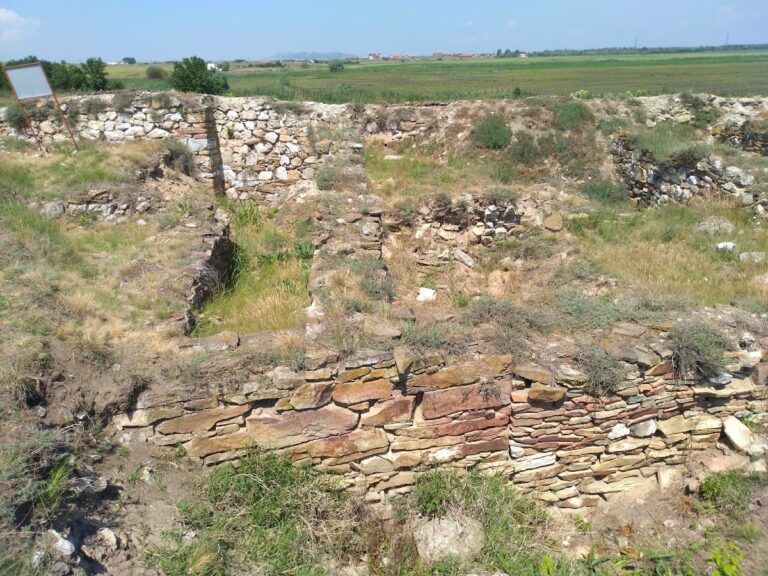
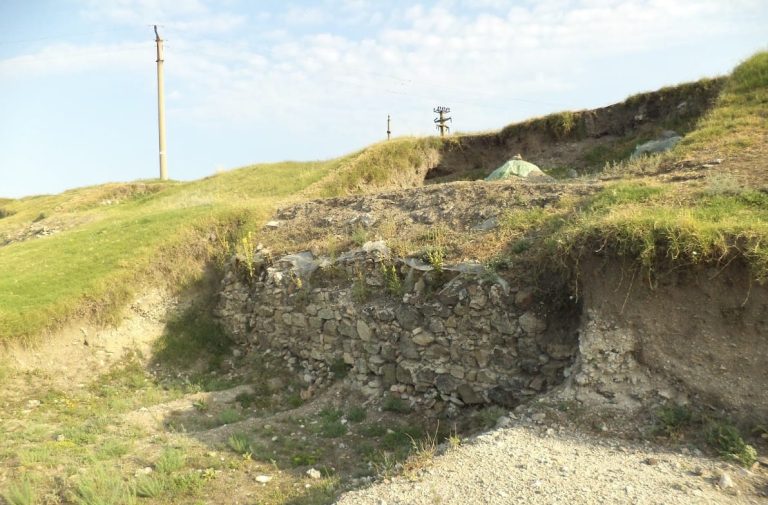
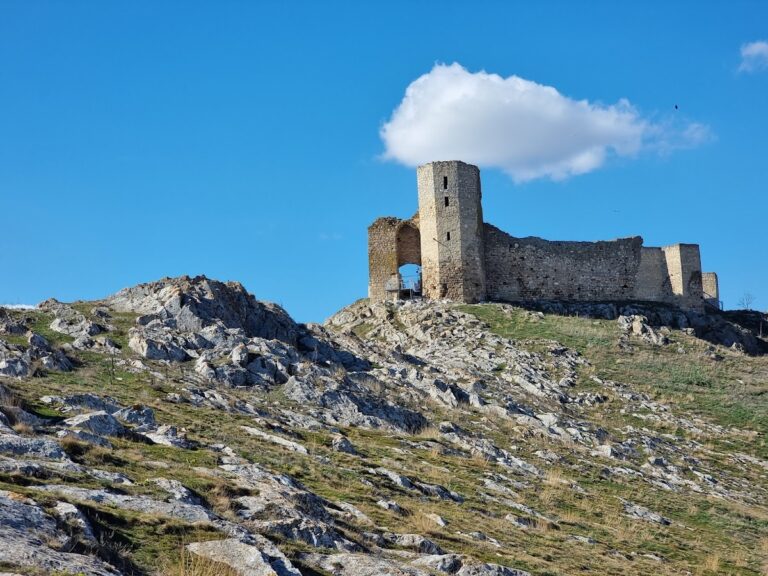
Kilia Fortress stood in the city of Kiliya in southern Bessarabia, on the Danube’s left bank. The surviving physical remains consist of one tower, probably a chapel belonging to the citadel. A citadel is the fortified central stronghold within a larger fortress or defended settlement. The fortress is now in ruins, and the tower stands on private property belonging to an industrial enterprise.